


Troubleshooting Gaggia Anima error codes during operation
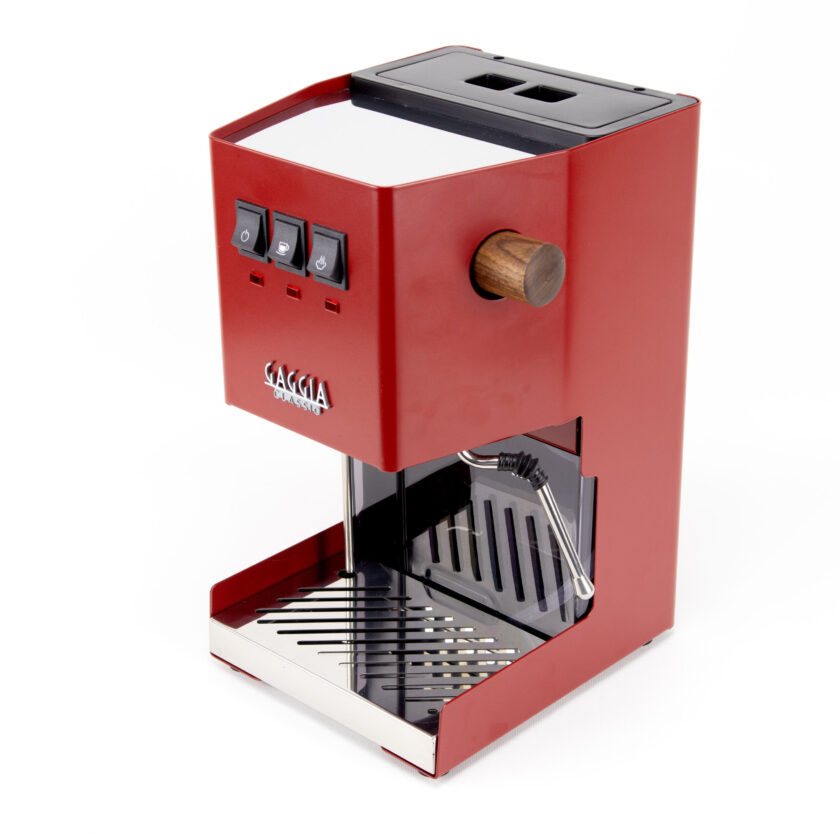
The Gaggia Anima series is known for its reliability in delivering quality espresso with minimal fuss. For the experienced home barista, it represents a bridge between manual control and automated convenience. However, like any sophisticated machine, it uses a system of error codes to communicate internal issues. Understanding these codes is crucial for quick diagnosis and repair, ensuring minimal downtime. This article provides a technical, no-nonsense guide to interpreting and resolving the most common error codes you may encounter during operation. The goal is to empower you to handle these situations with confidence, moving from problem identification to solution methodically and effectively.
Understanding the error code system
The Gaggia Anima communicates malfunctions through a series of numeric codes, typically displayed on the screen as an “E” followed by a number (e.g., E01, E05). Each code corresponds to a specific subsystem within the machine, such as the grinder, brew group, or water circuit. While an error code can seem alarming, it is simply a diagnostic tool. In many cases, the underlying issue is a common operational problem, such as a blockage or an airlock, which can be resolved with basic maintenance. The first step in any troubleshooting process is to power the machine off and on to see if the error clears. If it persists, the code provides the starting point for your investigation.
Grinder and brew group errors
Codes E01, E03, and E04 all point to mechanical issues within the dosing and brewing systems. These are often the most frequent errors and are typically user-serviceable.
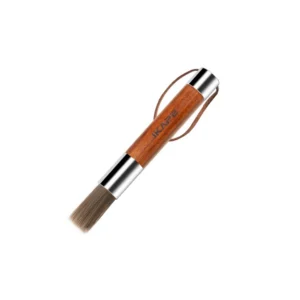
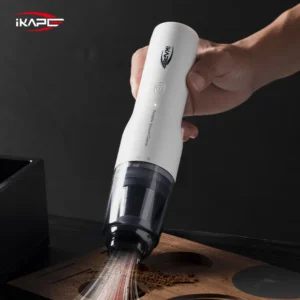
- E01: Grinder blocked. This error indicates that the grinder motor is stalling because coffee beans cannot be fed into the burrs or the ground coffee chute is clogged. It is often caused by excessively oily beans, the use of flavored coffee, or a foreign object in the hopper. To resolve it, turn off and unplug the machine. Remove the bean hopper and thoroughly clean the grinder chute with a vacuum and a small brush to clear any impacted grounds.
- E03 & E04: Brew group blocked. These codes signify that the brew group is stuck and cannot complete its cycle. E03 means it is blocked on its way up to the brewing position, while E04 means it is unable to return to the neutral position. The cause is almost always a buildup of coffee grounds or a lack of lubrication. The solution is to reset the machine, then remove the brew group. Clean it thoroughly under lukewarm water without any soap, paying close attention to the screen and coffee exit port. Allow it to air dry completely, re-lubricate the guide rails with a food-safe grease, and reinsert it, ensuring it clicks firmly into place.
Water circuit and flow errors
The E05 error is one of the most common issues on super-automatic espresso machines and points to a problem within the hydraulic circuit.
E05: Water circuit blocked / Flow meter error. This code appears when the machine’s flow meter does not detect water moving through the system when the pump is activated. The overwhelming majority of the time, this is caused by an airlock in the water lines, not a faulty component. An airlock can form if the water tank runs empty or after a descaling cycle. The standard procedure to resolve this is to prime the machine.
- First, ensure the water tank is full and seated correctly.
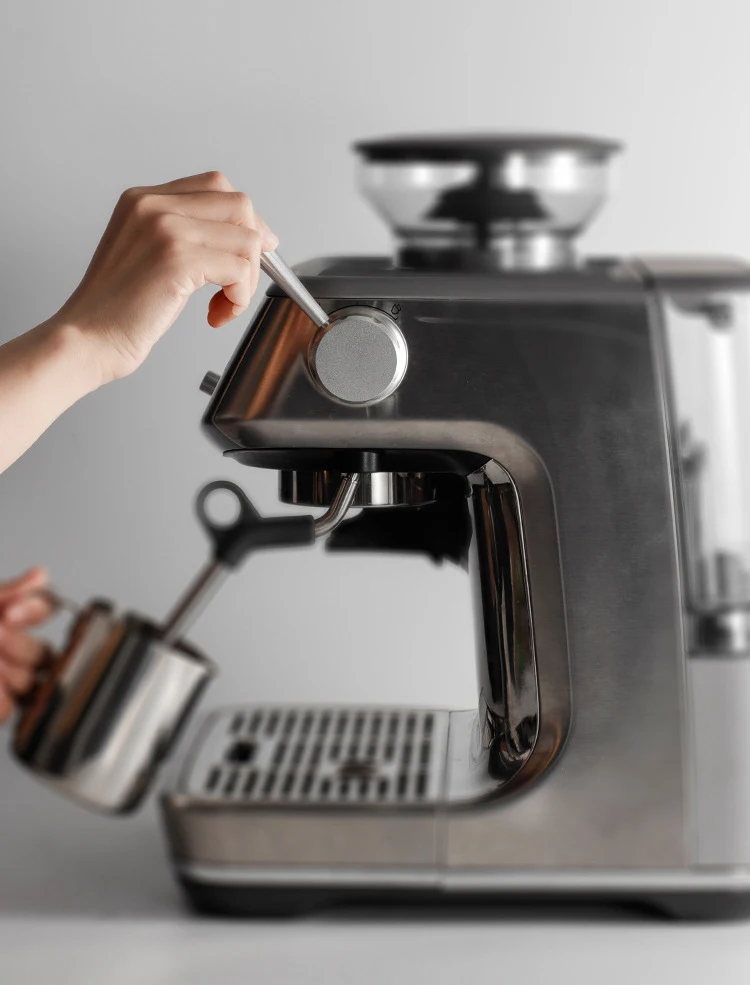
- Dispense a full cup of water from the hot water wand. This forces water directly through the pump and boiler, purging any trapped air.
- Repeat the priming process two or three times if necessary.
If priming does not clear the error, the issue could be related to a stuck magnet in the water tank’s float sensor or a more significant blockage from limescale, in which case a full descaling cycle may be required.
Boiler and sensor errors
While less common, errors like E14 and E15 indicate more serious issues related to the machine’s heating elements and temperature sensors. These should be approached with more caution.
E14 / E15: Overheating or boiler sensor malfunction. These codes suggest that the boiler has either exceeded its safe operating temperature (E14) or that its temperature-monitoring sensor (NTC sensor) is faulty (E15). This is a critical safety alert. Upon seeing either of these codes, you should immediately turn off and unplug the machine. Allow it to cool down completely for at least an hour. Afterward, you can plug it back in and attempt a restart. If the error code reappears, it signifies a likely component failure. Unlike mechanical blockages, these errors often require professional service, as they involve internal electronics and high-temperature components that are not intended for user replacement.
Conclusion
Gaggia Anima error codes are designed to be informative, not intimidating. A systematic approach is key to effective troubleshooting. For the advanced user, understanding that most operational errors stem from blockages, airlocks, or a need for basic maintenance demystifies the process. Grinder, brew group, and water circuit issues can almost always be resolved at home with thorough cleaning and priming. Boiler and sensor errors, however, serve as an important signal that professional attention may be required. Regular cleaning, lubrication, and descaling are the best preventative measures against common faults. By keeping up with maintenance, you ensure the machine operates reliably and continues to produce excellent espresso. When needed, the right tools and cleaning supplies can make this process straightforward, and quality resources are available from retailers like papelespresso.com.