


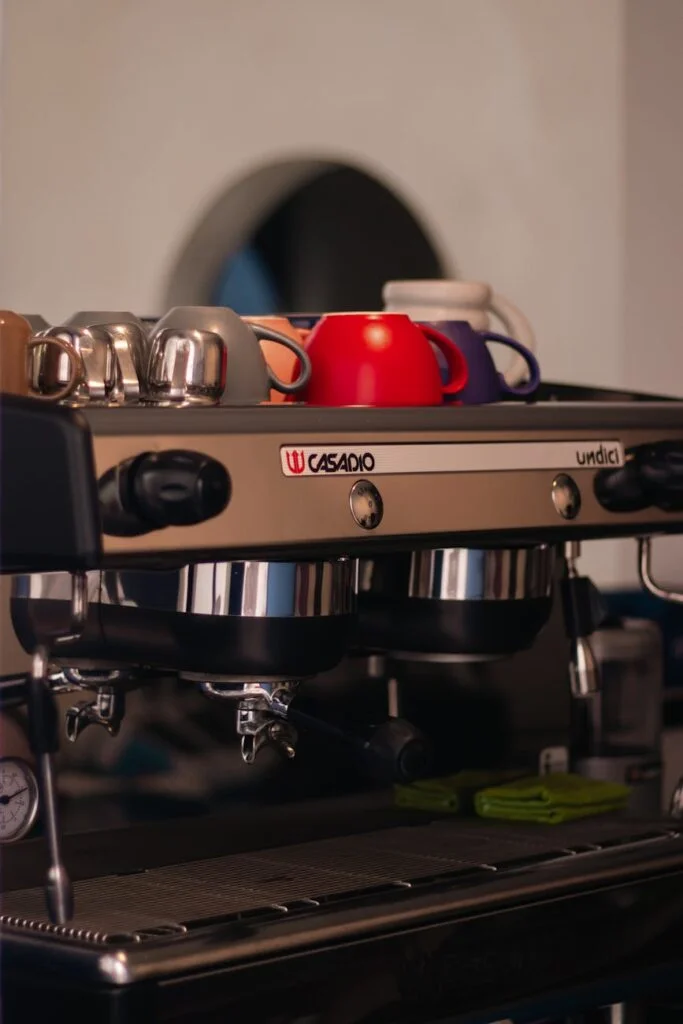
The legendary E61 group head is an icon in the world of espresso, celebrated for its temperature stability and its role in creating rich, balanced shots. A key part of its magic is a feature known as pre-infusion, the gentle wetting of the coffee puck before applying full extraction pressure. However, not all pre-infusion on an E61 is created equal. The classic design offers a passive system, an automatic process baked into its mechanical DNA. In recent years, the rise of flow control devices has introduced active pre-infusion, giving the barista direct, manual control. Understanding the fundamental difference between these two approaches is crucial for any home barista looking to master their E61 machine and tailor their espresso to perfection.
What is pre-infusion and why does it matter?
Before we can compare passive and active systems, we must first understand the goal of pre-infusion itself. In simple terms, pre-infusion is the process of introducing water to the dry coffee grounds in your portafilter at a low pressure (typically between 1-4 bar) before the main extraction phase begins at the full 9 bars of pressure. This initial, gentle soak has several critical benefits:
- Reduces channeling: When high-pressure water hits a dry puck of coffee, it can fracture it and create small channels, or “highways,” for water to flow through. This leads to uneven extraction, where some parts of the coffee are over-extracted (bitter) and others are under-extracted (sour). Pre-infusion allows the puck to swell and settle, creating a more uniform and resistant bed for the high-pressure water that follows.
- Improves consistency: By minimizing the risk of channeling, pre-infusion acts as a safety net, making your shots more forgiving of minor imperfections in puck preparation, like distribution or tamping.
- Enhances flavor: A more even extraction naturally leads to a more balanced and complex flavor profile. The gentle start allows for a fuller saturation of the grounds, helping to dissolve desirable flavor compounds that might otherwise be missed in a chaotic, high-pressure-only extraction.
The E61 group head was revolutionary because it had a form of this process built directly into its mechanical design, a feature that contributes to the smooth and syrupy shots it’s famous for.
The classic design: Passive E61 pre-infusion
The traditional E61 group head performs pre-infusion passively. It’s an automatic, mechanical process that requires no direct input from the user beyond lifting the brew lever. Here’s how it works: when the brew lever is engaged, it opens a valve that allows water from the boiler or pump to enter a small chamber within the group head. At the same time, a spring-loaded piston inside this chamber is pushed back.
Water fills this chamber before it proceeds to the puck. This sequence creates a gentle, gradual rise in pressure. On a plumbed-in machine, the puck is wetted at line pressure (usually 2-4 bar). On a machine with a vibratory pump and a reservoir, the pump starts slowly, and the chamber dampens the initial pressure spike. Only after this chamber is full and the puck is saturated does the pressure build to the full 9 bars. This entire process is passive; it’s a fixed characteristic of the E61’s design. The duration and pressure are not adjustable—they are what they are. This system provides excellent consistency and is a major reason why E61 machines are so forgiving.
The modern evolution: Active pre-infusion with flow control
Active pre-infusion is a more modern approach, typically added to an E61 group via a flow control modification kit. This kit replaces the top nut of the group head with a new assembly that includes a needle valve controlled by an external paddle or knob. This seemingly small change completely transforms the E61’s functionality from passive to active.
With a flow control device, the barista is no longer a passenger. By manipulating the paddle, you are directly controlling the rate of water flowing into the group head, which in turn gives you control over the pre-infusion pressure and duration. You can start with a very slow trickle of water for a long, low-pressure soak, perfect for light roast coffees that are harder to extract. You can then smoothly ramp up the pressure to full extraction power. This turns the simple on/off function of the E61 lever into a dynamic tool for pressure profiling, allowing you to mimic the extraction profiles of different machines, like manual levers or high-end commercial models.
Head-to-head comparison: Which is right for you?
Neither system is inherently superior; they simply serve different purposes and suit different types of users. The passive system offers simplicity and reliability, while the active system offers boundless control and experimentation. The best choice depends entirely on what you want to achieve with your espresso.
Let’s break down the key differences in a table for clarity:
| Feature | Passive Pre-infusion (Standard E61) | Active Pre-infusion (with Flow Control) |
|---|---|---|
| Control | Automatic and fixed. Determined by machine’s mechanics and water pressure. | Fully manual and variable. The user controls flow rate, pressure, and duration. |
| Consistency | Extremely high. The mechanical process is the same every time. | Dependent on the user’s skill. Can be very consistent with practice, but introduces user error as a variable. |
| Skill Level | Beginner-friendly. It works reliably without any special technique. | Intermediate to advanced. Requires practice and a good understanding of extraction theory. |
| Best For | Baristas who value consistency, simplicity, and classic espresso profiles (medium-dark roasts). | Enthusiasts who love to experiment, tweak variables, and extract modern, light roast coffees. |
| Flavor Impact | Promotes balanced, rich, and syrupy shots. A classic and forgiving profile. | Allows for targeting specific flavors, often enhancing acidity, sweetness, and complexity. |
In essence, the classic, passive E61 is like a high-quality automatic camera—it handles the technical details beautifully, allowing you to focus on the basics and get a great result consistently. An E61 with active flow control is like a fully manual camera—it hands you all the controls, offering unlimited creative potential but also a steeper learning curve.
In conclusion, the journey into E61 pre-infusion reveals a tale of two philosophies. The classic passive system is a testament to brilliant, timeless engineering, offering a simple and repeatable path to delicious, forgiving espresso. It’s the reliable workhorse that made the E61 group famous. Active pre-infusion, made possible by flow control mods, represents the evolution of this classic design, transforming it into a precise instrument for the modern coffee enthusiast. It puts the full power of extraction into the barista’s hands, unlocking new dimensions of flavor, especially with challenging light roasts. Ultimately, the choice is not about which is better, but about what kind of barista you want to be: one who perfects the classic shot or one who endlessly explores the boundaries of extraction.