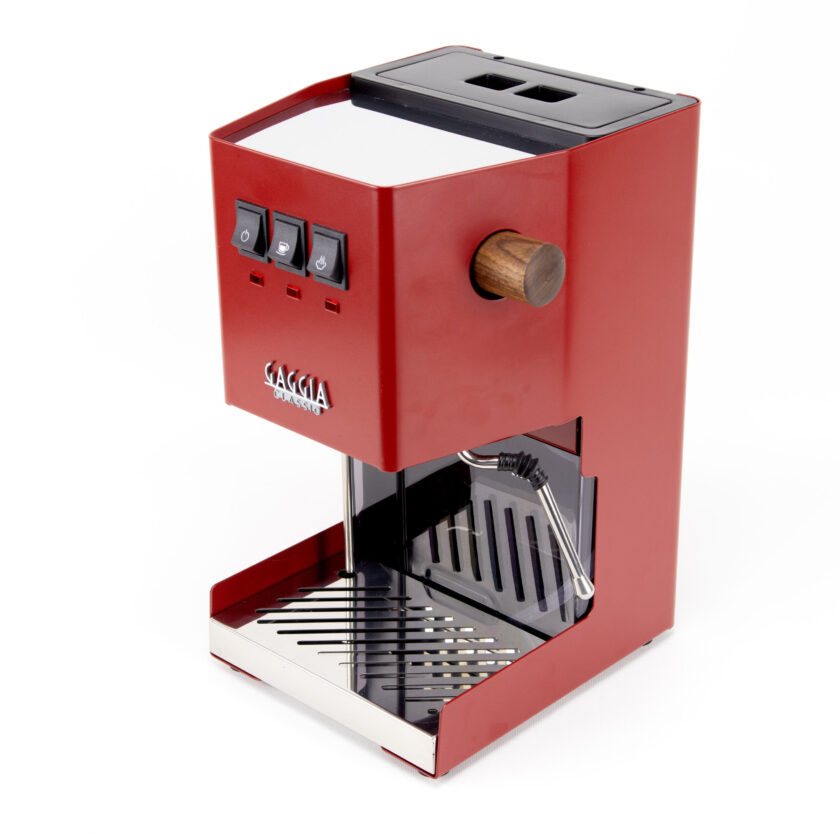
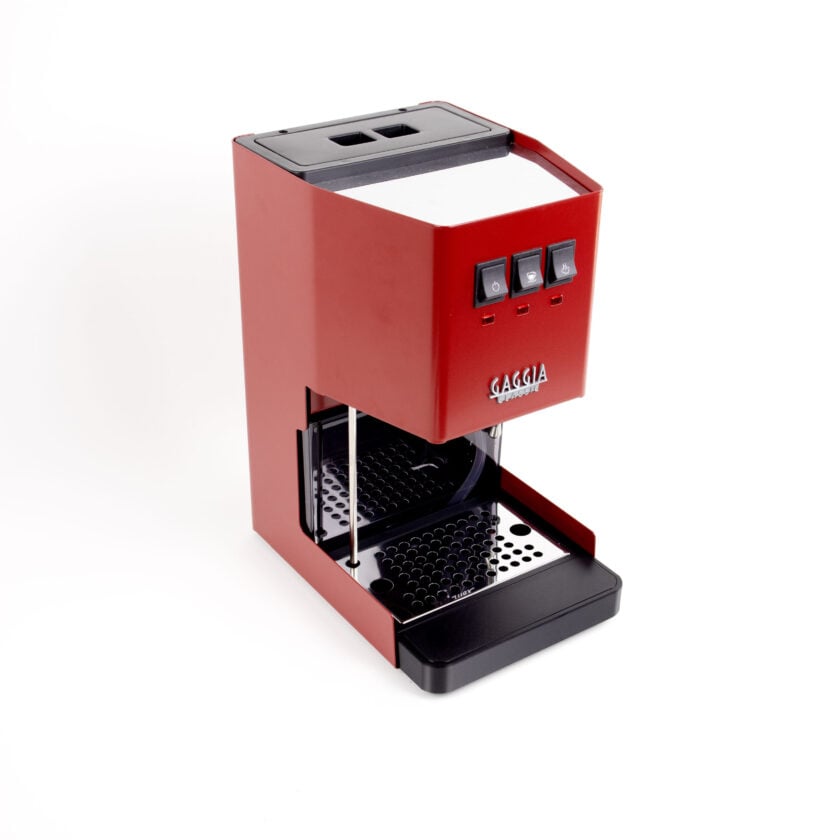



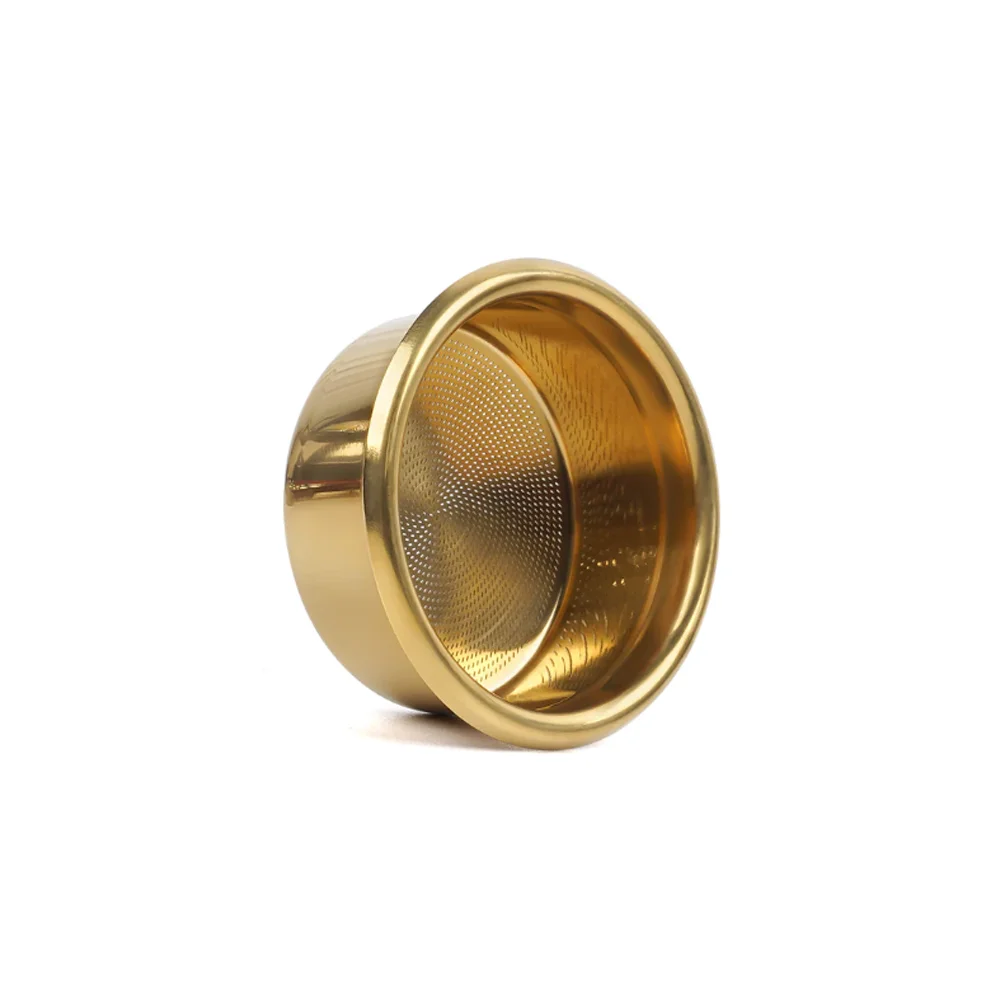
The transition from a standard spouted portafilter to a naked, or bottomless, portafilter is a significant step for any serious home barista. While aesthetically pleasing, its primary function is not for show. For users of manual and semi-automatic machines like the Gaggia Classic Pro, the naked portafilter is an indispensable diagnostic tool. It provides a raw, unfiltered view of the extraction process, revealing the direct consequences of your puck preparation and grind settings. This transparency is crucial for understanding the physics of espresso extraction, allowing you to identify flaws that a spouted portafilter would otherwise conceal. By learning to interpret these visual cues, you can move from guesswork to a deliberate, methodical approach to improving shot quality.
The unfiltered view: What a naked portafilter reveals
A standard spouted portafilter funnels the extracted espresso into one or two streams, effectively hiding what occurs at the bottom of the filter basket. This process can average out a poorly extracted shot, masking underlying issues and delivering a deceptively uniform stream. The naked portafilter, by removing the bottom and spouts, exposes the entire surface of the basket. This allows you to observe the extraction from the very first drop to the final blonding.
In an ideal extraction, you will observe several distinct stages:
- Initial bead formation: After a few seconds of preinfusion or pump engagement, dark, viscous droplets of espresso should begin to appear evenly across the entire bottom of the basket at roughly the same time.
- Cone formation: These droplets will quickly coalesce into a single, stable stream in the center of the basket. The flow should be steady and without sputtering.
- Color and consistency: The stream should have a deep, rich, reddish-brown color, often with darker streaks known as “tiger striping.” This indicates a well-developed extraction of oils and solids.
Observing this process provides an immediate feedback loop. Any deviation from this ideal sequence points to a specific problem in your puck preparation or brewing parameters.
Diagnosing the stream: Common extraction flaws
The most common issue revealed by a naked portafilter is channeling. Channeling occurs when water finds a path of least resistance through the coffee puck, over-extracting from that channel while under-extracting from the surrounding denser areas. This results in a shot that is simultaneously bitter and sour.
Visually, channeling manifests in several ways:
- Jets and spurts: Fine, high-velocity streams of espresso may shoot out from the basket. These “spritzers” are a clear sign of a significant channel. –
- Blond spots: You may notice areas of the stream becoming pale or watery much faster than others. This indicates that water has exhausted the coffee solids in that specific path. –
- Asymmetrical flow: If the espresso flow begins heavily on one side of the basket before migrating to the center, it suggests an uneven bed density or an unlevel tamp. –
- Dead zones: Conversely, you might see dry spots on the basket where no extraction occurs at all, indicating a pocket of coffee so dense that water cannot penetrate it effectively.
Each of these signs points away from a uniform, homogenous extraction and toward a flawed one that compromises flavor clarity.
Puck preparation: The foundation of a clean extraction
Nearly all issues identified with a naked portafilter originate from inadequate puck preparation. An even and consistent coffee bed is the primary goal, ensuring that water flows through all parts of the puck at the same rate. The main pillars of puck preparation are distribution and tamping.
Distribution is the process of arranging the coffee grounds in the basket to have a uniform density. Grinders often produce clumps and create a mound of grounds in the center of the basket. If left unaddressed, these inconsistencies create high- and low-density areas, which are prime locations for channels to form. Techniques like the Weiss Distribution Technique (WDT), which involves using fine needles to break up clumps and evenly distribute the grounds, are highly effective at creating a homogenous puck.
Tamping compacts the grounds into a firm puck. The primary objective is not simply pressure, but creating a perfectly level surface. An uneven tamp results in a puck of varying depth and density. Water will naturally flow faster through the shallower, less dense side, leading to an uneven extraction that is easily visible as a lopsided flow from a naked portafilter.
From diagnosis to solution: Adjusting your technique
Learning to read the visual cues from the extraction allows you to make targeted adjustments. Instead of changing variables randomly, you can address the specific root cause of the problem. A systematic approach is most effective for dialing in your espresso.
The following table provides a basic framework for troubleshooting:
| Visual Cue | Likely Cause | Suggested Adjustment |
|---|---|---|
| Flow starts too fast; stream is pale (blonding) | Grind is too coarse | Adjust your grinder to a finer setting. |
| Jets or “spritzers” appear during extraction | Channeling due to poor distribution | Improve your distribution technique (e.g., WDT). |
| Flow starts on one side of the basket | Unlevel tamp or uneven distribution | Focus on a perfectly level tamp; ensure grounds are evenly spread before tamping. |
| Shot chokes; flow is very slow or drips | Grind is too fine or dose is too high | Adjust your grinder to a coarser setting or slightly reduce the amount of coffee used. |
Conclusion
The naked portafilter transforms espresso making from a black box into a transparent process. For the Gaggia user dedicated to mastering their craft, it is not an accessory but a fundamental tool for learning and improvement. It demands precision in puck preparation but repays the effort with immediate, actionable feedback. By observing the evenness of the initial flow, the formation of a central cone, and the color of the stream, you can diagnose issues with distribution, tamping, and grind size. Mastering these variables is the key to unlocking the full potential of your espresso machine and achieving consistently balanced, flavorful shots. For those looking to refine their workflow, quality preparation tools are available at papelespresso.com.