
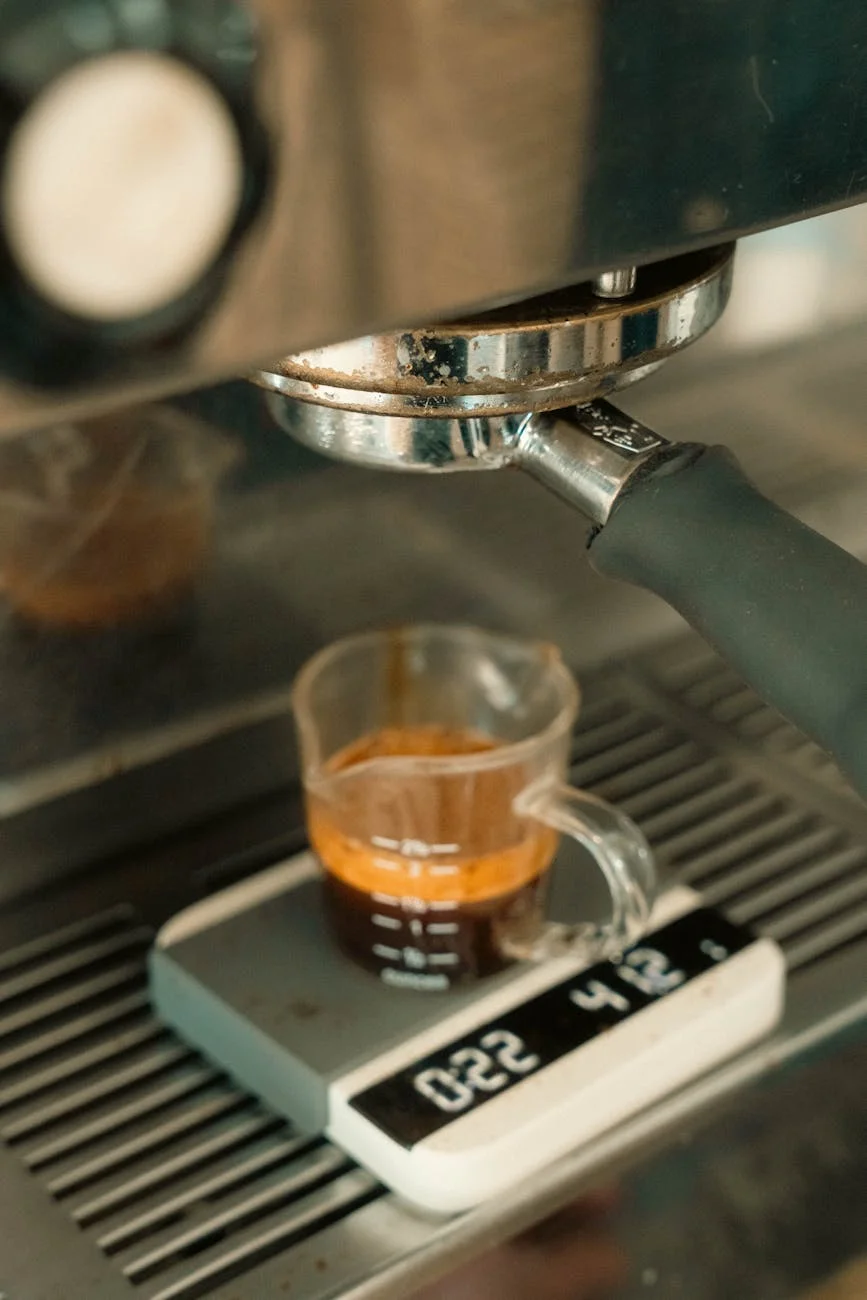
Brew like a pro: How a digital scale unlocks espresso consistency
For any home barista, the pursuit of the perfect espresso shot can feel like a frustrating game of chance. One day you pull a rich, syrupy, and beautifully balanced shot, and the next, it’s a sour, watery disappointment. This maddening inconsistency often stems from a lack of precision in the brewing process. While many focus on expensive grinders or machines, the single most impactful and affordable tool you can add to your arsenal is a simple digital scale. This article will explore why weighing your coffee is non-negotiable for achieving repeatability. We will delve into how to use a scale to control your dose, master your brew ratio, and use time as a diagnostic tool, transforming your guesswork into a reliable recipe for delicious espresso, every single time.
Beyond the scoop: The critical role of weighing your dose
The journey to consistent espresso begins before you even touch the machine. It starts with the amount of coffee you put in your portafilter basket, a variable known as the “dose”. Many beginners use volumetric scoops, but this is a major source of inconsistency. Why? Because the density of coffee beans varies significantly. A scoop of a dark, oily roast will weigh considerably less than the same scoop of a dense, light roast. Factors like the bean’s origin, processing method, and even its age can alter its weight-to-volume ratio.
Relying on a scoop means your dose could be off by several grams from one day to the next, which is a massive variable in the world of espresso. By using a digital scale with 0.1g precision, you eliminate this guesswork. Weighing your ground coffee ensures that the foundational element of your recipe—the amount of coffee being extracted—is exactly the same for every shot. This creates a stable baseline from which you can make other adjustments, knowing that your dose isn’t the culprit for a bad-tasting coffee.
Mastering the brew ratio for flavor control
Once you have a consistent dose, the next step is to control the amount of liquid espresso in your cup, known as the “yield”. The relationship between your dry coffee dose and your liquid espresso yield is called the brew ratio, and it is the primary lever you have for controlling the strength and flavor profile of your shot. Measuring yield by volume in a shot glass is just as inaccurate as using a scoop for your dose, as crema can take up a significant and variable amount of space.
By placing your cup on a scale on the drip tray and taring it to zero before you start the extraction, you can weigh the liquid espresso in real-time. This allows you to precisely hit your target yield. Common brew ratios include:
- Ristretto: A 1:1 to 1:1.5 ratio (e.g., 18g dose to 18g-27g yield). Tends to be concentrated, syrupy, with a heavy body and muted acidity.
- Normale: A 1:2 to 1:2.5 ratio (e.g., 18g dose to 36g-45g yield). This is the industry standard, aiming for a balance of sweetness, acidity, and bitterness.
- Lungo: A 1:3 or higher ratio (e.g., 18g dose to 54g+ yield). Results in a lighter-bodied, less intense shot that can highlight more delicate flavors but also risks over-extraction.
Controlling your brew ratio with a scale gives you the power to replicate a shot you love or intentionally alter it to change the taste, moving from random chance to deliberate creation.
Using time as your diagnostic tool
With a consistent dose and a target yield, you now have two of the three core variables of an espresso recipe locked in. The third is time. The total time it takes for your target yield to be extracted is a crucial indicator of whether your grind size is correct. Most quality coffee scales include a built-in timer, allowing you to monitor all three variables at once. A general target for a standard “normale” shot is between 25-35 seconds.
Think of time not as a target itself, but as feedback. If your dose and yield are correct, time tells you about the extraction:
- Shot is too fast (e.g., under 20 seconds): Your grind is likely too coarse. Water is passing through the coffee puck too easily, leading to under-extraction and a sour, acidic taste. Solution: Adjust your grinder to a finer setting.
- Shot is too slow (e.g., over 40 seconds): Your grind is likely too fine. Water is struggling to get through the puck, leading to over-extraction and a bitter, harsh taste. Solution: Adjust your grinder to a coarser setting.
This trifecta—dose, yield, and time—is the language of espresso. A scale allows you to read it perfectly.
| Problem | Observed Time (for 18g in, 36g out) | Likely Cause | Solution |
|---|---|---|---|
| Sour, weak, acidic taste | 18 seconds | Under-extraction (Grind too coarse) | Make grind finer |
| Balanced, sweet, pleasant | 30 seconds | Ideal extraction | Keep settings the same |
| Bitter, harsh, burnt taste | 45 seconds | Over-extraction (Grind too fine) | Make grind coarser |
Choosing the right scale for your workflow
Not all digital scales are created equal, especially for the demands of espresso. When choosing a scale, there are a few key features to look for. First and foremost are accuracy and responsiveness. You need a scale that measures in 0.1-gram increments and responds quickly to the flow of espresso so you can stop the shot at the right moment. The size of the scale is also critical; it must be small enough to fit on your machine’s drip tray, underneath the group head and portafilter. Given the environment, water resistance is a highly desirable feature to protect your investment from inevitable splashes and spills. Finally, a built-in timer is essential, as it allows you to monitor yield and time simultaneously on one display, streamlining your workflow immensely.
The investment in a proper coffee scale is minimal compared to the cost of a grinder or espresso machine, but its impact on your coffee quality is arguably just as significant. It is the tool that ties all the other elements together.
Conclusion
Moving from inconsistent, frustrating espresso to consistently delicious shots is not about magic; it’s about methodology. A digital scale is the key that unlocks this methodology. By meticulously weighing your dose, you create a stable foundation for every single brew. By measuring your yield, you gain direct control over the strength and flavor profile through the brew ratio. And by monitoring the extraction time, you receive clear, actionable feedback on how to adjust your grind for a balanced extraction. The scale transforms the abstract art of “dialing in” into a concrete science. It’s a small, one-time investment that pays daily dividends in quality, removing guesswork and empowering you to replicate your best shots and diagnose your bad ones with confidence.

 No products in the cart.
