


Finding the ideal pre-infusion pressure for high-extraction shots
For the dedicated manual espresso enthusiast, the pursuit of a perfect shot is a study in variables. While grind size, dose, and temperature are foundational, pre-infusion has emerged as a critical frontier for maximizing extraction and refining flavor. This is especially true for those targeting high-extraction shots, where the goal is to pull more soluble compounds from the coffee without introducing astringency. Understanding and controlling the pressure during this initial wetting phase is not merely a tweak; it is a fundamental technique that unlocks the ability to grind finer, saturate the coffee bed more evenly, and ultimately, produce a sweeter, more complex, and more transparent cup. This article explores the mechanics and application of pre-infusion pressure for the advanced home barista.
The purpose of pre-infusion in extraction
At its core, pre-infusion is the process of gently saturating the puck of coffee grounds with low-pressure water before applying the full nine bars (or more) of extraction pressure. Its primary purpose is to mitigate channeling, which occurs when water finds a path of least resistance and unevenly extracts the coffee. A dry, compressed puck of coffee is initially resistant to water. Applying high pressure immediately can fracture the puck, creating micro-channels that lead to a shot that is simultaneously sour and bitter.
By introducing water at a low pressure, typically between one and four bars, the coffee grounds are allowed to swell and settle. This helps to create a more uniform and cohesive bed, ensuring that when the full extraction pressure is applied, the water flows through it evenly. This improved puck integrity is the first step toward achieving a higher, more uniform extraction.
Relating pre-infusion pressure to grind size
The true power of controlled pre-infusion lies in its relationship with grind size. A key principle of extraction is that a larger surface area allows for more efficient dissolving of coffee solids. Grinding finer increases this surface area, but it also increases the puck’s resistance to water flow. Without proper pre-infusion, a very fine grind can easily choke a machine or lead to severe channeling under high pressure.
A gentle, low-pressure pre-infusion minimizes this resistance. It allows water to slowly and fully permeate the tightly packed grounds, pre-saturating the entire bed. Once the puck is saturated, its resistance to flow is more uniform, allowing the barista to apply full pressure without creating immediate channels. This technique enables the use of a significantly finer grind than would be possible with a conventional high-pressure start, directly facilitating a higher extraction yield while maintaining or even improving shot quality.
Pressure profiling: from saturation to extraction
Finding the ideal pre-infusion pressure is not about a single number, but about understanding a profile. The process can be broken into stages:
- Initial wetting: This stage involves pressures as low as one bar. The goal is simply to wet the grounds without causing any significant puck compression or flow. This is often done until the first drops appear on the bottom of the portafilter.
- Puck saturation (or “blooming”): Following the initial wetting, the pressure might be held or allowed to slowly rise to between two and four bars. This stage allows the coffee to fully absorb the water and release trapped CO2. The duration of this hold can vary, from a few seconds to over thirty seconds, depending on the coffee’s roast level and age.
- Ramping to full pressure: Once the puck is saturated, the pressure is ramped up to the target extraction pressure (e.g., nine bars). A slow, controlled ramp is often preferred as it minimizes the risk of disturbing the stabilized puck.
The ideal pressure and duration for each stage depend on the coffee and the desired flavor profile. Lower pressures and longer holds tend to mute acidity and enhance sweetness and body, which can be beneficial for light-roasted, dense coffees.
Techniques for measuring and controlling flow
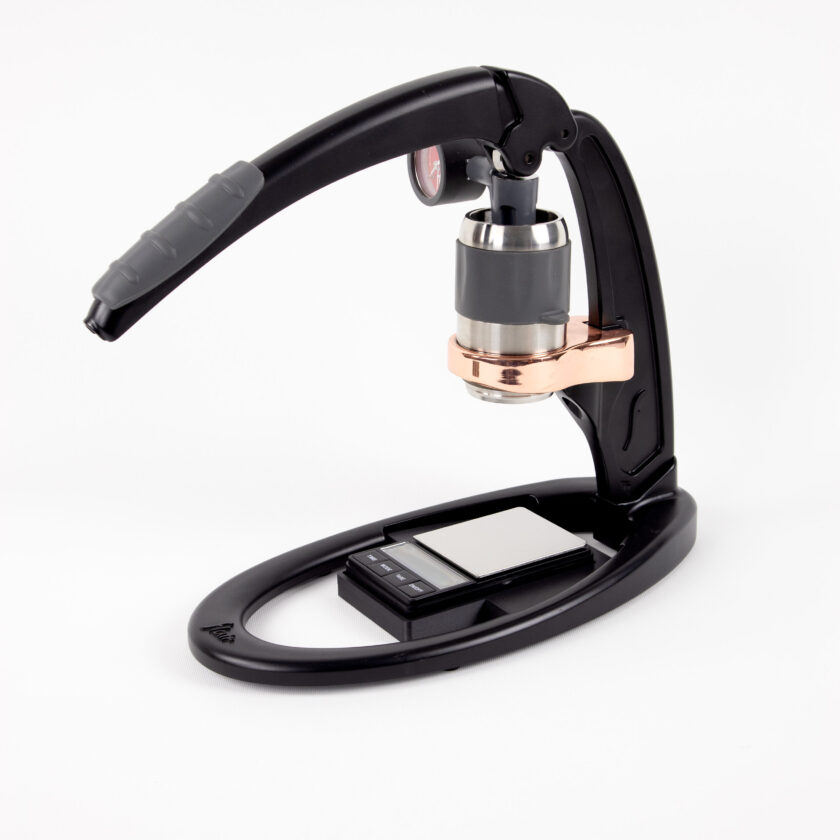
For manual and lever espresso machine users, control over pre-infusion is often inherent in the design. However, consistency requires measurement. An external pressure gauge that fits onto the portafilter can provide real-time feedback, allowing the barista to see the pressure at the puck during pre-infusion and extraction. This data is invaluable for developing repeatable profiles.
Another approach is to focus on flow rate rather than pressure. By controlling the valve on a manual machine to allow a very slow, specific flow rate (e.g., 2-3 mL/second) during pre-infusion, the barista can achieve consistent puck saturation regardless of the initial pressure reading. This method ensures that the puck is saturated in a repeatable manner shot after shot, which is crucial for dialing in a coffee and achieving consistently high extractions.
How pressure affects puck saturation
The pressure applied during pre-infusion directly impacts how water interacts with the coffee grounds. Different pressure levels create distinct conditions within the puck.
- 1–3 bars: At this very low pressure, water can slowly and evenly permeate the dry grounds. Resistance from the puck is minimal, allowing water to fill all the empty spaces without compressing the puck or dislodging fine particles. This gentle introduction is crucial for preventing early channel formation, especially with very fine grinds. This range is ideal for establishing a fully saturated puck before ramping up pressure.
- 4–6 bars: As pressure increases into this mid-range, the puck begins to offer more resistance. The bed of coffee is fully saturated and slightly compressed, creating a more uniform barrier for the water to pass through. Some espresso profiling techniques use this range as the peak pre-infusion pressure, holding it until the first drops appear on the spouts before moving to the final extraction pressure.
In contrast, applying the full nine bars of pressure instantly can shock the puck, causing it to fracture or compact unevenly. This abrupt force often leads to immediate channeling and a less-than-optimal extraction.
The relationship between pressure, grind, and time
The true power of mastering pre-infusion lies in its relationship with your grinder settings. A long and gentle pre-infusion allows you to use a much finer grind size than would be viable for a standard shot. This finer grind exposes more coffee surface area to water, which is the key to achieving higher extraction yields.
Consider this systematic approach:
- Grind finer: Start by adjusting your grinder to a setting that would typically choke a standard, straight nine-bar shot.
- Apply low pressure: Begin the extraction with a low pre-infusion pressure, targeting 2–3 bars. The goal is to keep the pressure low and stable.
- Observe and wait: Hold this low pressure until you see the first drops of espresso appear at the bottom of the basket. This may take anywhere from 10 to 20 seconds, much longer than a typical shot. This extended time confirms the puck is fully saturated.
- Ramp to full pressure: Once saturation is achieved, smoothly increase the pressure to your target for the main extraction phase, typically between seven and nine bars.
- Evaluate the shot: The total shot time will likely be longer, perhaps 35–45 seconds. The key is to evaluate the taste. The resulting shot should be sweet, clear, and complex, not bitter or astringent. If it runs too quickly, grind even finer.
Conclusion
Mastering pre-infusion pressure is a significant step toward achieving exceptional espresso. By moving beyond a simple on/off application of pressure, the experienced barista can unlock the potential to grind finer, extract more, and achieve a greater level of control over the final flavor profile. It transforms the process from a brute-force extraction into a more nuanced and deliberate infusion. The key is to treat pre-infusion not as a preliminary step, but as an integral part of the extraction itself, one that requires careful management of pressure and flow. For those looking to refine their technique, the right tools can aid in developing the necessary consistency, and a range of such equipment can be explored at papelespresso.com.