
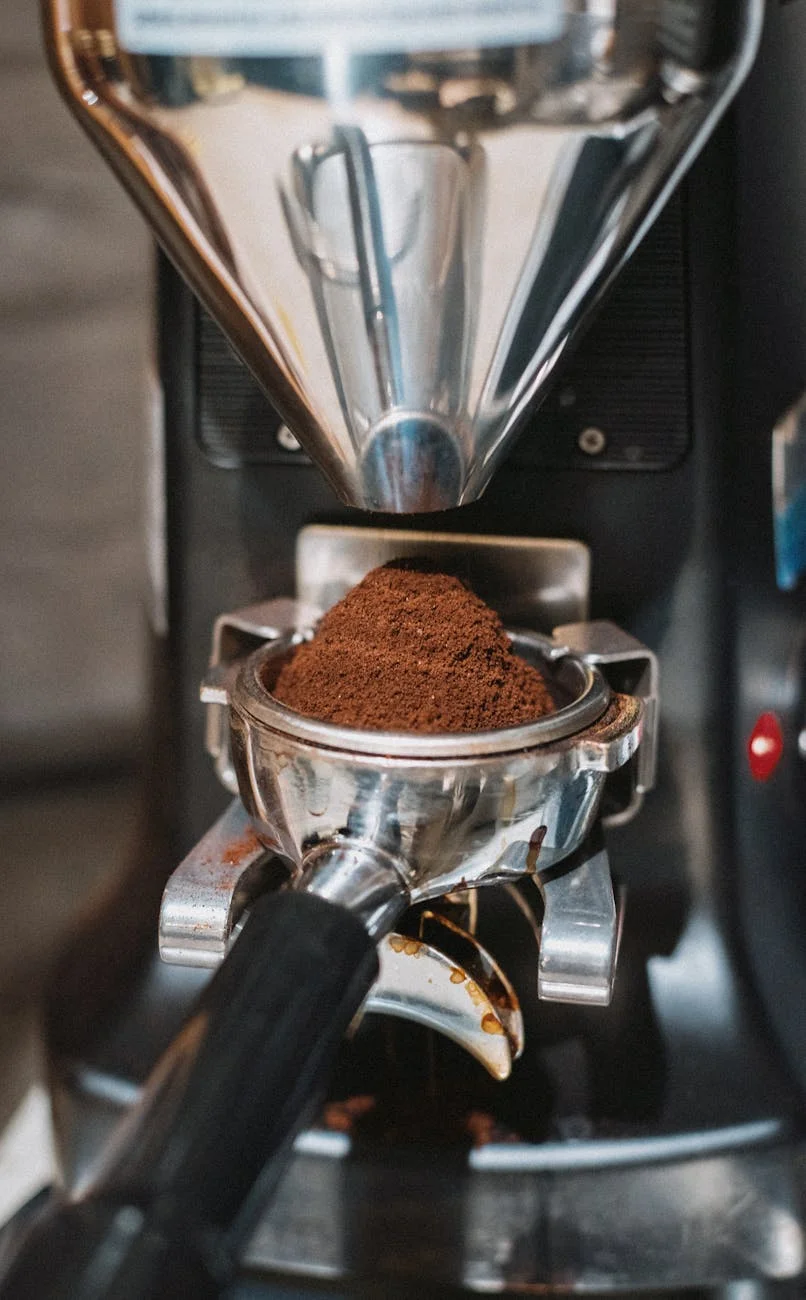
In the quest for the perfect espresso, we often obsess over the freshest beans, the most precise scales, and the shiniest espresso machines. We meticulously weigh our dose, perfect our tamping technique, and time our shots to the second. Yet, a common source of frustration remains: inconsistent shots that swing from sour to bitter with no clear reason. The culprit is often hiding in plain sight, inside the coffee grinder itself. Burr alignment, a seemingly minor mechanical detail, is one of the most critical and frequently overlooked factors influencing espresso extraction. This article will delve into what burr alignment is, how it creates a domino effect from the grinder to your cup, and why it is the key to unlocking true flavor clarity and consistency.
What is burr alignment?
At its core, burr alignment refers to the physical orientation of the two burrs inside your coffee grinder. One burr is stationary, while the other rotates. For an ideal grind, the surfaces of these two burrs must be perfectly parallel to each other at every point. Imagine two perfectly flat plates; when you bring them together, their entire surfaces should touch simultaneously. This parallelism ensures that the distance, or gap, between the burrs is uniform all the way around.
When burrs are misaligned, they are tilted in relation to one another. This means the gap is wider on one side and tighter on the other. This seemingly small imperfection has a monumental impact on the coffee grounds your grinder produces. While both flat and conical burrs can suffer from misalignment, the effect is often more pronounced and easier to diagnose in flat burr grinders, where maintaining a perfectly even plane is critical for performance.
The chain reaction of misalignment: From grind to extraction
A misaligned grinder sets off a chain reaction that compromises the entire brewing process, starting with the coffee grounds themselves. The goal of a good grinder is to produce coffee particles of a relatively uniform size, a concept known as a unimodal particle size distribution. This means most particles are clustered around your target grind size.
Misalignment shatters this uniformity. The wider section of the burr gap allows large, coarse particles (boulders) to pass through, while the tighter section grinds beans excessively fine, creating dust-like particles (fines). The result is a chaotic mix of particle sizes. When you try to pull a shot with this inconsistent grind, you invite disaster:
- Channeling: Pressurized water is lazy; it will always seek the path of least resistance. It will rush through the areas with coarse particles, under-extracting them and creating sour, weak flavors.
- Over-extraction: Simultaneously, the areas packed with fines will resist water flow, causing the water to sit too long and over-extract them. This contributes harsh, bitter, and astringent notes to the cup.
You are left with a shot that is simultaneously under-extracted and over-extracted—a phenomenon that is impossible to fix by simply adjusting the grind setting finer or coarser. You are fighting a losing battle against the grinder’s flawed output.
Tasting the difference: How alignment shapes flavor consistency
The technical problems of uneven extraction translate directly into the flavors you experience. An espresso pulled from a well-aligned grinder is a study in clarity and balance. The flavors are distinct and separated, allowing you to taste the delicate floral notes of a washed Ethiopian bean or the deep chocolate tones of a Brazilian one. The sweetness is pronounced, acidity is bright and pleasant, and the finish is clean. Most importantly, it is repeatable. Once you dial in your recipe, you can pull delicious shot after delicious shot.
In stark contrast, espresso from a misaligned grinder is often described as “muddy” or “confused.” The clash of sourness from under-extraction and bitterness from over-extraction cancels out any potential for clarity or sweetness. The resulting cup is flat, uninspiring, and often has a lingering, unpleasant astringency. This inconsistency makes dialing in impossible. You might get one decent shot, but the next three will be wildly different, leading to frustration and wasted coffee.
Identifying and addressing misalignment
How can you tell if your grinder is the source of your espresso woes? There are a couple of simple diagnostic tests you can perform. The most common is the “marker test.”
The Marker Test Steps:
- Unplug your grinder and remove the top burr.
- Thoroughly clean both burrs of any coffee grounds.
- Using a dry-erase marker, color the outer cutting edge of the stationary (or top) burr.
- Reassemble the grinder and, with it still unplugged, carefully turn the adjustment collar to bring the burrs closer until they just barely touch (you may hear a faint chirp).
- Rotate the burrs by hand just a fraction of a turn.
- Disassemble again and inspect the marker ink. If the ink is wiped off evenly all the way around, your alignment is good. If it’s only wiped off on one side, you have a misalignment.
Fixing misalignment often involves placing small, precisely cut shims of aluminum foil under the stationary burr on its “low” side to lift it up. This is an advanced tweak that requires patience, but it can transform a mid-range grinder into a high-performance machine. For those less mechanically inclined, seeking professional help or checking manufacturer resources is recommended.
| Characteristic | Well-Aligned Burrs | Misaligned Burrs |
|---|---|---|
| Grind Distribution | Uniform, mostly one size (unimodal) | Inconsistent, mix of fine and coarse |
| Extraction | Even and controlled | Uneven, prone to channeling |
| Flavor Profile | Clear, sweet, balanced, distinct notes | Muddy, both sour and bitter, muted flavors |
| Shot Consistency | High repeatability and predictability | Unpredictable, shots vary wildly |
| Dialing-In Process | Straightforward and logical | Frustrating and often impossible |
In conclusion, burr alignment is far more than an abstract engineering concept; it is the bedrock of consistent, high-quality espresso. It directly governs the uniformity of your coffee grounds, which in turn dictates the evenness of your extraction. As we’ve seen, a misalignment creates a chaotic mix of particle sizes, leading to channeling and a confused cup that is both sour and bitter. By ensuring your burrs are perfectly parallel, you provide the foundation for achieving flavor clarity, pronounced sweetness, and the shot-to-shot repeatability every barista dreams of. If you feel you’ve hit a wall in your espresso journey, it’s time to stop looking at your machine and start looking inside your grinder. Perfecting its alignment might just be the final step to unlocking your coffee’s true potential.


 No products in the cart.
