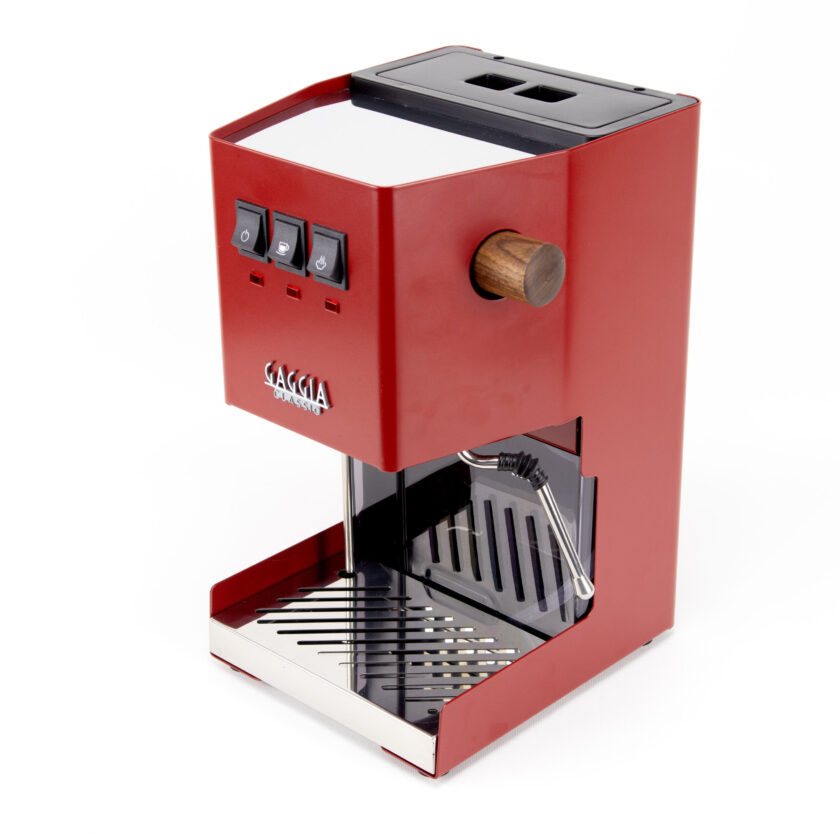



The Gaggia Anima is a capable super-automatic espresso machine engineered for convenience and consistency, excelling with medium to dark roast coffees that are forgiving and easily extracted. However, for home baristas accustomed to manual espresso preparation, using light roast beans in such a machine presents a distinct and interesting challenge. Light roasts are physically harder, less porous, and require more thermal energy and a finer grind to properly extract their complex, acidic, and often delicate flavor profiles. This article provides a technical guide for experienced users looking to optimize the Gaggia Anima’s performance and unlock the potential of light roast coffee, moving beyond the machine’s default capabilities through a methodical approach.
Understanding the core limitations
To effectively optimize the Gaggia Anima for light roast coffee, it is essential to first understand the machine’s inherent design limitations. Unlike a manual setup where every variable is independent, the Anima operates within a set of pre-defined parameters that are interconnected. The primary constraints are the grinder, brew temperature, and dosing mechanism.
The Anima is equipped with a ceramic flat burr grinder with five stepped settings. While durable and suitable for traditional espresso roasts, its finest setting may not be sufficient for the density of many light roast beans. This can lead to a faster-than-ideal shot flow and subsequent under-extraction, resulting in sourness and a lack of body. The brew group’s temperature is adjustable across three levels, but its maximum setting may still fall short of the 94–96°C (201–205°F) often required to properly break down the cellular structure of light roast beans and extract their nuanced acidity and sweetness. Finally, the machine’s automatic dosing system, while consistent, offers a limited range that cannot be fine-tuned with the precision of a manual workflow, making it harder to manipulate brew ratios effectively.
Calibrating the grinder and aroma strength
The most impactful adjustments you can make are to the grinder and the coffee dose, which the Anima refers to as “Aroma Strength.” These two settings work together to control puck resistance and influence extraction time.
First, adjust the grinder to its finest setting. It is critical to only adjust the grinder while it is in operation to prevent the burrs from locking or sustaining damage. To do this, initiate a brewing cycle and, as the beans are grinding, turn the adjustment knob inside the hopper to the smallest dot. This single adjustment is the foundation for improving light roast extraction.
Next, set the Aroma Strength to its maximum level (five beans). This setting controls the volume of beans ground for each shot. Using a higher dose increases the amount of coffee in the brew chamber, creating a more compact puck. This added density helps to slow down the flow of water, increasing contact time and compensating for a grind that may still be slightly too coarse. A lower dose with a coarse grind would result in a soupy, under-extracted puck. By maximizing both grind fineness and dose, you establish the best possible foundation for extraction within the machine’s capabilities.
Temperature, volume, and pre-infusion
With the grind and dose optimized, the next step is to manage thermal energy and shot volume. Light roasts are highly sensitive to temperature, and insufficient heat will fail to unlock their full aromatic potential.
Navigate the machine’s menu to set the coffee temperature to its highest level. While the machine does not display a specific temperature, this setting ensures the thermoblock is aiming for its maximum output. However, this alone is not enough. A thorough pre-heating routine is crucial for thermal stability:
- Flush the system by running a blank shot of hot water through the brew spout. This heats the internal brewing components.
- Use the hot water function to fill and warm your cup before brewing.
This routine minimizes heat loss as the espresso is brewed, ensuring the slurry temperature is as high and stable as possible. Further control can be achieved by programming the shot volume. Enter the programming mode by pressing and holding the espresso button until the machine begins to brew and a “MEMO” icon appears. Stop the shot when you have reached your desired volume (or weight, if using a scale) by pressing the button again. For light roasts, aiming for a slightly longer brew ratio, such as 1:2.5 or 1:3, can sometimes help increase extraction yield and balance the acidity, though this depends heavily on the specific bean.
Bean selection and puck analysis
Even with a perfectly tuned machine, bean choice remains paramount. Not all light roasts are suitable for a super-automatic machine. Look for beans that are specifically described as being developed for espresso. These roasts are often taken a touch further in development, increasing their solubility and making them more cooperative. Extremely dense, high-altitude beans, often found in “Nordic style” roasts, will likely prove too challenging for the Anima’s grinder, regardless of settings.
A useful diagnostic tool is the bypass doser. By using a high-quality external grinder to prepare a dose of the same light roast beans, you can isolate the machine’s grinder as the primary variable. If the shot quality improves dramatically with pre-ground coffee, it confirms that the built-in grinder is the main limitation. This also provides a practical workaround for enjoying specific beans that the Anima cannot otherwise handle.
Finally, pay attention to the spent coffee pucks. Even with a high dose, a puck from a light roast may be slightly softer than one from a dark roast. However, it should still be relatively cohesive. If the puck is soupy, watery, and falls apart easily, it is a clear indicator of significant channeling and under-extraction, suggesting the grind and dose combination is insufficient to create proper resistance.
Understanding the core challenge: bean density and extraction
The primary obstacle when using light roast coffee in any espresso machine, especially a super-automatic, is the physical nature of the bean itself. During the roasting process, coffee beans lose moisture and become more porous and brittle as they darken. Light roast beans are roasted for a shorter duration, retaining more of their original density and hardness. This physical difference has two major consequences for extraction.
First, grinding dense beans is more demanding on the grinder. The Anima’s built-in ceramic burr grinder may struggle to achieve the fine, consistent particle size required for a proper light roast extraction. Second, the cellular structure of a light roast bean is less porous, making its flavor compounds less soluble. To properly extract the desirable sweetness and acidity, a finer grind, higher water temperature, and potentially a longer contact time are necessary. Super-automatic machines are often factory-calibrated for the opposite scenario: softer, more soluble dark roast beans that extract easily. Pushing the Anima beyond these baseline parameters is essential.
Programming espresso parameters: aroma, temperature, and volume
Beyond the grind, the Anima offers three key programmable variables that directly influence extraction quality. Methodical adjustment of these settings is required to compensate for the less soluble nature of light roast coffee.
- Aroma Strength: This setting controls the coffee dose, or the amount of beans ground for each shot. Light roasts often benefit from a slightly higher dose to increase the body of the shot and help balance their characteristic acidity. It is recommended to start with the highest aroma setting (represented by five beans on the display) to maximize the dose.
- Temperature: Higher brewing temperatures increase the rate of extraction, which is crucial for pulling sweetness and complexity from light roasts. The Anima’s temperature can be adjusted through its programming menu. Setting the temperature to the maximum available level is a necessary step for these beans.
- Brew Volume: The final yield, or the total volume of the liquid espresso, is a critical factor in determining the final taste. Instead of relying on default volumes, it is better to program the machine to deliver a specific brew ratio. A common starting point for light roast espresso is a ratio of 1:2.5 (e.g., 10 grams of coffee dose yielding a 25-gram liquid shot). Program the espresso button to stop the water flow once your target weight or volume is reached to maintain shot-to-shot consistency.
Below is a table with suggested starting parameters for a typical light roast bean.
| Parameter | Recommended Setting | Rationale |
|---|---|---|
| Grind Setting | Finest setting, or use bypass doser | Maximizes surface area for proper extraction of dense beans. |
| Aroma Strength (Dose) | Highest (5/5 beans) | Increases coffee solids to balance acidity and enhance body. |
| Temperature | Maximum | Improves solubility of less-soluble flavor compounds. |
| Brew Ratio | 1:2.5 to 1:3 (e.g., 10g dose to 25-30g yield) | Allows for a more complete extraction, reducing sourness. |
Conclusion
Optimizing the Gaggia Anima for light roast coffee is an exercise in managing limitations with technical precision. The primary constraints are the grinder’s maximum fineness and the brew group’s peak temperature. By setting the grinder to its finest level, using the highest dose (Aroma Strength), and implementing a meticulous pre-heating routine, users can create an environment that pushes the machine’s extraction potential to its upper limit. Programming the shot volume provides an additional layer of control over the final brew ratio. While the Anima may never replicate the nuanced control of a fully manual espresso setup, a methodical and informed approach allows experienced baristas to produce surprisingly balanced and flavorful shots from light roast beans. For those dedicated to espresso, exploring the right techniques and tools is a continuous pursuit, and resources for such equipment are available from retailers like papelespresso.com.