

The Gaggia Anima is engineered for convenience, but its super-automatic design does not eliminate the need for diligent maintenance. Central to its operation is the removable brew group, a component that handles the core process of tamping, infusing, and discarding coffee pucks. For the experienced home barista, understanding the necessity of regular brew group rinsing is fundamental to achieving consistent espresso quality. This task, while simple, directly prevents the degradation of flavor and ensures the machine’s mechanical longevity. This article explores the technical reasons behind this crucial maintenance step, moving beyond basic cleaning instructions to detail its impact on both the final cup and the hardware itself.
Deconstructing the brew group’s role
The brew group is the heart of the Gaggia Anima. It is an intricate assembly of moving parts, including a piston, a brewing chamber, and a shower screen, that automates the espresso extraction process. When a brew cycle begins, ground coffee is dosed into the chamber. The piston assembly then moves to tamp the grounds to the correct density. Following this, heated water is forced through the integrated shower screen, saturating the coffee bed to perform the extraction. Once the shot is complete, the mechanism ejects the spent puck into an internal dreg box. Every part of this assembly is in direct, repeated contact with coffee grounds, oils, and water, making it a primary site for residue accumulation.
The unseen impact of coffee oils and fines
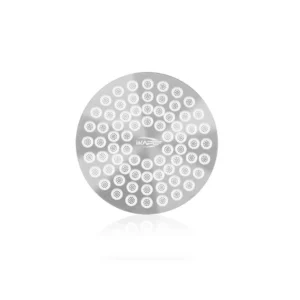
During every extraction, the brew group becomes coated with coffee fines—microscopic particles of ground coffee—and lipids, or coffee oils. While a single cycle leaves a negligible amount, the buildup over multiple shots is significant. Coffee oils are highly unstable and begin to oxidize almost immediately upon exposure to heat and air. This oxidation process turns the oils rancid, and the resulting residue imparts a distinctively acrid and stale flavor to any subsequent shots. This is often misdiagnosed as an issue with the beans or grind setting, when in reality, it is a problem of simple hygiene. The accumulation also creates a sticky film that can clog the mesh of the shower screen, obstructing the even flow of water and contributing to poor extraction.
A practical guide to effective rinsing
A proper rinsing routine is straightforward and requires no special tools. The primary goal is to use water to flush away the loose grounds and oily buildup before it hardens or oxidizes. For optimal performance, this should be done at the end of each day of use or approximately every 20-30 brew cycles.
- Power down: Always turn the machine off before attempting to remove internal components.
- Access and remove: Open the side service door. The brew group can be removed by pushing the prominent “PRESS” lever and pulling the unit straight out.
- Rinse thoroughly: Use lukewarm running water to rinse the entire assembly. Avoid soaps, detergents, or abrasive tools, as these can strip away the food-safe lubricant on the moving parts and potentially damage plastic components. Focus the water flow on the shower screen and the areas around the piston.
- Air dry: After rinsing, shake off excess water and allow the brew group to air dry completely before reinserting it into the machine. Reinserting it while wet can create a damp environment conducive to mold.
Long-term effects of an unrinsed brew group
Neglecting this simple task leads to a host of preventable issues. From a mechanical standpoint, the accumulation of dried coffee residue acts as an abrasive agent, increasing friction on the brew group’s moving parts. This places additional strain on the machine’s drive motor and gears, potentially shortening their operational lifespan. A clogged shower screen is another significant consequence. When the screen’s perforations are blocked, water pressure cannot be distributed evenly across the coffee puck. This forces water through the path of least resistance, a phenomenon known as channeling, which results in an espresso shot that is simultaneously under-extracted and bitter. In the most severe cases, the combination of moisture, warmth, and organic coffee matter can become a breeding ground for mold, posing a serious health and hygiene risk.
In conclusion, regular brew group rinsing is a non-negotiable aspect of maintaining a Gaggia Anima. It is a practice rooted in the principles of coffee chemistry and mechanical preservation. The procedure directly mitigates the primary causes of flavor degradation—rancid oils and trapped fines—while ensuring the machine can operate without undue mechanical stress. By incorporating this quick, daily rinse into your workflow, you protect the integrity of your espresso and the longevity of your equipment. This simple discipline is one of the key distinctions between a machine that merely functions and one that consistently produces high-quality results. Proper maintenance is foundational to performance, and for those seeking to maintain their equipment, various cleaning and maintenance tools are available from retailers like papelespresso.com.



 No products in the cart.
