


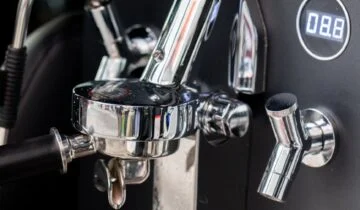
The iconic, polished chrome of the E61 group head is more than just a beautiful piece of espresso machine design; it’s a symbol of a revolutionary approach to coffee extraction. While its temperature stability is legendary, a less-discussed but equally crucial component is its internal pre-infusion chamber. This small, integrated space is the secret behind the smooth, forgiving, and rich extractions the E61 is famous for. For any home barista looking to move beyond just pulling a shot and into the realm of crafting exceptional espresso, understanding this mechanism is paramount. This article will delve into the mechanics of the E61 pre-infusion chamber, exploring how this classic piece of engineering works and its profound impact on every single shot you pull.
A brief history of the E61 innovation
To understand the pre-infusion chamber, we must first look at its context. Unveiled by Faema in 1961, the original E61 group head solved two major problems in espresso making at the time: temperature instability and harsh extractions. The first was solved with its famous thermosyphon system, which constantly circulates hot water through the massive brass group head to keep it at a stable brewing temperature. The second issue—harshness caused by hitting a dry puck of coffee with nine bars of pressure instantly—was solved through an ingenious mechanical design. Before the E61, most machines were direct-lever or used simple switches, offering little to no buffer for the coffee grounds. The E61’s design introduced a pause, a gentle beginning to the extraction process that changed the game for espresso quality and consistency.
The mechanics of a gentle start
The magic of E61 pre-infusion lies in its purely mechanical operation, which occurs in the first few seconds after you lift the brew lever. Unlike modern machines that might use complex electronics or solenoid valves, the E61 relies on a system of chambers, springs, and a cleverly designed cam.
Here’s a step-by-step breakdown of what happens:
- Lever Activation: When the barista lifts the brew lever, an internal cam opens a valve that allows water to flow from the boiler or heat exchanger into the group head. Crucially, at this stage, the pump is not yet fully engaged.
- Line Pressure Saturation: The water that enters the group is at line pressure (if the machine is plumbed in) or comes through via convection (on tank models), which is typically a low 3-4 bars. This low-pressure water begins to fill the “pre-infusion chamber,” the empty space within the group head just above the shower screen.
- Puck Saturation: As this chamber fills, the water gently trickles down through the shower screen and begins to saturate the dry coffee puck in the portafilter. This process allows the coffee grounds to swell and settle, creating a more uniform and stable structure.
- Pump Engagement: Only after this chamber is full and the pressure begins to build does the cam fully activate a microswitch that turns on the pump, delivering the full nine bars of pressure needed for extraction. This entire sequence happens over approximately 4-8 seconds.
This gradual pressure ramp-up is the core of the E61’s character. It ensures the coffee puck is never shocked by a sudden blast of high-pressure water, which is a leading cause of extraction problems.
The impact on espresso extraction and flavor
This mechanical grace period has a direct and tangible effect on the final cup. By allowing the coffee puck to be gently saturated before full pressure is applied, the E61’s pre-infusion chamber provides several key benefits. The most significant is the reduction of channeling. Channeling occurs when water finds a path of least resistance through the coffee puck, leading to uneven extraction—some grounds are over-extracted (bitter), while others are under-extracted (sour). Pre-infusion helps the coffee grounds swell and expand, sealing any micro-fractures from tamping and creating a more homogenous bed for the water to flow through evenly.
Furthermore, this gentle start promotes a more balanced flavor profile. By allowing the coffee to “bloom” slightly, similar to a pour-over brew, it can help release more delicate aromatic compounds. The result is often a shot with greater sweetness, more clarity of flavor, and a rounder, more pleasant mouthfeel. It also makes the extraction process more forgiving. Minor imperfections in distribution or tamping, which might ruin a shot on a machine with instant pressure, are often mitigated by the E61’s gentle pre-infusion.
Modern adaptations: From passive pre-infusion to active flow control
The inherent genius of the E61 design is that it remains relevant even six decades later. While the classic pre-infusion is a passive system—its duration and pressure are largely fixed—it laid the groundwork for modern advancements. Today, many E61 machines are retrofitted with flow control devices. These are essentially manual valves that allow the user to actively control the rate of water flowing into the pre-infusion chamber, giving them direct influence over the pre-infusion time and pressure.
This turns a passive system into an active one, allowing baristas to experiment with long, low-pressure pre-infusions for light roasts or different profiles for darker roasts. It’s an evolution of the original concept, giving the user even more control over the variables that create a perfect shot.
| Feature | Standard E61 Pre-infusion | E61 with Flow Control |
|---|---|---|
| Control Mechanism | Passive, determined by line pressure | Active, user-controlled via a manual valve |
| Pressure | Low (approx. 3-4 bar) | Variable, from a trickle to full line pressure |
| Duration | Relatively fixed (4-8 seconds) | Fully variable by the user |
| Main Benefit | Consistency and forgiveness | Ultimate control and experimentation |
The pre-infusion chamber is far more than just a hollow space within the E61 group head; it is the heart of its gentle and forgiving extraction process. This brilliant piece of 1960s engineering ensures that every coffee puck is perfectly prepped for full-pressure extraction by slowly and evenly saturating it with low-pressure water. The result is a significant reduction in channeling, a more balanced and nuanced flavor profile, and a much more forgiving shot-pulling experience for the barista. While modern flow control devices have expanded upon this principle, they stand on the shoulders of the original, passive system. Understanding this quiet, mechanical function is key to mastering the E61 and appreciating the timeless design that continues to define high-quality espresso.
 No products in the cart.