

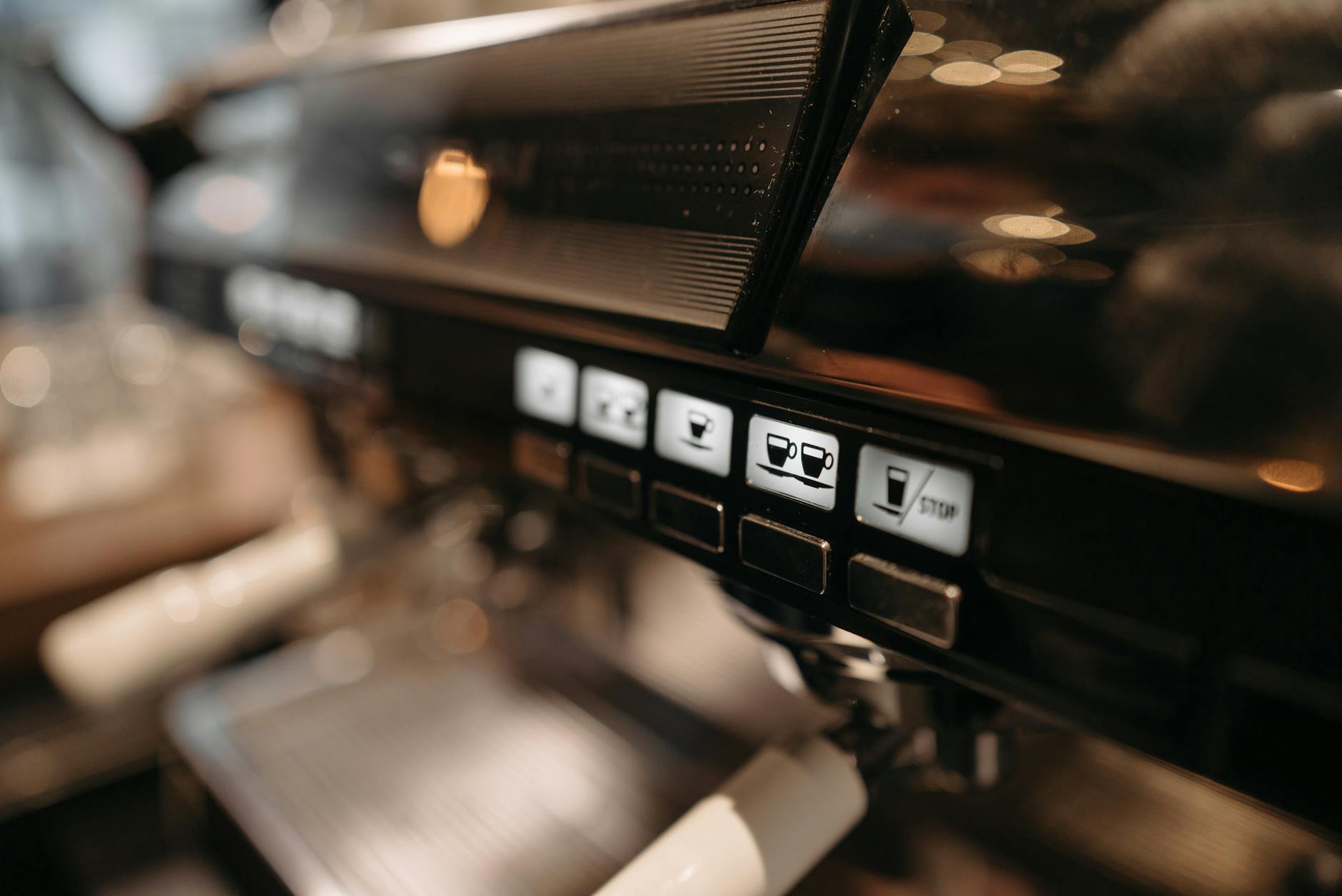
Why your PID-equipped Gaggia Classic still makes sour espresso
So you’ve taken the plunge and upgraded your Gaggia Classic with a PID controller. It was a significant investment of time and money, all in the pursuit of that perfect, syrupy, balanced shot of espresso. You now have rock-solid temperature stability, the kind professional baristas dream of. Yet, you pull a shot, and the taste is disappointingly familiar: a sharp, acidic sourness that puckers your lips. It can be incredibly frustrating. You solved the Gaggia’s biggest weakness, so why is your espresso still sour? This article will dive into the common culprits beyond brew temperature. We will explore why a PID is a powerful tool but not a magic bullet, and guide you through the other critical variables you must master.
The PID is a tool, not a cure-all
It’s crucial to first understand what a PID (Proportional-Integral-Derivative) controller actually does and, more importantly, what it doesn’t. A PID is an incredibly precise thermostat. It monitors the boiler’s temperature and makes constant, tiny adjustments to the heating element to keep the water within a fraction of a degree of your set target. This eliminates the wild temperature swings inherent in the Gaggia Classic’s stock thermostat, which is a massive step towards consistency. By ensuring your water is at, say, exactly 93°C when it hits the coffee, you have removed a huge variable from the espresso-making equation.
However, espresso extraction is a complex interplay of multiple factors. The PID only controls one of them: temperature. It has no control over your grind size, how you prepare the coffee puck, the pressure of the water, or the beans you are using. Think of it like putting a high-performance engine in a car but keeping the old, worn-out tires. The engine provides stable power, but if the other components aren’t up to the task, the car won’t perform well. Your PID provides a stable temperature foundation, but if your grind is wrong or your puck prep is sloppy, the result will still be a flawed shot.
Dialing in your grinder is still king
With temperature now a reliable constant, the most likely cause of sour espresso is under-extraction. Sourness is the hallmark taste of coffee acids that are extracted early in the brewing process. The sweet, complex flavors we want in espresso are derived from compounds that take longer to dissolve. If the shot runs too quickly, you are essentially just getting the first wave of sour flavors without giving the water enough time to extract the desirable sweetness to balance it out.
What causes a shot to run too quickly? Almost always, the answer is that your grind is too coarse. Water will blast through coarse grounds with little resistance, resulting in a gushing, pale shot that finishes in 10-15 seconds. To fix this, you must “dial in” your grinder:
- Make small adjustments: Move your grinder to a finer setting. The adjustments should be very small, as even a tiny change can have a big impact on shot time.
- Measure everything: Use a scale to weigh your dose of coffee going into the portafilter and the liquid espresso yield coming out. A great starting point is a 1:2 ratio. For example, if you use 18 grams of coffee, aim for 36 grams of espresso in the cup.
- Time the shot: Start your timer the moment you engage the pump. Aim for your target yield (e.g., 36g) to be reached in about 25-30 seconds.
If your shot is too fast, grind finer. If it’s too slow and tastes bitter, grind coarser. This process is the single most important skill in making good espresso, and your PID now gives you the stable baseline needed to do it effectively.
Puck preparation and the enemy of channeling
Let’s say you’ve found the perfect grind setting, but your shots are still inconsistent and sometimes sour. The next area to scrutinize is your puck preparation. Even with the right grind size, if the coffee grounds are not distributed evenly in the portafilter basket, water will exploit the weak spots. This phenomenon is called channeling.
Channeling occurs when water finds a path of least resistance—a crack or less dense area—and rushes through it, completely bypassing other parts of the coffee puck. This leads to a shot that is simultaneously under-extracted in the neglected areas (causing sourness) and over-extracted in the channel (causing bitterness). The final cup is a messy combination of both. To combat channeling:
- Distribute the grounds: After grinding into your portafilter, the grounds will likely be in a mound. Use a distribution technique like the WDT (Weiss Distribution Technique), which involves stirring the grounds with a tool made of fine needles to break up clumps and create a uniform, fluffy bed of coffee.
- Level the surface: Before tamping, ensure the surface of the grounds is perfectly flat. You can use your finger to gently level it or invest in a coffee distribution tool that rests on the rim of the portafilter.
- Tamp evenly: The goal of tamping is not to press as hard as you can, but to press with consistent and level pressure. A crooked tamp creates a puck with uneven density, inviting channels. Ensure your tamper is level throughout the press.
Proper puck prep ensures that water flows evenly through the entire bed of coffee, leading to a much more balanced and sweet extraction.
Other variables: From beans to pressure
If you’ve mastered your grind and puck prep, but sourness persists, it’s time to look at a few other key variables. Your PID-equipped Gaggia Classic is a capable machine, but it’s still subject to the laws of physics and chemistry that govern coffee.
The Coffee Itself: Lightly roasted coffees are much denser and less soluble than dark roasts. They are also naturally higher in acidity. To properly extract a light roast and tame its bright, acidic notes, you may need to push your extraction further. Try increasing your brew temperature on the PID (e.g., to 94-96°C), grinding finer, or pulling a slightly longer ratio (e.g., 1:2.5). Also, ensure your beans are fresh. Coffee that is more than a month past its roast date becomes difficult to extract properly and can produce unpredictable, often sour shots.
Brew Pressure (The OPV Mod): A stock Gaggia Classic often ships with its brew pressure set to 12 bars or even higher. While functional, this is well above the 9-bar standard considered ideal for espresso. High pressure can be unforgiving, compacting the puck aggressively and making it more prone to channeling. One of the most popular modifications for the Gaggia, besides a PID, is the OPV (Over-Pressure Valve) spring mod. By swapping the stock spring for a 9-bar or 6.5-bar spring, you can lower the brew pressure, leading to a gentler, more even extraction and sweeter shots.
Troubleshooting sour shots quick guide
| Symptom | Likely Cause | Solution |
|---|---|---|
| Shot is sour and runs very fast (<20 seconds for 1:2 ratio). | Grind is too coarse. | Adjust your grinder to a finer setting. Make small, incremental changes. |
| Shot time is correct (25-30s) but still tastes sour and thin. | Channeling due to poor puck prep. | Improve distribution (WDT), ensure a level bed of coffee, and apply a flat, even tamp. |
| Shot is sour, especially with light roast beans. | Under-extraction due to bean density/acidity. | Increase brew temperature on your PID (e.g., 94-96°C) and/or increase the brew ratio (e.g., 1:2.5). |
| Shots are inconsistent, often spraying from the portafilter. | High brew pressure exacerbating channeling. | Consider installing a 9-bar OPV spring modification for a gentler, more forgiving extraction. |
By systematically addressing these factors, you can leverage the stability of your PID to diagnose and solve the true root cause of your sour shots.
Conclusion
Installing a PID on your Gaggia Classic is a transformative upgrade that provides an incredible level of control over brew temperature, but it is not a silver bullet for perfect espresso. It solves one crucial variable, thereby exposing the other elements that may be holding your coffee back. If you’re still pulling sour shots, the problem almost certainly lies not with your new tool, but with fundamental espresso techniques. By focusing meticulously on dialing in your grinder, perfecting your puck preparation to eliminate channeling, and considering factors like your choice of beans and brew pressure, you can finally overcome that persistent sourness. Use the consistency your PID provides as a stable foundation upon which to build your skills. Change one variable at a time, taste every shot, and you will unlock the true potential of your machine.


 No products in the cart.