
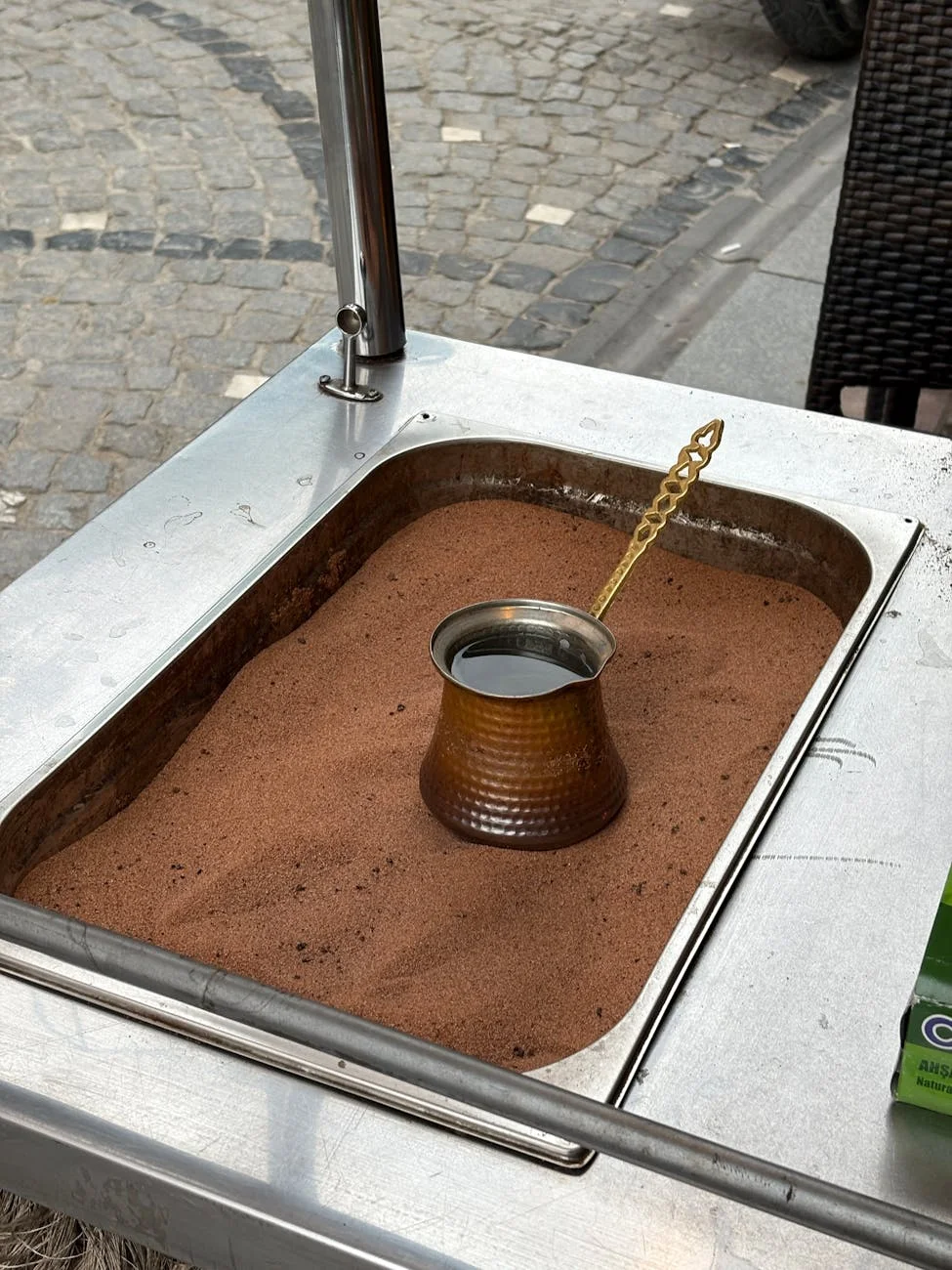
Turkish coffee is more than just a beverage; it’s a cultural institution, a ritual steeped in centuries of tradition. Prepared in a special pot called a cezve or ibrik, its unique unfiltered brewing method produces a rich, strong, and aromatic cup. Many newcomers to this coffee focus on the grind’s fineness or the delicate art of managing the foam, known as kaymaki. However, one of the most critical and often overlooked steps occurs after the coffee is poured: the resting period. This brief pause is not simply a matter of tradition; it is a crucial phase grounded in science and sensory experience. This article will explore why allowing your Turkish coffee to rest is essential for achieving the perfect texture, flavor, and overall enjoyment.
The science of sedimentation
Unlike filtered coffee methods where the grounds are separated and discarded, in Turkish coffee, the grounds are an integral part of the brew. The coffee is ground to a powder-like consistency, finer than almost any other method. When boiled with water and sugar, these microscopic particles become suspended throughout the liquid, creating a thick, homogenous mixture. If you were to drink it immediately after pouring, you would get a mouthful of gritty, unpleasant sediment.
This is where the resting time becomes a non-negotiable step. By letting the cup sit undisturbed, you allow gravity to do its work. The heavier coffee particles slowly drift downwards and settle at the bottom of the cup, forming a dense layer of “mud.” This process clarifies the liquid portion of the coffee, ensuring that each sip is smooth, rich, and free of particulates. Rushing this step fundamentally compromises the coffee’s signature velvety mouthfeel, which is one of its most celebrated characteristics.
Flavor development and optimal temperature
The waiting period does more than just manage sediment; it is also a critical phase for flavor development. Immediately after being removed from the heat, Turkish coffee is exceptionally hot, often well above the ideal drinking temperature. Attempting to drink it right away would not only scald your tongue but also prevent you from perceiving the coffee’s complex flavor profile. The taste buds are less receptive to nuanced flavors at extreme temperatures.
As the coffee cools slightly over a few minutes, two important things happen. First, the initial harshness from the direct-heat brewing process mellows out, allowing more subtle, intricate notes to emerge. The flavors of chocolate, spice, and fruit that are characteristic of good quality beans become more pronounced. Second, the thick foam, or kaymaki, on top acts as a lid, trapping the volatile aromatic compounds. This pause allows the aromas to be preserved, so they are released with your first sip, creating a richer sensory experience.
A practical guide to waiting
Knowing you need to wait is one thing, but knowing for how long is the key to consistency. While there is no single perfect answer, the general recommendation is to let Turkish coffee rest for 2 to 4 minutes after pouring. However, several factors can influence the ideal resting time for your perfect cup. Understanding them will help you adjust and master the process.
Consider these variables:
- Grind fineness: The finer the grind, the longer it takes for the particles to settle. If your coffee is as fine as flour, aim for the longer end of the spectrum (3-4 minutes).
- Cup size: A traditional small fincan (Turkish coffee cup) will cool faster than a larger, non-traditional mug. Adjust your time accordingly.
- Personal preference: Some drinkers enjoy a slightly thicker consistency, while others prefer a cleaner cup. Experiment to see what you like best.
Instead of just watching the clock, look for these visual cues:
- The coffee is no longer steaming furiously.
- The foam on top has set and appears stable and creamy.
- There are no visible grounds swirling on the surface or near the top edges.
| Factor | Influence on Resting Time | Recommendation |
|---|---|---|
| Grind Size | Finer grinds are lighter and need more time to settle. | For a powdery grind, wait at least 3 minutes. |
| Initial Heat | Coffee brewed to a rolling boil may be more agitated. | Allow an extra 30-60 seconds for everything to calm down. |
| Desired Texture | For the cleanest possible sip, a longer wait is better. | Wait until the top third of the coffee looks perfectly clear. |
Patience as part of the ritual
Beyond the technical reasons, the act of waiting is deeply woven into the cultural fabric of Turkish coffee. This is not a beverage meant for a quick caffeine hit; it is an experience designed to be savored. The preparation itself is a deliberate ritual, and the resting period is a natural extension of that. It encourages a moment of pause, conversation, and mindfulness. In a fast-paced world, the Turkish coffee ritual forces us to slow down and appreciate the moment.
This tradition of patience is best exemplified by the practice of tasseography, or fortune-telling from coffee grounds. This can only be done after the coffee has been enjoyed and the cup is turned upside down, allowing the residual sediment to create patterns. This beloved cultural practice is entirely dependent on the grounds settling properly, first in the cup for drinking, and then for the reading. The waiting is, therefore, not an inconvenience but an essential part of the entire cultural experience.
In conclusion, the resting time after brewing Turkish coffee is far from an optional or trivial step. It is an integral part of the process that directly impacts the final product on multiple levels. Physically, it allows the fine sediment to settle, transforming the texture from gritty to luxuriously smooth. Sensorially, it lets the coffee cool to an optimal temperature where its complex flavors and rich aromas can be fully appreciated. Culturally, this pause embodies the spirit of the Turkish coffee tradition, which champions patience, conversation, and mindfulness. By embracing this simple waiting period of a few minutes, you are not just making better coffee; you are honoring a centuries-old ritual and ensuring every cup is a truly perfect experience.



 No products in the cart.
