
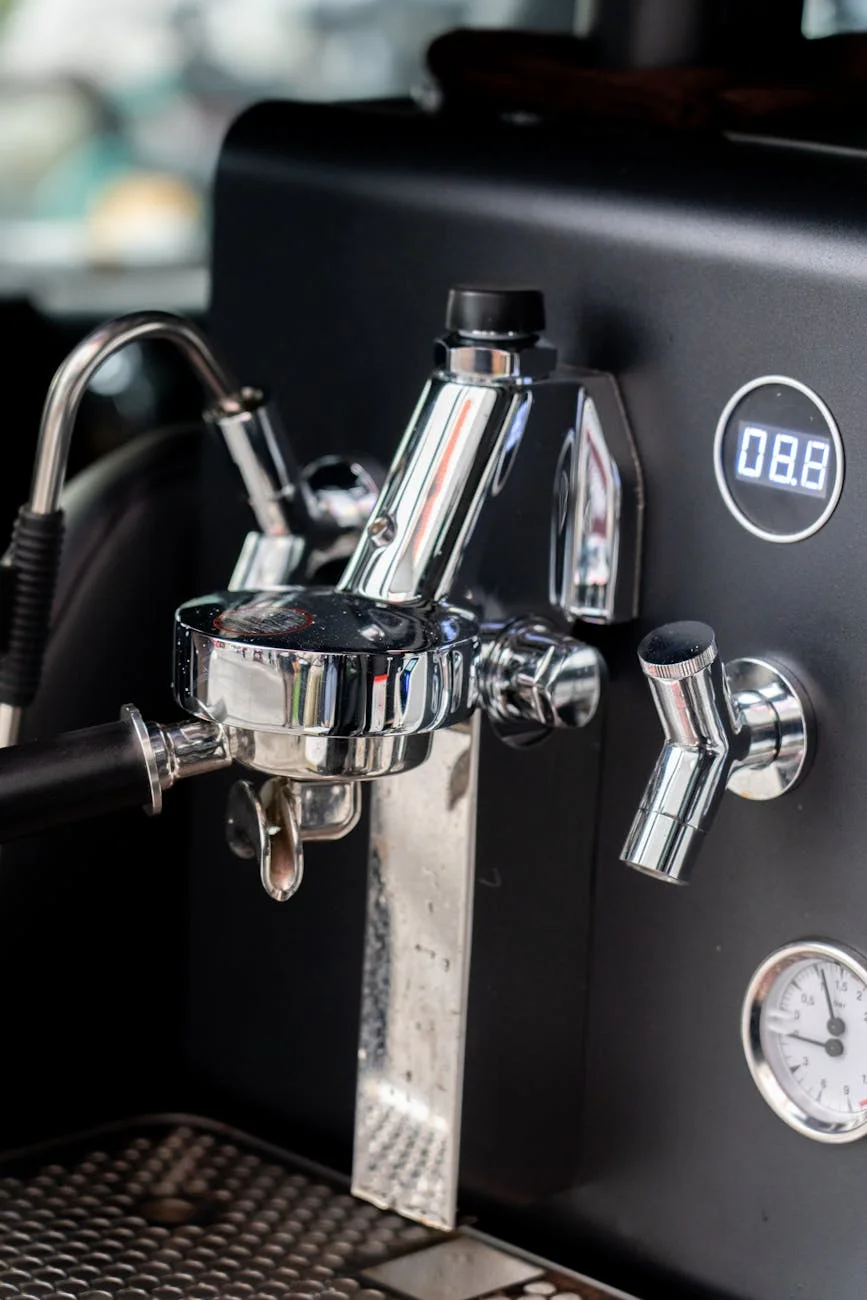
Mastering your spring lever: The critical role of basket dose weight
Spring lever espresso machines are objects of beauty and fascination, offering a tactile and engaging brewing experience unlike any other. Their unique declining pressure profile can produce shots with incredible texture and flavor clarity. However, this manual nature also introduces variables that can seem daunting to new users. While grind size, temperature, and puck prep are often discussed, one of the most fundamental yet overlooked variables is the basket dose weight. The precise amount of coffee you use is not just a matter of strength; it is a cornerstone of your entire extraction. This article will delve into why dose weight is so critically important for spring lever machines and how mastering it is the first step toward consistent, delicious espresso.
The spring lever’s unique pressure dynamic
To understand why dose weight is so crucial, we first need to appreciate what makes a spring lever machine different from its pump-driven counterparts. A typical semi-automatic machine uses a pump to force water through the coffee puck at a constant pressure, usually around 9 bars. A spring lever machine operates differently. When you pull the lever down, you are compressing a large, powerful spring and allowing water to enter the chamber to pre-infuse the coffee. When you release the lever, the spring expands and drives a piston, pushing the water through the puck.
This spring expansion creates a unique declining pressure profile. The shot begins at a high pressure (perhaps 10-11 bars) and then gradually tapers off as the spring extends (ending around 5-6 bars). This profile is often lauded for its ability to produce a full-bodied but smooth shot, avoiding some of the harshness that can come from constant high pressure. However, it also means the integrity of the coffee puck is paramount. The puck must be able to withstand the high initial pressure without fracturing, a phenomenon which leads to channeling and a poorly extracted shot. This is where your dose weight begins to play its first critical role.
Headspace: The critical gap controlled by dose
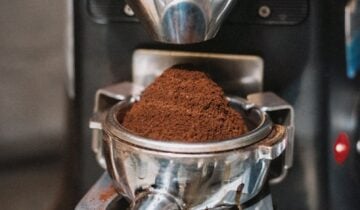
The dose weight directly influences one of the most important physical parameters inside your portafilter: headspace. Headspace is the small gap between the top of your tamped coffee puck and the bottom of the grouphead’s shower screen. This space is essential because as water enters the chamber, the coffee puck swells. Adequate headspace gives the puck room to expand without immediately pressing against the screen, which can shatter the puck’s surface and disrupt a uniform extraction.
- Too little headspace: If your dose is too high for your basket, the dry puck might already be touching or be very close to the shower screen. When you lock in the portafilter, you might even hear a crunching sound. This immediately compromises puck integrity, and the shot will almost certainly channel, resulting in a thin, sour, and bitter taste.
- Too much headspace: Conversely, if your dose is too low, you will have excessive headspace. This can lead to a soupy, messy puck after the shot. The water can agitate the grounds too much before proper pressure builds, leading to an uneven and under-extracted shot that lacks body and sweetness.
For a spring lever machine, finding the correct headspace is a non-negotiable step. Your dose weight is the primary tool you have to control this variable. A simple way to check this is the “nickel test”: place a nickel on top of your tamped puck, lock the portafilter into the grouphead, and then carefully remove it. If the nickel has left a clear indentation, your dose is too high. If there is no mark at all, you have sufficient headspace.
Dose as a primary driver of resistance
Once you’ve established a dose that provides the correct headspace, you can begin to think about its second major role: controlling resistance. With a spring lever, the force applied by the spring is fixed. You cannot change the pressure curve of the spring itself. Therefore, to control how quickly or slowly your shot extracts, you must control the resistance of the coffee puck. This resistance is created by two interconnected variables: grind size and dose weight.
Think of it this way: a finer grind creates smaller particles with less space between them, increasing resistance and slowing down the shot. A larger dose increases the physical depth of the coffee bed the water must travel through, which also increases resistance. You can use these two variables in tandem to “dial in” your shot.
For example, if your shot is running too quickly (gushing), you have two options: grind finer or increase the dose. Grinding finer will have a more significant impact on the flavor profile, often extracting more complex acids and sugars. Increasing the dose (by perhaps 0.5g, assuming you still have adequate headspace) will slow the shot down primarily by increasing the puck’s depth, which can enhance the shot’s body and texture. Mastering your espresso involves learning how to manipulate both variables to achieve the desired result.
A practical guide to finding your ideal dose
Every coffee basket is designed to work best within a specific dose range. A basket stamped with “18g” might perform optimally between 17g and 19g, but poorly at 15g or 21g. It is essential to use a high-precision coffee scale (accurate to 0.1g) to ensure consistency. Without a scale, you are flying blind, and achieving repeatable results is nearly impossible.
Start by using the manufacturer’s recommended dose for your basket. From there, you can adjust in small increments to find what works best for your specific coffee and machine. Keep your grind setting the same and only change the dose weight by 0.5g at a time to see how it affects the shot time and taste. Below is a table illustrating how small changes in dose can affect your extraction within common basket sizes.
| Basket Size | Typical Dose Range (g) | Effect of -1g Dose | Effect of +1g Dose |
|---|---|---|---|
| 14g Double | 13.5 – 15g | Faster flow, brighter shot, thinner body | Slower flow, more body, muted acidity |
| 18g Double | 17 – 19g | Risk of channeling, less resistance | More resistance, fuller body, easier to control flow |
| 20g Double | 19 – 21g | May be soupy, risk of under-extraction | Can choke machine, risk of bitterness from long extraction |
Remember, this is a starting point. The optimal dose will change depending on the coffee’s roast level, age, and density. However, by being methodical and changing only one variable at a time, you can gain precise control over your shots.
Conclusion
In the world of spring lever espresso, consistency is key, and it all begins with the dose. The weight of your coffee grounds is not an arbitrary number; it is a foundational variable that dictates critical factors like headspace and puck resistance. As we’ve seen, the declining pressure profile of a lever machine demands a well-formed, resilient coffee puck, and an incorrect dose can compromise it from the start. By investing in a quality scale and taking the time to methodically determine the right dose for your basket and coffee, you move from guesswork to precision. This allows you to use grind size as a finer tool to shape the flavor of your shot, unlocking the full, nuanced potential of your beautiful machine.
 No products in the cart.
