

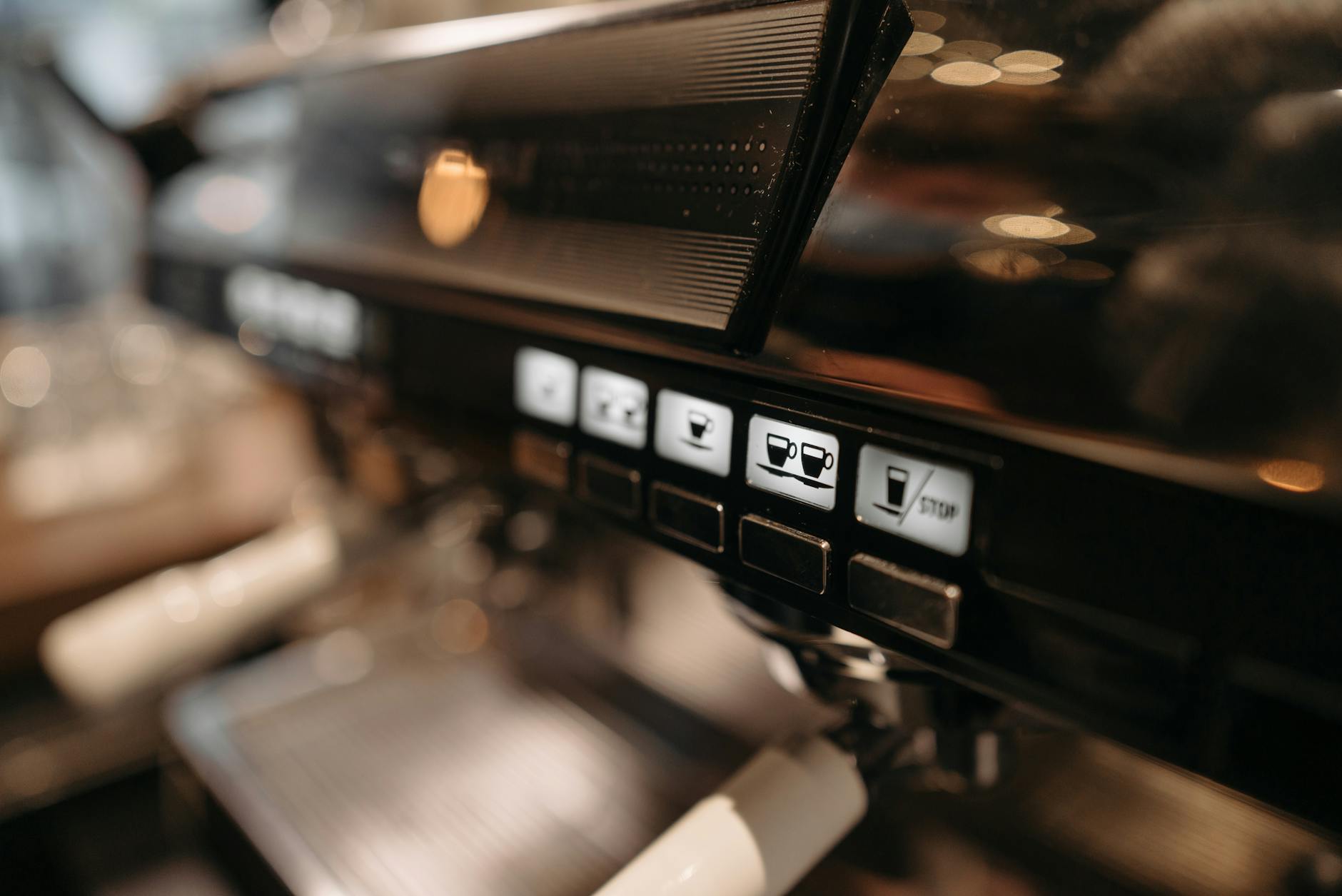
The quest for the perfect espresso shot is a journey filled with variables. Baristas and home enthusiasts alike obsess over grind size, dose weight, and tamping pressure, all in pursuit of that rich, syrupy extraction. Yet, one of the most critical and often misunderstood variables is the temperature of the water itself. It’s not simply a matter of being “hot enough.” The precise temperature of the water hitting the coffee grounds has a profound and direct impact on which flavor compounds are extracted, and ultimately, on the consistency of your final cup. This article will explore the science behind brew temperature, how it shapes the flavor profile from sour to bitter, and how you can gain control over it to achieve consistently delicious espresso.
The science of temperature and extraction
At its core, brewing espresso is a chemical process. Hot, pressurized water acts as a solvent, dissolving solids and oils from the finely ground coffee. Water temperature is the catalyst that governs the speed and efficiency of this process. Think of it as the engine driving the extraction; the hotter the engine runs, the faster and more aggressively it extracts compounds from the coffee puck.
Coffee grounds contain hundreds of different soluble compounds, each contributing to the final taste and aroma. These compounds dissolve at different rates:
- Acids: These are highly soluble and extract very quickly, even at lower temperatures. They contribute brightness and fruity notes.
- Sugars: Responsible for sweetness and body, sugars take a bit longer to dissolve than acids.
- Oils and Lipids: These contribute to the rich body and crema of an espresso shot.
- Bitter compounds: Elements like caffeine and tannins are less soluble and tend to extract last, especially at higher temperatures.
Understanding this sequence is key. Temperature directly controls how far along this extraction path you travel during the 25-30 seconds it takes to pull a shot. It dictates whether you stop in the bright, acidic phase or push through to the rich, sweet, and potentially bitter phases.
The flavor spectrum from sour to bitter
Because temperature controls the rate of extraction, it creates a predictable spectrum of flavor. If you can control the temperature, you can effectively target a specific flavor profile. Deviating from the ideal temperature, even by a few degrees, can drastically alter the taste in your cup.
Too cold: Under-extraction
When the water isn’t hot enough, it lacks the energy to properly dissolve the desirable sugars and oils. It primarily extracts the fastest-dissolving compounds: the acids. The result is a shot that tastes disappointingly sour, thin, and sometimes salty. It lacks the sweetness and body that makes espresso so satisfying, a clear sign of under-extraction.
Too hot: Over-extraction
Conversely, when water is too hot, the extraction process becomes overly aggressive. It rapidly dissolves all the acids and sugars and then moves on to extract an excess of the less soluble, bitter compounds. This leads to a shot that tastes harsh, bitter, and astringent. It might have a “hollow” or burnt taste, as the delicate, sweet notes have been completely overwhelmed. This is a classic sign of over-extraction.
The goal is to find the “sweet spot” where you achieve a balanced extraction, capturing the pleasant acidity and deep sweetness without pulling in too much bitterness.
Finding the ideal temperature range
While there is no single “perfect” temperature for all coffee, the industry-accepted range for espresso is generally between 90°C and 96°C (195°F and 205°F). The ideal temperature within this range depends heavily on the coffee’s roast level, as this affects the bean’s density and solubility.
Lighter roasts are less porous and more dense. They require more thermal energy to properly extract their complex floral and fruity notes. Therefore, they often taste best when brewed at the higher end of the temperature range. Darker roasts, on the other hand, are more brittle and soluble due to the prolonged roasting process. Using water that is too hot can easily over-extract them, leading to excessive bitterness. A lower temperature helps to tame these roasty notes and highlight the chocolatey, caramelized flavors.
| Roast Level | Recommended Temperature Range (°C) | Expected Flavor Profile |
|---|---|---|
| Light Roast | 93°C – 96°C (200°F – 205°F) | Highlights bright acidity, complex floral and fruity notes. |
| Medium Roast | 91°C – 94°C (196°F – 201°F) | Achieves a balance of sweetness, body, and acidity. |
| Dark Roast | 90°C – 92°C (195°F – 198°F) | Minimizes bitterness, emphasizing deep chocolate and roasty notes. |
Tools for achieving temperature stability
Knowing the right temperature is one thing; achieving it consistently is another. The type of espresso machine you use plays the biggest role in temperature stability. Basic, entry-level machines often use a simple thermostat that allows for wide temperature swings, sometimes as much as 5-10°C. This makes shot-to-shot consistency nearly impossible.
More advanced machines, such as those with dual boilers or heat exchangers, offer significantly better stability. However, the gold standard for temperature control is a machine equipped with a PID (Proportional-Integral-Derivative) controller. A PID is essentially a smart, digital thermostat. Instead of simply turning the heater on and off, it uses an algorithm to make constant, tiny adjustments to the heating element, keeping the water temperature incredibly stable, often within a single degree of the target. This level of precision removes temperature as a random variable, allowing you to produce the same delicious, balanced shot every single time.
In conclusion, water temperature is far more than a minor detail in the espresso-making process; it is a fundamental pillar of flavor and consistency. As we’ve seen, it directly dictates which compounds are extracted from the coffee, guiding the taste from unpleasantly sour to overwhelmingly bitter. By understanding the science of extraction and how temperature interacts with different roast levels, you can start to intentionally steer your espresso towards that coveted sweet spot. Investing in equipment that offers stable temperature control, like a machine with a PID, is the ultimate step in this journey. It transforms espresso from a game of chance into a craft of precision, empowering you to finally achieve repeatable, exceptional results with every shot you pull.

 No products in the cart.