
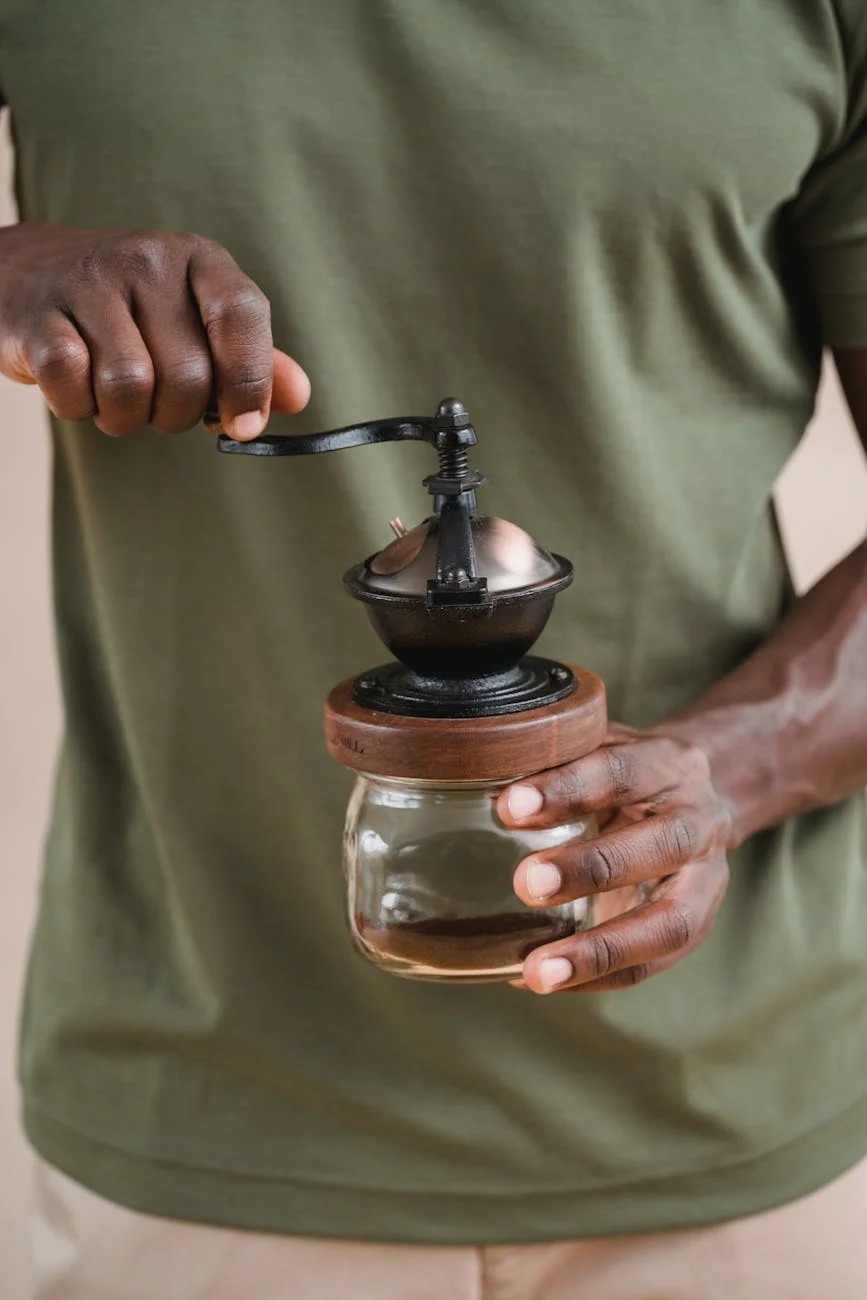
That beautiful, reddish-brown layer blanketing the surface of your espresso is more than just a pretty foam. Crema is the hallmark of a well-extracted shot, a visual promise of the rich flavors and aromatic oils locked within the coffee beans. Many aspiring home baristas invest in high-end espresso machines, yet find themselves chasing this elusive element, often ending up with thin, pale, and quick-to-vanish foam. The culprit, however, is frequently not the machine or even the beans, but a far more critical, and often overlooked, component of the setup: the coffee grinder. This article will explore the non-negotiable, direct link between your grinder’s performance and the quality of your espresso crema, unpacking how grind consistency and precision are the true foundations of a perfect shot.
What is crema and why does it matter?
Before we can understand the grinder’s role, we must first understand what we’re aiming for. Crema is a complex emulsion of coffee bean oils, suspended coffee solids, and, most importantly, carbon dioxide (CO2). When coffee is roasted, CO2 gas gets trapped within the beans. During the espresso extraction process, hot, highly pressurized water is forced through the finely ground coffee puck. This intense pressure and temperature forces the CO2 out of the coffee grounds. As the liquid espresso exits the portafilter and returns to normal atmospheric pressure, the CO2 expands and becomes trapped in the liquid, forming microscopic bubbles that emulsify the coffee’s natural oils.
A good crema is not just for looks. It contributes significantly to the sensory experience of the espresso:
- Aroma: It traps volatile aromatic compounds, releasing them as you drink.
- Flavor: While slightly bitter on its own, it adds a layer of complexity and a smoother, heavier mouthfeel to the shot.
- Indicator: Its color, thickness, and persistence can tell you a lot about the freshness of the beans and the quality of the extraction. A rich, hazelnut-colored crema with fine “tiger striping” suggests a great shot.
This entire chemical and physical reaction is critically dependent on how the water interacts with the coffee grounds, an interaction dictated entirely by the grinder.
Grind consistency is king for extraction
The single most important job of an espresso grinder is to produce a consistent grind. This means that all the tiny particles of coffee should be as close to the same size as possible. A low-quality grinder, especially a blade grinder, produces a chaotic mix of particle sizes—from large chunks (often called boulders) to microscopic dust (known as fines). This inconsistency is the number one enemy of a good extraction and, by extension, good crema.
When you have an inconsistent grind in your portafilter basket, water, being lazy, will always follow the path of least resistance. It will rush through the gaps created by the large boulders, a phenomenon known as channeling. This water barely interacts with the coffee, leading to a sour, under-extracted shot with thin, bubbly, and lifeless crema. Meanwhile, the excessive fines will do the opposite; they clog the filter basket, preventing water from flowing through evenly. This can choke the machine and lead to a slow, bitter, over-extracted shot. In both scenarios, the balanced pressure and flow rate required to properly extract oils and CO2 are destroyed, making a stable crema impossible to form.
The crucial role of micro-adjustments
Beyond consistency, a great espresso grinder must offer precise control over the grind size. “Espresso grind” isn’t a single setting; it’s a tiny, sensitive range that changes based on the specific coffee beans, their age, the roast level, and even the humidity in your kitchen. The process of finding the perfect setting is known as “dialing in.” This is where the ability to make tiny, incremental changes—or micro-adjustments—becomes essential.
If your grind is just a fraction too coarse, your shot will run too fast (e.g., 15 seconds instead of the ideal 25-30). This results in under-extraction and a weak, pale crema that vanishes in seconds. If it’s a fraction too fine, the shot will choke, dripping slowly for 45 seconds or more, resulting in a bitter brew and a dark, splotchy crema, if any forms at all. A quality grinder allows you to make minute adjustments to hit that sweet spot where the extraction time, pressure, and volume are all in harmony. This perfect balance ensures the ideal emulsification of oils and CO2, producing that thick, velvety, and persistent crema you’re looking for.
Burr grinders vs. blade grinders: An essential distinction
When it comes to espresso, the type of grinder you use is not a matter of preference; it’s a matter of necessity. There are two main types of grinders on the market: blade and burr. A blade grinder uses a spinning blade to smash beans into pieces, much like a blender. This violent chopping action offers no control over particle size and generates significant heat, which can cook out the delicate oils before you even brew. The result is the highly inconsistent mix of fines and boulders discussed earlier.
A burr grinder, on the other hand, uses two abrasive surfaces (burrs) that mill or crush the beans between them to a uniform size. The distance between the burrs can be precisely controlled, allowing you to achieve the consistency and make the micro-adjustments vital for espresso. For crema, there is simply no comparison.
| Feature | Burr Grinder | Blade Grinder |
|---|---|---|
| Grind Mechanism | Crushing and milling | Smashing and chopping |
| Particle Consistency | High (uniform particles) | Low (dust and boulders) |
| Grind Size Control | Precise, with micro-adjustments | None, based on time |
| Impact on Crema | Enables rich, stable, and lasting crema | Produces thin, weak, or no crema |
| Extraction Result | Even and balanced | Uneven (channeling and clogging) |
In conclusion, the path to achieving exceptional espresso crema does not start at your high-tech machine; it begins with your grinder. Crema is the direct visual feedback of a successful extraction, a process that is entirely dependent on the uniform resistance that only a consistent coffee grind can provide. As we’ve seen, factors like grind consistency, the ability to make precise micro-adjustments, and the fundamental mechanism of the grinder itself are not minor details—they are the core pillars of good espresso. A quality burr grinder provides the control and uniformity necessary to unlock the oils and CO2 from your beans, creating the perfect conditions for a rich, velvety crema. It is the single most impactful investment you can make in your coffee journey.

 No products in the cart.
