

Keep your brew perfect: A guide to maintaining your espresso machine after CBTL dark roasts
There’s nothing quite like the rich, bold, and complex flavor of a dark roast from The Coffee Bean & Tea Leaf. Whether you prefer the smoky notes of their French Roast or the deep, caramelized sweetness of the Italian Roast, these beans produce a truly satisfying cup of espresso. However, that deep flavor comes at a price. The intense roasting process brings natural oils to the surface of the bean, leaving a visible sheen. While these oils are key to the coffee’s character, they can be a formidable foe for your espresso machine. This article will serve as your essential guide to a proper maintenance routine, ensuring your machine stays in peak condition and every shot of CBTL dark roast tastes as incredible as the last.
Why CBTL dark roasts demand special attention
Not all coffee beans are created equal when it comes to machine maintenance. The defining characteristic of a dark roast is that it’s roasted longer and at a higher temperature. This process breaks down the bean’s structure, causing the oils inside to migrate to the surface. When you grind these visibly oily beans, they leave behind a sticky, potent residue. This residue is the primary culprit behind many common espresso machine issues.
This oily buildup affects every part of your machine that the coffee touches:
- The grinder: Oils and fine coffee particles combine to create a paste-like gunk on the burrs, leading to inconsistent grinds and eventual clogs.
- The group head and shower screen: A tar-like residue can accumulate here, restricting water flow and imparting a rancid, bitter taste to your espresso.
- The portafilter and basket: Old, oxidized oils will contaminate every new shot of coffee, masking the fresh flavors you want to taste.
Without a specific cleaning routine, you’re not just risking damage to your equipment; you’re also compromising the taste of your coffee. That stale, bitter flavor you might notice is often not the bean, but the ghost of old brews past.
The daily post-brew ritual
Consistency is key to combating the effects of oily beans. The best defense is a good offense, and that starts with a simple, non-negotiable cleaning ritual you perform every time you finish brewing. This takes less than two minutes but makes a world of difference in preventing long-term buildup. Think of it as cleaning your plate after dinner—it’s much easier than scrubbing off dried-on food later.
Your daily ritual should include four simple steps:
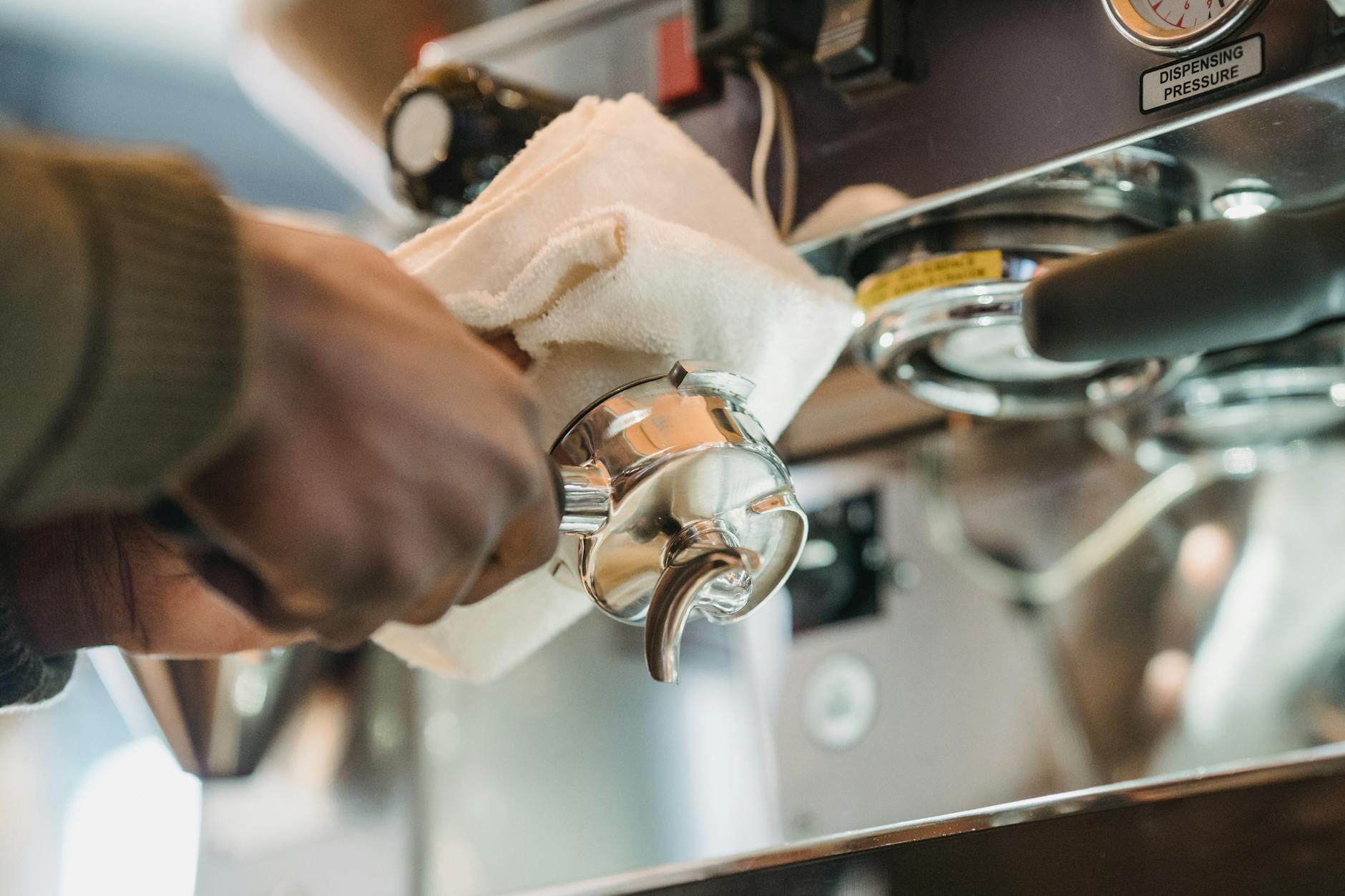
- Rinse the portafilter immediately: As soon as you pull your shot, knock the used coffee puck into a knock box or compost. Immediately rinse the portafilter and basket under hot water from the group head. Use a small brush to dislodge any stubborn grounds. Dry it thoroughly before your next use.
- Flush the group head: With the portafilter removed, run the machine for 5-10 seconds. This purges any loose grounds and oils from the shower screen and the internal pathways.
- Purge the steam wand: If you’ve steamed milk, this is critical. Wipe the wand with a dedicated damp cloth, then open the steam valve for a couple of seconds to blast out any milk that may have been sucked inside.
- Wipe everything down: Give the machine’s exterior and drip tray a quick wipe to clean up any splashes or stray grounds.
Weekly deep cleaning for a fresh start
While the daily ritual keeps things tidy, a more thorough weekly deep clean is necessary to dissolve the stubborn, hardened oils that rinsing alone can’t remove. This is where you bring in the heavy-duty tools: an espresso machine cleaner like Cafiza or a similar product, and a blind basket (a filter basket with no holes).
The core of this weekly routine is backflushing. This process forces a mixture of hot water and cleaning solution back up through the group head, solenoid valve, and brew pathways, powerfully scrubbing the machine’s internals from the inside out. Place your blind basket in the portafilter, add a small amount of cleaning powder, and lock it in. Run the pump for about 10 seconds, then stop. You’ll hear a “whoosh” as the pressure releases and discharges the dirty water into the drip tray. Repeat this cycle 4-5 times. Afterwards, remove the portafilter and repeat the entire process with just water to rinse away any remaining cleaner.
While the backflush is happening, you can multitask. Soak your portafilter (metal parts only), baskets, and the shower screen (if easily removable) in a solution of hot water and cleaning powder for about 20 minutes. This will dissolve the caked-on oils, and they should wipe clean effortlessly afterward.
Don’t forget the grinder
The grinder is the first point of contact for your oily CBTL beans, and it’s often the most neglected part of the cleaning process. Oily residue on the burrs not only affects grind consistency but also turns rancid, imparting stale flavors to your fresh beans. For grinders used daily with dark roasts, a bi-weekly cleaning is a good habit to form.
The easiest method is to use grinder cleaning pellets. These are food-safe, grain-based tablets that you run through your grinder just like coffee beans. They are designed to absorb oils and dislodge old coffee particles from the burrs and grinding chamber. For a deeper clean (perhaps monthly), unplug your grinder, remove the bean hopper, and use a combination of a stiff brush and a vacuum to meticulously clean the burrs and the chute where the grounds exit.
Your recommended cleaning schedule
| Task | Frequency | Purpose |
|---|---|---|
| Rinse Portafilter & Flush Group Head | After every brew session | Removes fresh grounds and oils before they can harden. |
| Wipe & Purge Steam Wand | After every use | Prevents milk from souring and clogging the wand. |
| Backflush with Cleaner | Weekly | Deep cleans the group head and internal valves. |
| Soak Baskets & Portafilter | Weekly | Dissolves stubborn, caked-on coffee oils. |
| Clean Grinder Burrs | Bi-weekly to Monthly | Removes rancid oils and fine particles for consistent grinding. |
Conclusion
Enjoying premium dark roasts from The Coffee Bean & Tea Leaf at home is a genuine pleasure, but it comes with the responsibility of diligent machine care. The oils that create that rich body and flavor are the very same substances that can clog your equipment and spoil your coffee’s taste. By committing to a simple routine, you can easily manage their impact. A quick daily flush, a dedicated weekly backflush and soak, and regular attention to your grinder are all it takes. This proactive approach does more than just protect your investment in your espresso machine; it guarantees that every single cup you brew is a pure, untainted expression of the bold, delicious CBTL dark roast you intended to enjoy.

 No products in the cart.