

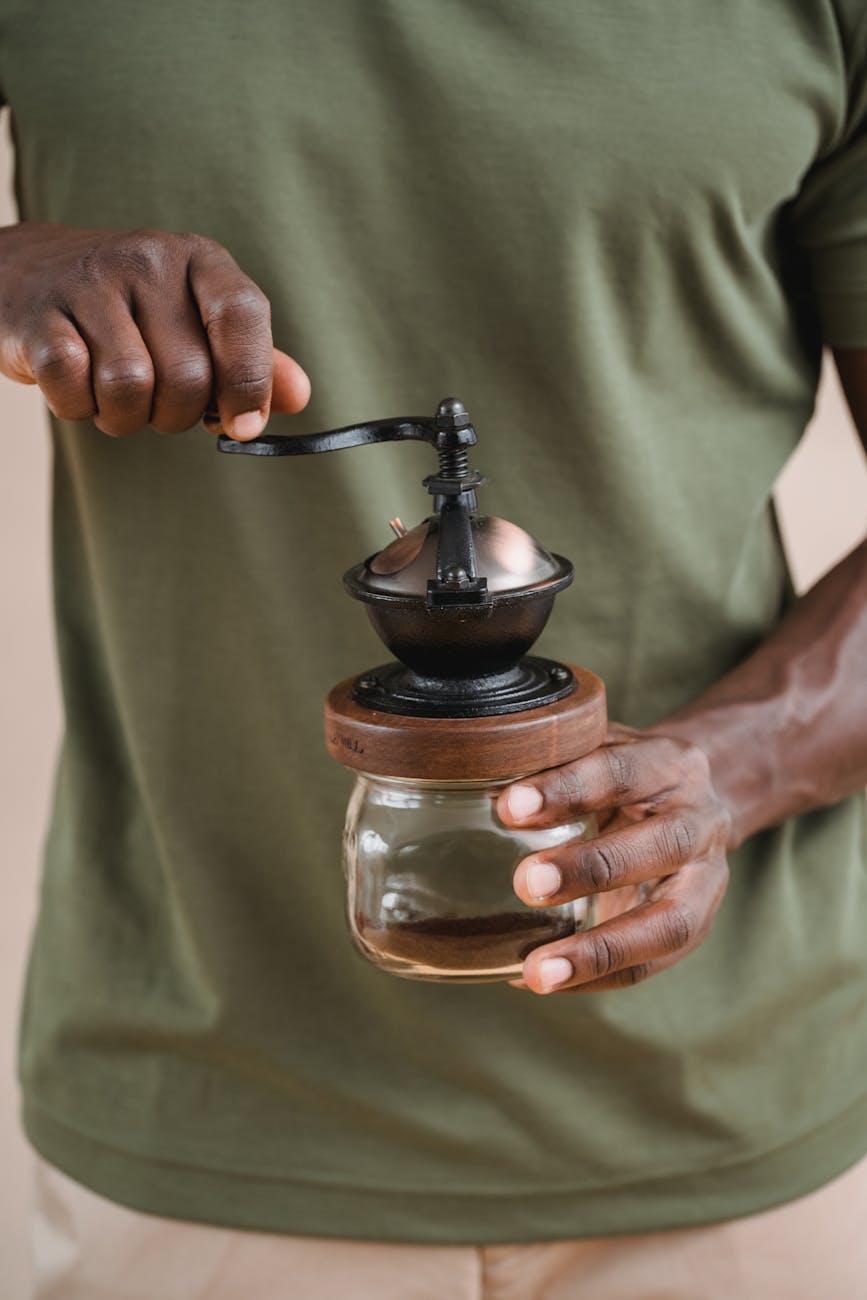
The pursuit of the perfect espresso shot is a journey many coffee enthusiasts embark on. Investing in a high-end grinder with precision-engineered burrs is a significant step, promising uniform particle size and superior flavor clarity. Yet, many are frustrated to find their expensive equipment producing clumpy, statically-charged grounds. This clumping is more than a minor annoyance; it is a direct obstacle to a balanced extraction, often leading to channeling and inconsistent shots. This article will delve into the science behind espresso clumping, specifically within the context of high-end grinders. We will explore the primary causes, from static electricity to bean characteristics, and provide a systematic approach to eliminating clumps for a fluffier, more uniform coffee bed and ultimately, a better-tasting espresso.
Understanding the root causes of clumping
Before we can solve the problem of clumping, we must first understand why it happens. While it may seem like a simple mechanical issue, clumping is a complex interplay of physics, chemistry, and mechanics, even in the most sophisticated grinders. The primary culprits can be broken down into three main categories.
Static electricity: The invisible enemy
The number one cause of clumping is static electricity. As coffee beans are shattered and ground between two rapidly moving metal burrs, immense friction is generated. This friction causes electrons to be stripped from the coffee particles, creating a static charge. These charged particles then attract each other, forming small clumps. High-end grinders, with their powerful motors and high RPMs, can be particularly susceptible to static generation. Furthermore, the design of the exit chute and the materials used can either help dissipate this charge or make it worse.
Bean characteristics matter
The coffee itself plays a huge role. Not all beans are created equal when it comes to clumping.
- Roast level: Lighter roasts are typically denser and less porous. When ground, they tend to shatter into particles with sharper, more irregular shapes, which can increase friction and static. Darker roasts are more brittle and contain more surface oils. While these oils can sometimes help reduce static, they can also cause grounds to stick together in a different, gummier type of clump.
- Moisture content and environment: Drier beans are more prone to building a static charge. This is compounded by low ambient humidity in your environment, a common issue in winter or in air-conditioned homes. Dry air is a poor electrical conductor, allowing static to build up without a path to dissipate.
Grinder mechanics and burr geometry
The design of your high-end burrs also influences clumping. Burrs from manufacturers like SSP or Mazzer are engineered for specific particle size distributions. Some flat burr geometries, designed to produce a high number of uniform fine particles for modern espresso, can inadvertently increase the surface area available for static charge to accumulate. Additionally, the speed at which the burrs spin (RPM) is a critical factor. Higher RPMs generate more friction and heat, which directly translates to more static and, consequently, more clumps.
The Ross droplet technique (RDT) and managing static
Knowing that static is the primary cause of clumping, the most direct solution is to address it head-on. The single most effective, inexpensive, and widely adopted method for this is the Ross Droplet Technique (RDT). This simple technique can feel counterintuitive—adding water to something you’re about to grind—but its effect is profound.
The science is simple: water is conductive. By introducing a minuscule amount of moisture to the beans before grinding, you provide a path for the static charge to dissipate rather than build up on the coffee grounds. The result is a dramatic reduction in static, leading to significantly fluffier, clump-free grounds that fall neatly from the grinder’s chute.
How to perform RDT correctly
- Weigh your dose: Start with your normal dose of whole beans in a cup or tray.
- Add a tiny amount of water: This is the most critical step. You need very little water. The easiest way is to use a small spray bottle for a single, fine mist. Alternatively, you can dip the handle of a spoon in water and stir it through the beans. You should not see visible droplets on the beans; you are merely trying to raise the surface humidity.
- Shake and distribute: Vigorously shake or stir the beans for a few seconds to ensure the tiny amount of moisture is evenly distributed across all the beans.
- Grind immediately: Add the beans to your grinder and grind as you normally would.
A word of caution: Overdoing RDT is the biggest mistake you can make. Too much water can cause coffee grounds to form a paste inside your grinder, potentially leading to rust on steel burrs over the long term. Less is always more. The goal is to eliminate static, not to wet the beans.
Optimizing your grinder and environment
While RDT is a powerful tool, it works best as part of a holistic approach. Optimizing your equipment and environment can further reduce the tendency for grounds to clump and improve your overall workflow. This is where you can leverage the features of your high-end grinder to your advantage.
Adjusting grinder RPM
Many premium single-dosing grinders (such as those from Lagom, Weber, or Option-O) offer variable RPM control. As discussed, high RPMs increase static. By grinding at a lower speed, you reduce the friction and heat generated during the process. This not only results in less static and clumping but can also produce a more uniform particle distribution with fewer micro-fines, which many users find leads to a sweeter, more nuanced extraction. Experiment with different RPM settings for your specific beans to find the sweet spot that balances grind time with grind quality.
Burr seasoning and alignment
If your high-end burrs are brand new, they will often produce more static and clumps. This is because the fresh-from-the-factory metal surfaces are pristine. Over time, as you grind a few kilograms of coffee, the burrs become seasoned. A microscopic layer of coffee oils coats the burr surfaces, which helps reduce friction and static. It’s a process that simply requires patience and use. Furthermore, ensuring your burrs are perfectly aligned is critical. Misaligned burrs grind unevenly, creating excess fines and increasing the potential for clumping and channeling in the final puck.
Puck preparation: The final line of defense
Even with perfect RDT and an optimized grinder, you may still encounter minor clumping depending on the coffee. This is where your post-grind puck preparation routine becomes the final and most crucial step to ensure an even extraction. A flawed coffee bed will ruin a shot, no matter how perfect the grind is.
The most important tool in your arsenal is a Weiss Distribution Technique (WDT) tool. This simple device uses several fine needles (typically 0.4mm or less) to break up any remaining clumps and evenly distribute the coffee grounds throughout the portafilter. By systematically stirring the grounds with a WDT tool, you eliminate dense spots and voids, creating a homogenous puck of uniform density. This is non-negotiable for modern espresso, especially when using grinders that produce very fine, fluffy grounds that are prone to settling unevenly.
Combining WDT with other tools creates a foolproof workflow. A dosing funnel is essential to contain the grounds while you perform WDT, preventing a messy countertop and ensuring all your weighed coffee makes it into the basket. After distribution, a calibrated, level tamp provides the final, uniform compression. These steps ensure that the water flows evenly through the entire coffee bed during extraction, preventing channeling and unlocking the full potential of your beans and high-end burrs.
Key puck preparation tools
| Tool | Primary function | Impact on clumping |
|---|---|---|
| Dosing funnel | Prevents spillage of grounds | Allows for aggressive WDT without making a mess. |
| WDT tool | Breaks up clumps and distributes grounds | The most effective method for eliminating clumps in the portafilter. |
| Distributor/Leveler | Creates a level surface before tamping | Can help prepare the bed for tamping but does not de-clump like WDT. |
| Calibrated tamper | Applies even, consistent pressure | Ensures a uniformly compressed puck after grounds have been de-clumped. |
In conclusion, espresso clumping in high-end grinders is a solvable, multi-faceted problem. It stems primarily from static electricity generated during grinding, a phenomenon influenced by bean characteristics like roast level and moisture, as well as grinder mechanics like burr speed. The most powerful tool against static is the Ross Droplet Technique (RDT), the simple act of adding a tiny mist of water to your beans before grinding. However, for the best results, this should be part of a comprehensive strategy. This includes optimizing your grinder by lowering the RPM if possible, allowing your burrs to season, and meticulously preparing your puck with a WDT tool to break up any final imperfections. By systematically addressing each of these variables, you can transform a clumpy, frustrating experience into a smooth, consistent workflow that unlocks the true potential of your high-end equipment and produces exceptional espresso.


 No products in the cart.