

Evaluating the effect of puck screens on espresso crema and body
The quest for the perfect espresso shot is a journey filled with variables, from bean freshness and grind size to tamping pressure and brew temperature. In recent years, a small, unassuming accessory has made a significant impact on this pursuit: the puck screen. This simple metal disc, placed on top of the tamped coffee grounds, promises to revolutionize extraction consistency. But what is its real-world effect on the final cup? This article delves into the specific influence of puck screens on two of the most cherished qualities of a great espresso: its rich, velvety crema and its full, satisfying body. We will explore the mechanics behind this tool and analyze how it alters the dynamics of extraction to enhance your daily coffee ritual.
What is a puck screen and how does it work?
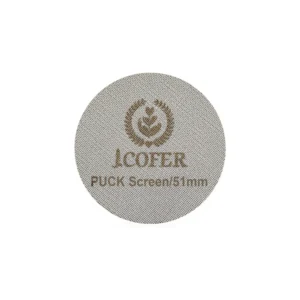
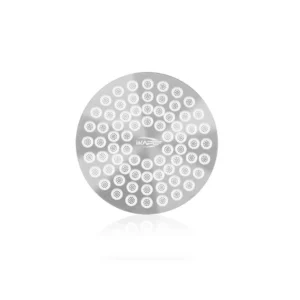
At its core, a puck screen is a thin, reusable metal filter, typically made of stainless steel mesh. It is designed to sit directly on top of your prepared coffee puck inside the portafilter before you lock it into the espresso machine. Its primary purpose is simple yet profound: to improve the distribution of water from the group head onto the coffee grounds. When you start an extraction, water is released from the group head under high pressure. Without a screen, this water can hit the puck with force, potentially disrupting the surface and creating small fissures. This often leads to channeling, where water finds paths of least resistance, resulting in an uneven extraction.
The puck screen acts as a buffer and a diffuser. It absorbs the initial impact of the water and disperses it gently and evenly across the entire surface of the coffee. This ensures that all the coffee grounds are saturated at the same rate, promoting a uniform extraction. A secondary, but highly appreciated, benefit is that it keeps the group head and shower screen significantly cleaner by preventing coffee grounds from being sucked back up after the shot is pulled. This simple mechanical change is the foundation for all its perceived effects on the final taste and texture of the espresso.
The science of crema and body in espresso
To understand how a puck screen affects your espresso, it’s crucial to first understand what creates the crema and body we seek. These two elements are direct results of a successful high-pressure extraction process.
Crema is the beautiful, reddish-brown foam that rests on top of an espresso shot. It is an emulsion of microscopic coffee oils and carbon dioxide (CO2) gas, which is naturally present in freshly roasted coffee beans. During extraction, the high pressure and hot water force these oils and gases out of the coffee grounds. As the liquid exits the portafilter and returns to normal atmospheric pressure, the CO2 expands and becomes trapped in the coffee oils, forming a stable foam. A thick, persistent crema is often a visual indicator of fresh coffee and a well-executed extraction.
Body, often referred to as mouthfeel, is the tactile sensation of the coffee in your mouth. It relates to its weight, viscosity, and texture. A full-bodied espresso feels rich, heavy, and syrupy on the tongue. This sensation is primarily created by dissolved solids and undissolved fine coffee particles, as well as the emulsified oils that contribute to crema. An extraction that effectively pulls these compounds from the coffee will produce a shot with a more substantial and satisfying body.
Puck screens and their impact on extraction dynamics
By preventing channeling and promoting an even extraction, the puck screen directly influences the formation of both crema and body. When water flows uniformly through the coffee puck, it extracts soluble compounds, oils, and gases more efficiently from the entire bed of coffee. This contrasts sharply with a channeled shot, where some parts of the puck are over-extracted (leading to bitterness) and other parts are under-extracted (leading to sourness and a thin body).
The effect on crema is often immediately visible. Because the extraction is more uniform, the CO2 and oils are released more consistently. This often results in a crema that is more finely textured, with smaller, more compact bubbles. This “microfoam” texture not only looks better but is also more stable and persistent, lasting longer in the cup. While you might not see a massive increase in the *volume* of crema, its *quality* is typically improved. It appears darker and less blotchy, without the premature blonding that signals channeling.
Similarly, the impact on body is significant. A more even extraction means a higher overall yield of total dissolved solids (TDS) in the final shot. More dissolved solids translate directly to a higher viscosity and a richer, more rounded mouthfeel. The espresso feels smoother and more complete because the sour and bitter notes from an uneven extraction are minimized, allowing the coffee’s inherent sweetness and texture to shine through. The result is a cup that feels more balanced and luxurious.
A summary of observed effects and considerations
While the theoretical benefits are clear, the practical results are what matter to the barista. The puck screen is not a magic fix for poor preparation, but rather a tool that enhances good technique by adding a layer of control and forgiveness. It helps bridge the gap between a good shot and a great one, primarily by boosting consistency. However, it does add an extra step to your workflow, as the screen needs to be placed before brewing and then removed and rinsed afterward.
Here is a simplified comparison of pulling a shot with and without a puck screen:
| Feature | Without Puck Screen | With Puck Screen |
|---|---|---|
| Water Distribution | Direct impact, can cause channeling | Evenly dispersed, minimizes channeling |
| Crema Quality | Can be thick but may dissipate quickly or show signs of channeling (blonding) | Often more stable, with a finer texture and more uniform color |
| Body/Mouthfeel | Can be thin or inconsistent due to uneven extraction | Generally fuller, smoother, and more viscous |
| Shot Consistency | Lower, more prone to unpredictable results | Higher, shots are more repeatable and forgiving |
| Workflow | Simpler and faster | Adds a step (placing, removing, cleaning) |
| Group Head Cleanliness | Gets dirty quickly with coffee grounds and oils | Stays significantly cleaner, reducing maintenance |
It’s important to note that the puck screen also acts as a heat sink, absorbing thermal energy. Preheating the screen on your portafilter or cup warmer is recommended to ensure you don’t lose precious degrees from your brew water, which could otherwise lead to an under-extracted shot.
Final conclusions on the puck screen’s value
After evaluating its function and effects, it’s clear that the puck screen is more than just a passing trend. By fundamentally improving water distribution across the coffee puck, it mitigates the risk of channeling, one of the most common espresso-making frustrations. This leads to a more even and efficient extraction, which has a direct and positive impact on the final cup. The resulting espresso often presents with a more stable, finely-textured crema and a noticeably fuller, smoother body. While it requires a small adjustment to your workflow, the marked improvement in shot consistency and quality makes it a powerful tool. For any home or professional barista dedicated to achieving repeatable, high-quality results, the puck screen is a worthwhile and effective investment.



 No products in the cart.
