



Turkish coffee is an art form, a ritual steeped in centuries of tradition. For many, its preparation is a cherished routine passed down through generations. However, this traditional approach often relies on intuition and approximation, using “heaping spoonfuls” and “a small cup” as units of measure. While charming, this can lead to frustratingly inconsistent results—one day a perfect, rich brew, the next a cup that’s disappointingly bitter or weak. The secret to bridging this gap between tradition and consistency lies in a simple, modern tool: the digital scale. This article will guide you through how to integrate a digital scale into your Turkish coffee workflow, transforming your brewing process from guesswork into a precise science for the perfect cup, every time.
Why precision matters in Turkish coffeeThe soul of any coffee brewing method is the brew ratio—the specific relationship between the weight of the coffee grounds and the weight of the water. For Turkish coffee, this ratio is critical. The extremely fine grind, similar to powdered sugar, means the coffee extracts very quickly. A small change in the amount of coffee or water can dramatically alter the final taste. Too much coffee, and you get a sludgy, over-extracted brew that is overwhelmingly bitter. Too little, and the result is a thin, weak, and sour cup that lacks the iconic body of Turkish coffee.
By using a digital scale, you eliminate the variability of a “scoop,” which can change based on how compacted the coffee is or the size of the spoon. Weighing your ingredients in grams allows you to establish a baseline recipe and repeat it with absolute certainty. This is the key to consistency. Once you can reliably replicate a brew, you can then begin to make small, intentional adjustments to tailor the recipe perfectly to your personal taste preferences. The scale empowers you to move from being a passive brewer to an active creator of your ideal coffee.
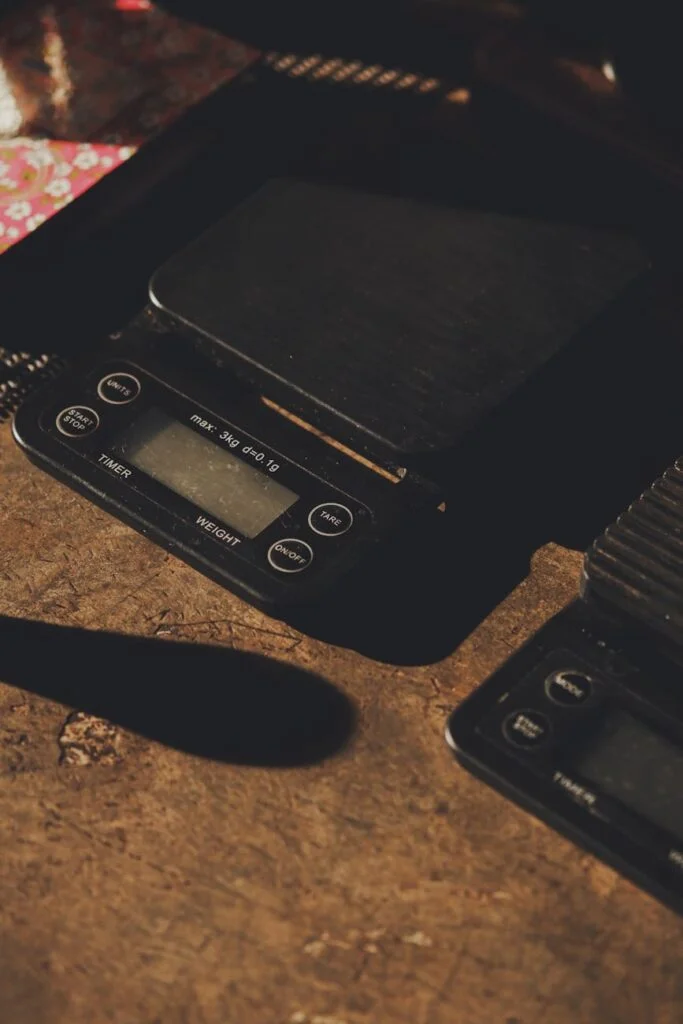
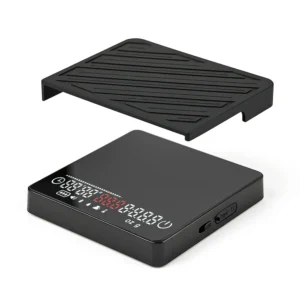
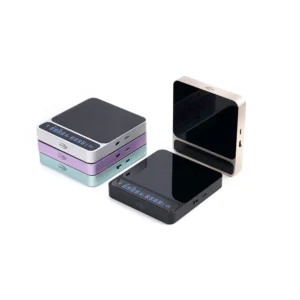
The essential tools for a measured approachTo start your journey into precision brewing, you only need a few key items. The most important, of course, is the scale itself. You don’t need an expensive, feature-laden coffee scale. Look for a simple digital kitchen scale with two crucial features:
- 0.1-gram precision: Since you’ll be working with small amounts (typically 7-10 grams of coffee), this level of accuracy is essential for making meaningful adjustments.
- A tare function: This is the button that zeroes out the weight on the scale. It allows you to place your cezve (or ibrik) on the scale, press “tare,” and then measure your coffee directly into it. You can then press “tare” again to measure the water, all in one seamless process.
Your other critical tool is the cezve. It’s important to use a cezve that is appropriately sized for the amount of coffee you are making. Brewing a single serving in a large four-person cezve causes the water to heat up too quickly and spread out, preventing the formation of the rich, thick foam (kaymak) that is the hallmark of a great Turkish coffee. Finally, for the best results, start with whole beans and grind them fresh to a fine powder just before brewing. Weighing your beans before grinding is the most accurate way to dose your coffee.
A step-by-step workflow for the perfect brewAdopting a scale into your routine is simple. Once you do it a few times, it will become second nature. The goal is to control the variables so you can focus on the taste. A great starting point for a balanced cup is a 1:10 brew ratio—that is, 1 gram of coffee for every 10 grams of water.
- Place and tare. Put your empty cezve on the digital scale and press the “tare” button to set the display to zero.
- Weigh your coffee. Add your finely ground Turkish coffee directly into the cezve until you reach your desired weight. For a single robust serving, let’s aim for 7 grams.
- Tare and weigh your water. Press the “tare” button again. Now, slowly pour cold, filtered water into the cezve until the scale reads 70 grams (maintaining our 1:10 ratio). Using cold water allows for a slower, more even extraction and helps build better foam.
- Weigh your additions (optional). If you take your coffee with sugar, press “tare” one last time and add it by weight. This ensures the sweetness level is identical every time. A small amount, like 3-4 grams, is a good starting point for a lightly sweet coffee (orta şekerli).
- Brew as usual. After a quick stir to combine the ingredients, place the cezve on a low heat source. From this point on, your brewing technique takes over. Watch carefully for the foam to rise, and remove it from the heat just before it boils over.
By following these steps, you have created a cup of coffee based on a precise, repeatable recipe. Now you have a reliable benchmark for future adjustments.
Dialing in your personal recipeOnce you’ve mastered the consistent 1:10 ratio, the real fun begins: experimentation. Your digital scale is now your most powerful tool for exploring different flavor profiles. If you find the standard brew a little too weak for your liking, you can make it stronger by using a “tighter” ratio. If you find it too intense or bitter, you can mellow it out with a “wider” ratio. It’s all about small, measured changes.
Think of it this way:
- For a stronger, bolder cup: Tighten the ratio to 1:9 or even 1:8. This means using more coffee relative to the water (e.g., 8g of coffee to 72g of water).
- For a lighter, milder cup: Widen the ratio to 1:11 or 1:12. This means using less coffee relative to the water (e.g., 6g of coffee to 72g of water).
Keeping a small notebook can be incredibly helpful. Jot down the ratio you used and a quick note on the taste. This data will help you quickly zero in on the exact recipe that you love. Here is a simple table to guide your experiments:
| Brew ratio (Coffee:Water) | Example (for ~70g serving) | Expected taste profile |
| 1:8 (Tighter) | 8.7g Coffee | 70g Water | Very strong, bold, rich body, potentially more bitter notes. |
| 1:10 (Standard) | 7.0g Coffee | 70g Water | Balanced, classic flavor with good body and aroma. |
| 1:12 (Wider) | 5.8g Coffee | 70g Water | Milder, lighter body, highlights more delicate notes, less intense. |
Ultimately, making the switch from imprecise scoops to precise grams is the single biggest step you can take to elevate your Turkish coffee. It demystifies the brewing process and puts you in complete control of the final result. A digital scale is not an unnecessary complication; it’s an instrument of empowerment for the home brewer. By measuring your coffee, water, and even sugar, you guarantee consistency, which is the foundation for meaningful experimentation. This methodical approach allows you to repeat that one “perfect cup” on any given day and to confidently tweak your recipe until it is uniquely yours. Embrace this small piece of modern technology to unlock a deeper appreciation and a more delicious expression of this ancient coffee tradition.

A step-by-step guide to brewing with a scale
Incorporating a scale into your routine is simple and adds less than a minute to your prep time. This small investment in time pays off with a perfect cup. Here is the process:
- Tare the cezve. Place your empty cezve (or ibrik) on the digital scale and press the “tare” or “zero” button. This removes the weight of the pot, so you’re only measuring the ingredients.
- Weigh your coffee. Add your finely ground Turkish coffee directly into the cezve until you reach your desired weight. For the best results, the coffee should be ground to a fine powder, like flour.
- Tare the scale again. With the coffee in the cezve, press the “tare” button again. The scale will now read “0” and is ready to measure only the water.
- Weigh your water. Slowly pour your cold, filtered water into the cezve until you reach the target weight based on your chosen ratio (e.g., 70g of water for 7g of coffee).
- Brew as usual. Remove the cezve from the scale. If you use sugar, add it now. Give the mixture a quick stir to combine, then place it on low heat. From this point on, you can follow your preferred brewing technique, watching carefully for the foam to rise before it boils. Because your foundation is precise, the outcome will be far more predictable.
Beyond the basics: refining your technique
Once you are comfortable using the scale for your basic recipe, you can use it to gain even more control over your coffee. The scale becomes a diagnostic tool that helps you understand every part of the brew. For example, if you want to experiment with a new type of coffee bean, you can keep your ratio identical to your usual recipe. This ensures that any difference you taste is from the beans themselves, not from an accidental change in brew strength.
You can also use the scale to test different grind sizes or water temperatures while keeping the ratio constant. This methodical approach allows you to isolate variables and truly understand how each one affects the final cup. For the ultimate coffee geek, some scales have built-in timers. You can use this to monitor your total brew time, adding another layer of consistency to your ritual.
The ritual of making Turkish coffee is a beautiful tradition, but it doesn’t have to be a guessing game. A digital scale is the simple, modern tool that bridges the gap between tradition and consistency. By precisely weighing your coffee and water, you take control of the most important variable in the entire process: the brew ratio. This small change removes the frustration of inconsistent results and empowers you to brew a perfect cup, on purpose, every single time. Once you discover your ideal recipe, the scale acts as your guarantee. Put away the imprecise spoons and cups, embrace the accuracy of grams, and elevate your daily coffee into a consistently flawless experience.