


Understanding and correcting common Gaggia Classic Pro mistakes
The Gaggia Classic Pro is a highly capable, entry-level espresso machine that has earned its place on the counters of countless home enthusiasts. Its single boiler, manual controls, and direct feedback offer a rewarding, hands-on experience. However, this same manual nature means the machine is less forgiving than its more automated counterparts. For the experienced home barista, mastering the Classic Pro involves moving beyond basic operation and addressing the subtle variables that separate a good shot from a great one. This article provides a technical breakdown of the most common operational mistakes and offers clear, repeatable solutions to help you achieve consistent, high-quality espresso.
Inconsistent brew temperature and steam management
One of the most significant challenges with any single-boiler machine is thermal stability. The Gaggia Classic Pro’s boiler cannot simultaneously maintain optimal brew temperature and produce steam, requiring a specific workflow to achieve shot-to-shot consistency. A frequent error is pulling a shot based solely on the ready light, which can lead to sour (under-extracted) or bitter (over-extracted) results.
The ready light indicates the heating element has turned off, but the boiler temperature continues to drift. To achieve a more stable starting temperature, a practice known as temperature surfing is necessary. A reliable method involves these steps:
- With the machine at idle, engage the steam switch for 5 to 8 seconds. This forces the boiler to heat beyond its standard brew thermostat setting.
- Turn the steam switch off and immediately flush water through the group head. Continue flushing until the brew-ready light turns off, then stop. This cools the boiler down.
- Wait for the ready light to turn back on. At this point, the heating cycle is complete. Begin your extraction within a consistent window, such as 5 to 10 seconds after the light appears.
Equally important is managing temperature after steaming milk. The boiler will be far too hot for brewing. You must purge this excess heat and refill the boiler by running the pump until a steady, non-sputtering stream of water exits the group head. Failing to do so will scald the coffee puck with steam and superheated water.
Channeling from improper puck preparation
The Gaggia Classic Pro ships with a factory-set nine-bar brew pressure, which is the industry standard. However, unlike more expensive machines, it lacks a gentle pre-infusion phase to help settle the coffee bed before applying full pressure. This makes meticulous puck preparation absolutely critical. Any inconsistencies in the density of the coffee puck will be exploited by the water, leading to channeling, where water carves a path of least resistance through the grounds. This results in an uneven extraction that is simultaneously bitter and sour.
To mitigate channeling, focus on a consistent and thorough preparation routine:
- Distribution: After grinding, the coffee grounds are often clumpy and unevenly distributed in the portafilter basket. Using a Weiss Distribution Technique (WDT) tool, which consists of fine needles, is highly effective for breaking up these clumps and creating a homogenous, fluffy bed of coffee. – Leveling: Ensure the surface of the grounds is perfectly flat before tamping. Gentle vertical taps on the counter can help settle the grounds, or a coffee distribution tool can be used to level the surface. – Tamping: The goal of tamping is not to apply maximum force, but to apply even, consistent pressure that results in a level puck. Ensure your elbow is at a 90-degree angle to the portafilter to avoid an uneven tamp, which is a primary cause of channeling.
Misunderstanding the role of brew pressure
While current Gaggia Classic Pro models are factory-set to the ideal nine bars of pressure, many older models or second-hand machines operate at 12 to 15 bars. This higher pressure was intended to create sufficient resistance for pressurized baskets and pre-ground coffee pods. For experienced users working with fresh coffee and standard baskets, this excessive pressure is a significant hindrance. It compacts the coffee puck too forcefully, making it extremely prone to channeling and demanding an exceptionally fine grind that can easily choke the machine.
High pressure can also accelerate extraction, pulling forward bitter compounds before the desirable acids and sugars have been fully dissolved. If you are struggling with persistently bitter shots and channeling despite perfect puck preparation, verifying your machine’s brew pressure is a logical next step. For users with machines producing more than nine bars, installing an Over-Pressure Valve (OPV) spring kit is a common and essential modification to bring the machine to modern espresso standards.
Neglecting routine cleaning and maintenance
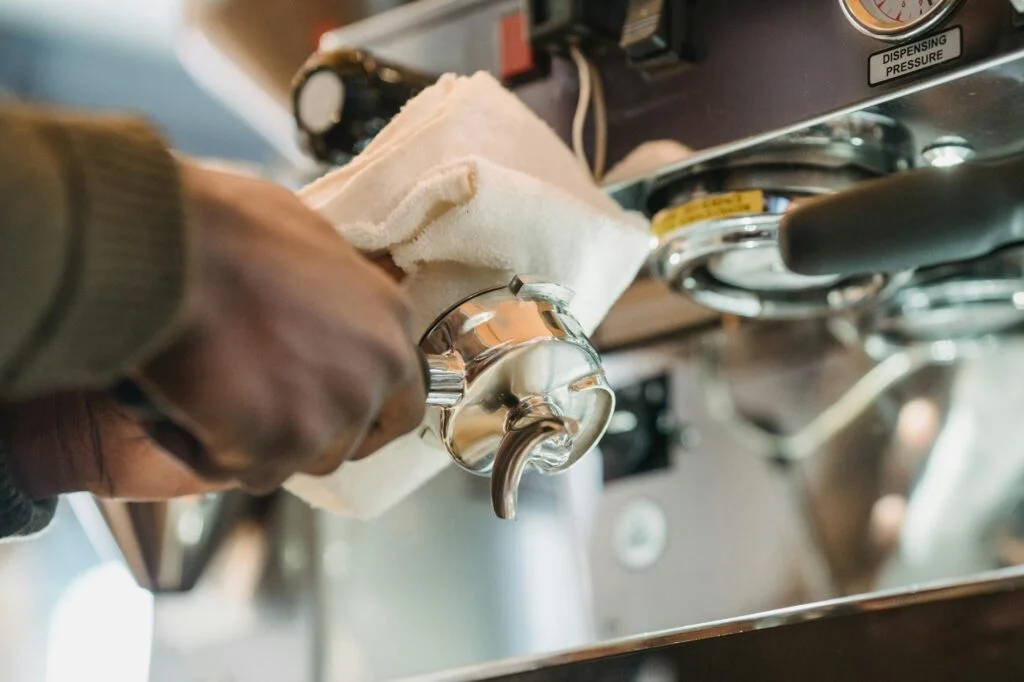
A clean machine is fundamental to both espresso quality and equipment longevity. Coffee oils accumulate on the shower screen, group head, and in the three-way solenoid valve, turning rancid and imparting off-flavors to subsequent shots. Limescale buildup from hard water can insulate the heating element, causing poor thermal performance and eventually leading to component failure.
A disciplined maintenance schedule is not optional. Consider the following routine:
| Frequency | Task | Purpose |
|---|---|---|
| After each session | Water backflush and screen wipe | Removes fresh coffee grounds and oils from the group head. |
| Weekly | Chemical backflush | Uses a dedicated espresso machine detergent to dissolve stubborn, built-up coffee oils inside the solenoid valve and group head. |
| Monthly | Remove and clean shower screen | Allows for a deep clean of the screen and the dispersion block behind it, where fines can accumulate. |
| Every 2-4 months | Descale | Removes mineral deposits from the boiler and water paths. The frequency depends entirely on your water hardness. |
Conclusion
Mastering the Gaggia Classic Pro is a process of transforming its manual eccentricities into strengths through a disciplined and informed workflow. The most common frustrations experienced by even advanced users often stem from four key areas: inconsistent thermal management, imperfect puck preparation, excessive brew pressure, and overlooked maintenance. By implementing temperature surfing, focusing on a meticulous distribution and tamping routine, ensuring the machine operates at nine bars of pressure, and adhering to a strict cleaning schedule, you can unlock the full potential of this enduring machine. The reward is not just excellent espresso, but the deep satisfaction that comes from mastering a truly manual process. For those looking to refine their workflow, various precision tools and maintenance supplies are available at papelespresso.com.