

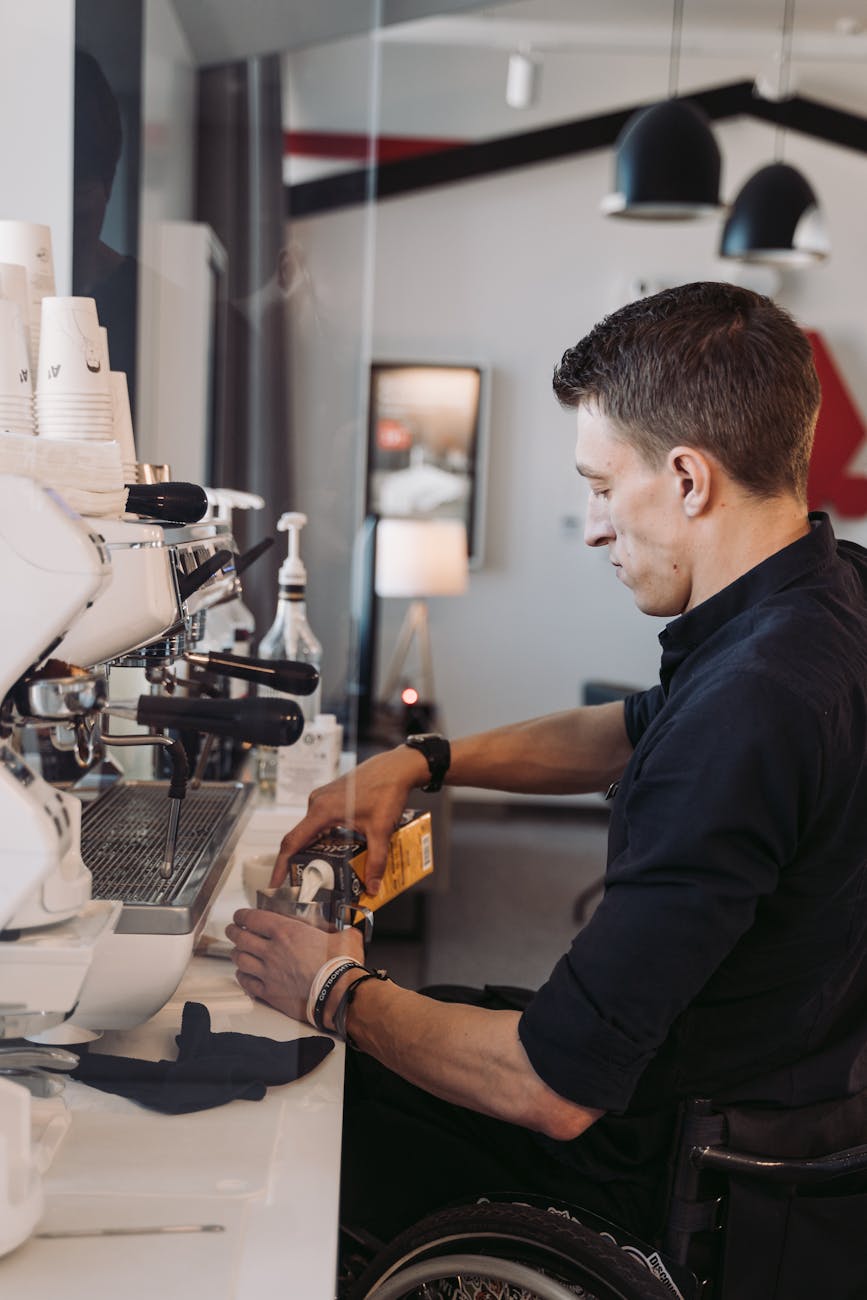
The Gaggia Classic is a legendary entry-level espresso machine, celebrated for its robust build and potential to produce cafe-quality shots. However, many new owners quickly discover a frustrating challenge: taming light roast espresso. These beans, known for their bright, acidic, and complex flavor profiles, often result in sour, under-extracted shots on a stock Classic. It’s a common hurdle that can make you question your skills or your equipment. This article will serve as your guide to overcoming these obstacles. We’ll delve into the specific reasons why the Gaggia Classic struggles with light roasts out of the box and provide a clear, step-by-step roadmap of techniques and modifications to unlock its full potential, transforming your frustrating attempts into delicious, well-balanced espresso.
The light roast challenge on a Gaggia Classic
To understand the solution, we must first diagnose the problem. Why do light roasts and a stock Gaggia Classic often fail to get along? The difficulty lies in a combination of the bean’s characteristics and the machine’s factory settings. Lightly roasted coffee beans are denser and less soluble than their darker counterparts. To properly extract their delicate and complex flavors, they demand two things: higher brew temperatures and stable extraction pressure. A shot that’s too cool will taste overwhelmingly sour, a sign of under-extraction.
This is where the stock Gaggia Classic falls short. Firstly, its temperature is managed by a simple bimetallic thermostat with a wide temperature swing, often fluctuating by 10°C or more. This inconsistency makes it nearly impossible to hit the precise, elevated temperature required for a light roast. Secondly, the machine ships with its Over-Pressure Valve (OPV) set to a very high pressure, typically between 12 and 15 bars. While this high pressure can work for dark roasts, it’s brutal on a finely ground light roast puck, often causing channeling and leading to a harsh, bitter, and astringent taste that masks the coffee’s true character. These two core issues create an unpredictable brewing environment that is the enemy of good light roast espresso.
Taming the temperature beast
Controlling brew temperature is the single most important step toward mastering light roasts on your Gaggia. An unstable temperature will yield inconsistent results, making it impossible to dial in your shot properly. Fortunately, there are ways to manage and perfect the Gaggia’s thermal performance.
The most accessible method is called temperature surfing. This is a manual technique to try and “catch” the machine at a more desirable point in its heating cycle. The process involves:
- Letting the machine fully heat up for at least 15-20 minutes.
- Purging a few ounces of hot water through the group head until the “ready” light turns off, indicating the boiler is now heating.
- Once the light turns on again, the boiler is at its hottest. You then start a timer and pull your shot after a specific interval (e.g., 10 seconds).
This technique requires practice and is inherently inconsistent, but it’s a definite improvement over pulling a shot randomly.
For those seeking true precision and repeatability, the ultimate solution is installing a PID (Proportional-Integral-Derivative) controller. A PID is a small digital thermostat that bypasses the Gaggia’s inaccurate stock thermostat. It constantly monitors the boiler temperature and makes tiny, rapid adjustments to the heating element to hold it rock-steady, typically within 1°C of your target. This modification transforms the Gaggia Classic, giving you complete control to set the exact temperature needed (e.g., 94-96°C) for beautiful light roast extraction. It turns the machine from a guessing game into a precise brewing instrument.
Mastering pressure and flow
Once you have a stable temperature, the next frontier is managing water pressure. As mentioned, the factory-set 12-15 bars of pressure is too high for specialty coffee. The industry standard for espresso is around 9 bars, which provides a gentler, more even extraction, significantly reducing the risk of channeling and bitterness.
The solution is the famous OPV mod. This involves adjusting or replacing the spring inside the machine’s Over-Pressure Valve to lower the maximum pressure. You can easily find pre-cut spring kits online that allow you to set the pressure to 9, 6.5, or even 5 bars. Lowering the pressure to 9 bars is a game-changer. It forces you to grind finer, which increases the contact time between water and coffee, helping to properly extract the less soluble compounds in light roasts.
Beyond static pressure, controlling the flow of water can further enhance your shots. Light roast pucks benefit from a gentle pre-infusion, which is a short period of low-pressure water flow to saturate the coffee grounds before the full 9 bars of pressure is applied. This helps prevent channeling and promotes a more uniform extraction. While a stock Gaggia has no pre-infusion, you can add this capability by installing a dimmer switch on the pump’s power line. This “flow control” mod allows you to manually ramp up the pressure, mimicking the functionality of far more expensive machines and giving you the ultimate tool for perfecting your light roast recipe.
The dialing-in workflow
With a modified (or skillfully surfed) Gaggia, you’re ready to dial in. This is the process of finding the right recipe of dose, yield, and grind size for a specific bean. Forget the old rule of a 1:2 ratio in 25 seconds; light roasts play by different rules. They often require longer ratios and shot times to balance their bright acidity and develop sweetness.
Start with your grinder. You’ll need a quality burr grinder capable of making fine adjustments. For light roasts, you will be grinding significantly finer than you would for a medium or dark roast. The goal is to create enough resistance for the water to extract properly at the lower 9-bar pressure. Next, focus on your ratio. A great starting point for many light roasts is a 1:2.5 ratio. This means for every 18 grams of coffee you put in your portafilter (your dose), you’re aiming for about 45 grams of liquid espresso in the cup (your yield).
Finally, let time be your guide, not your target. With a finer grind and a longer ratio, your shot might take 35, 40, or even 45 seconds to complete. This is perfectly normal and often necessary for a balanced extraction. Taste is the final arbiter.
- Sour or grassy? The shot is under-extracted. Grind finer to slow the shot down and increase extraction.
- Bitter or dry? The shot is over-extracted. Grind coarser to speed the shot up and decrease extraction.
Adjust one variable at a time, and you’ll soon be pulling delicious shots.
| Variable | Starting Point Recommendation | Notes |
|---|---|---|
| Brew Temperature | 94-96°C (201-205°F) | Requires a PID for accuracy. Higher temps help extract bright, fruity notes. |
| Pressure | 9 bars | Requires an OPV mod. This is the industry standard for balanced extraction. |
| Dose | 17-19g | Dependent on your basket size. Keep it consistent while dialing in. |
| Yield (Ratio) | 1:2.5 to 1:3 (e.g., 18g in, 45-54g out) | Longer ratios help balance acidity and increase sweetness in light roasts. |
| Time | 35-45 seconds | This is an output, not an input. Let it run longer to achieve your target yield. |
Pulling exceptional light roast espresso on a Gaggia Classic is not just possible; it’s an incredibly rewarding journey. While the machine’s stock configuration presents significant challenges with its unstable temperature and excessively high pressure, these are not insurmountable. By understanding the core principles of extraction, you can begin to tame the machine even without modifications through techniques like temperature surfing. For those willing to make a few key upgrades, installing a PID controller for temperature stability and performing the OPV mod to lower the pressure to 9 bars will completely transform the Gaggia Classic. It evolves from a capable but fickle appliance into a precise and powerful espresso tool, fully equipped to unlock the delicate, vibrant, and sweet flavors hidden within light roast coffee beans.
 No products in the cart.