
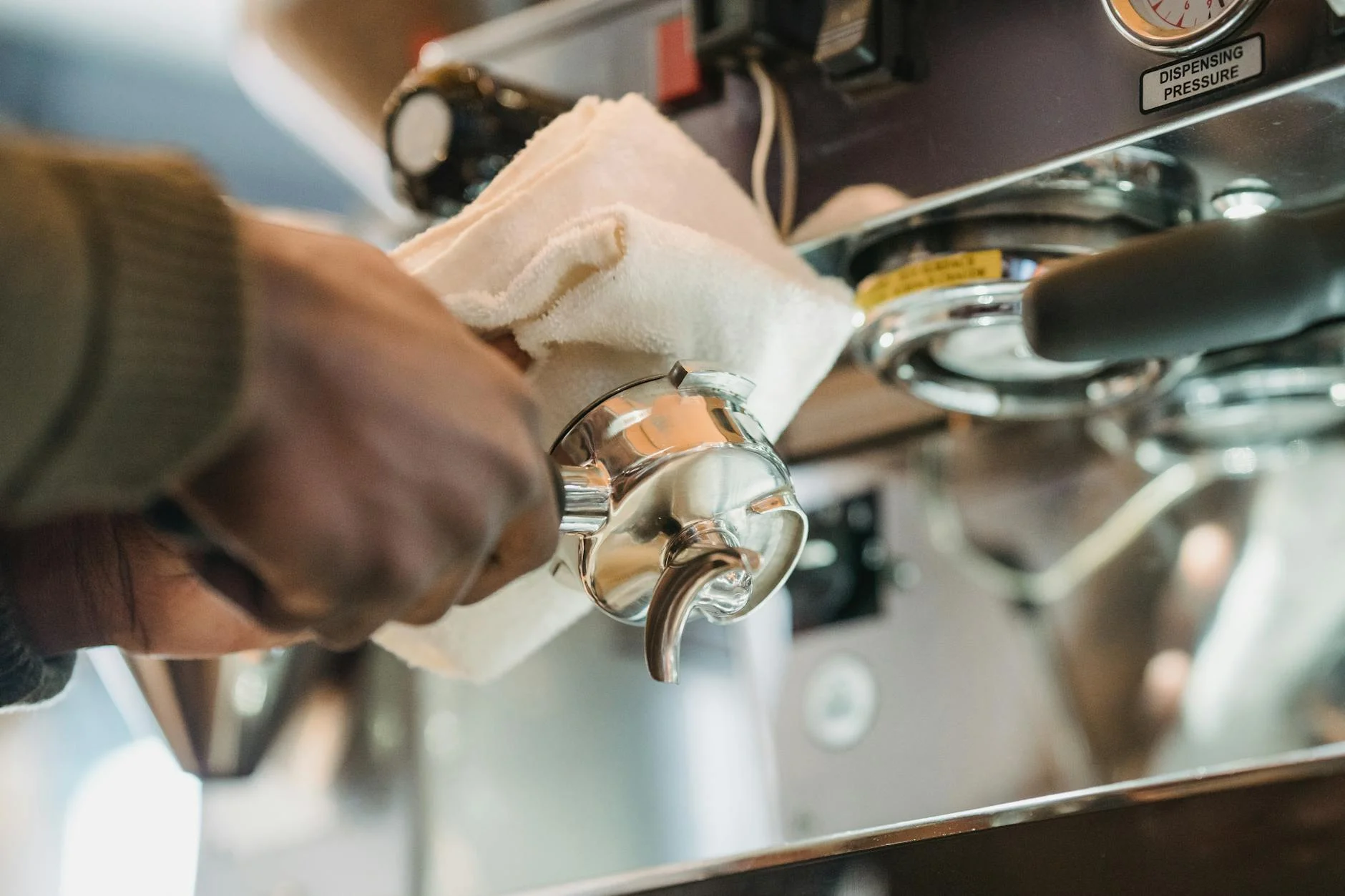
Owning a quality espresso machine is a joy for any coffee lover, but it’s an investment that requires proper care. To keep your machine running smoothly and your coffee tasting delicious, regular maintenance is non-negotiable. However, the world of espresso machine care is filled with specific terminology that can be confusing. Two of the most critical, and often misunderstood, procedures are descaling and backflushing. Many new users mistakenly believe they are the same thing or that one can replace the other. The truth is, they are completely different processes that target separate issues within your machine. Understanding this distinction is the first step toward protecting your equipment and perfecting your brew. This guide will demystify these two essential tasks for you.
What is backflushing? Cleaning the brew group
Think of backflushing as the daily “dishwashing” for your espresso machine’s brew group. Every time you pull a shot, hot, pressurized water forces coffee oils, grounds, and solubles through the group head. While most of this ends up in your cup, a small amount is always left behind on the shower screen, the gasket, and within the internal pathways of the group head. Specifically, it targets the three-way solenoid valve, a component that relieves pressure after brewing. Over time, these leftover coffee oils turn rancid, and the fine grounds build up into a hard, tar-like gunk. This residue will inevitably taint your espresso, imparting a bitter, stale, or even metallic taste.
Backflushing is the process of cleaning this specific area. It is performed using a special “blind” filter basket with no holes. You place this basket in your portafilter, add a small amount of a specialized espresso machine detergent (not descaler), and lock it into the group head. When you run the pump, pressure builds up since the water has nowhere to go. When you stop the pump, the three-way valve opens, and the pressure forcefully flushes the detergent-laced water backwards through the system, blasting away the built-up grime. It’s a targeted clean for the parts that directly touch your coffee during extraction.
What is descaling? Tackling internal mineral buildup
If backflushing is washing the dishes, descaling is cleaning the plumbing inside your house. This process has nothing to do with coffee oils and everything to do with your water. All water, unless it’s distilled, contains minerals like calcium and magnesium. When this water is heated inside your machine’s boiler and pipes, these minerals precipitate out and form limescale—a hard, chalky deposit. This is the same white crust you might see inside a kettle.
This internal scale buildup is a silent killer for espresso machines. It acts as an insulator on heating elements, forcing them to work harder and eventually fail. It can clog the narrow pipes and tubes, leading to weak water flow, low steam pressure, and inconsistent brew temperatures. In a worst-case scenario, a complete blockage can cause a catastrophic failure. Descaling involves running a specific acidic solution (a descaler) through the entire water path of the machine—from the water tank, through the boiler, and out the group head and steam wand. This acid dissolves the mineral deposits, flushing them out and restoring the machine’s internal pathways to a clean state.
A direct comparison of descaling and backflushing
To put it simply, these two maintenance tasks are not interchangeable. Using a detergent to descale would do nothing against mineral buildup, and using an acidic descaler to backflush could severely damage the chrome and brass components of your group head. They are complementary procedures required for complete machine health. One addresses the byproducts of coffee, ensuring great taste, while the other addresses the byproducts of water, ensuring machine longevity and performance. The table below provides a clear, at-a-glance summary of their core differences.
| Feature | Backflushing | Descaling |
| Primary Target | Rancid coffee oils and fine grounds | Limescale and mineral deposits |
| Location Cleaned | Group head, shower screen, 3-way valve | Boiler, heating elements, internal pipes |
| Cleaning Agent | Alkaline-based detergent | Acid-based descaling solution |
| Main Purpose | Preserve coffee taste and flavor | Prevent machine damage and ensure performance |
| Typical Frequency | High (e.g., weekly for home use) | Low (e.g., every 1-4 months) |
When and how often should you perform maintenance?
Knowing what to do is only half the battle; knowing when to do it is just as important. The frequency of these tasks depends heavily on your usage and water quality.
- Backflushing: For the home barista, a full backflush with detergent is recommended at least once a week. It’s also excellent practice to do a quick backflush with just water at the end of each day you use the machine to rinse out fresh grounds before they harden. The primary sign you need to backflush is a decline in taste—if your espresso suddenly starts tasting overly bitter or “off,” a dirty group head is the most likely culprit.
- Descaling: This is entirely dependent on the hardness of your water. If you use very hard water, you may need to descale as often as every month. If you use soft or properly filtered water, you might only need to do it every three to six months, or even less. The best approach is to test your water hardness with a simple test strip. Signs your machine needs descaling include reduced steam pressure, weak water flow from the group head, or the machine taking longer than usual to heat up. Many modern machines also have an indicator light to tell you when it’s time.
In conclusion, backflushing and descaling are two pillars of proper espresso machine care. They are not interchangeable but rather work in tandem to keep your machine in peak condition. Backflushing focuses on cleanliness at the point of extraction, using a detergent to remove coffee oils from the group head to ensure your espresso tastes pure and flavorful. Descaling is a deep, internal clean, using an acidic solution to eliminate mineral scale from the boiler and pipes to prevent clogs and heating issues. Ignoring one for the other will lead to either bad-tasting coffee or a broken machine. By incorporating both into a regular maintenance schedule tailored to your usage and water quality, you protect your investment and guarantee a delicious cup every time.

 No products in the cart.
