

Mastering your CBTL espresso: A guide to balancing acidity and bitterness
There’s a unique satisfaction in brewing a cafe-quality espresso in your own kitchen. For fans of The Coffee Bean & Tea Leaf, bringing that signature taste home is a daily ritual. Yet, many home baristas face a common challenge: the espresso shot that misses the mark, tasting either sharply sour or unpleasantly bitter. This frustrating experience isn’t a fault of your CBTL beans or machine, but rather a simple imbalance in the brewing process. This guide is designed to demystify the core concepts of espresso extraction. We will explore why your coffee might taste sour or bitter and provide a clear, step-by-step approach to help you control the variables and finally achieve that rich, sweet, and perfectly balanced CBTL espresso shot every time.
Understanding the taste culprits: Acidity vs. bitterness
Before you can fix a problem, you must understand its source. In espresso, the two main flavor extremes you’ll encounter are acidity (sourness) and bitterness. It’s crucial to know that neither is inherently bad; in fact, a great espresso has elements of both. Acidity provides a bright, lively quality, like the pleasant tang of a citrus fruit. Bitterness can offer a deep, satisfying finish, similar to dark chocolate. The problem arises when one of these flavors completely overpowers the other.
This imbalance is almost always a direct result of extraction. Think of extraction as the process of water dissolving flavors from your coffee grounds.
- Under-extraction (Sour): This happens when the water passes through the coffee grounds too quickly, not giving it enough time to dissolve all the good stuff. The first flavors to extract are the acids. If you stop the process too early, you’re left with a cup full of sharp, sour notes and a thin body. Your shot will taste underdeveloped and lemony.
- Over-extraction (Bitter): This is the opposite scenario. The water spends too much time in contact with the coffee grounds, dissolving everything, including the less desirable, bitter compounds. While you’ll get the acids and sugars, you’ll also pull out harsh, ashy, and intensely bitter flavors that mask any sweetness.
The goal is to find the sweet spot right in the middle, where you have extracted just enough of the desirable acids and sugars before the heavy, bitter compounds take over. This is a balanced shot.
The grinder is your greatest ally
To control extraction, your single most powerful tool is your coffee grinder. While you may be using premium CBTL beans, if your grind isn’t right, you’ll never achieve a balanced shot. The size of your coffee grounds directly dictates how fast water can flow through them, giving you primary control over the extraction time.
Imagine water flowing through a jar of large pebbles versus a jar of fine sand. The water will rush through the pebbles but will take much longer to seep through the sand. It’s the same principle with coffee:
- If your shot is sour (under-extracted): Your grind is likely too coarse. The water is flowing through too quickly. You need to make your grind finer. This increases the resistance, slowing the water down and allowing for more flavor to be extracted.
- If your shot is bitter (over-extracted): Your grind is probably too fine. The water is struggling to get through, spending too much time with the grounds. You need to make your grind coarser. This reduces the resistance and allows the water to flow more freely.
This process of making small, incremental changes to your grind setting is called “dialing in.” Don’t be afraid to experiment. Make one small adjustment at a time, pull a shot, and taste it. This iterative process is the key to unlocking your coffee’s potential.
The brew recipe: Dose, yield, and time
Once you start honing in on the right grind size, the next step is to control your brewing recipe. This consists of three interconnected variables: dose, yield, and time. For consistency, using a small digital scale that measures in grams is essential.
Dose: This is the weight of your dry coffee grounds in the portafilter basket. A common starting dose for a double shot is around 18 grams, but this depends on your basket size. Keeping your dose consistent from shot to shot is critical for repeatable results.
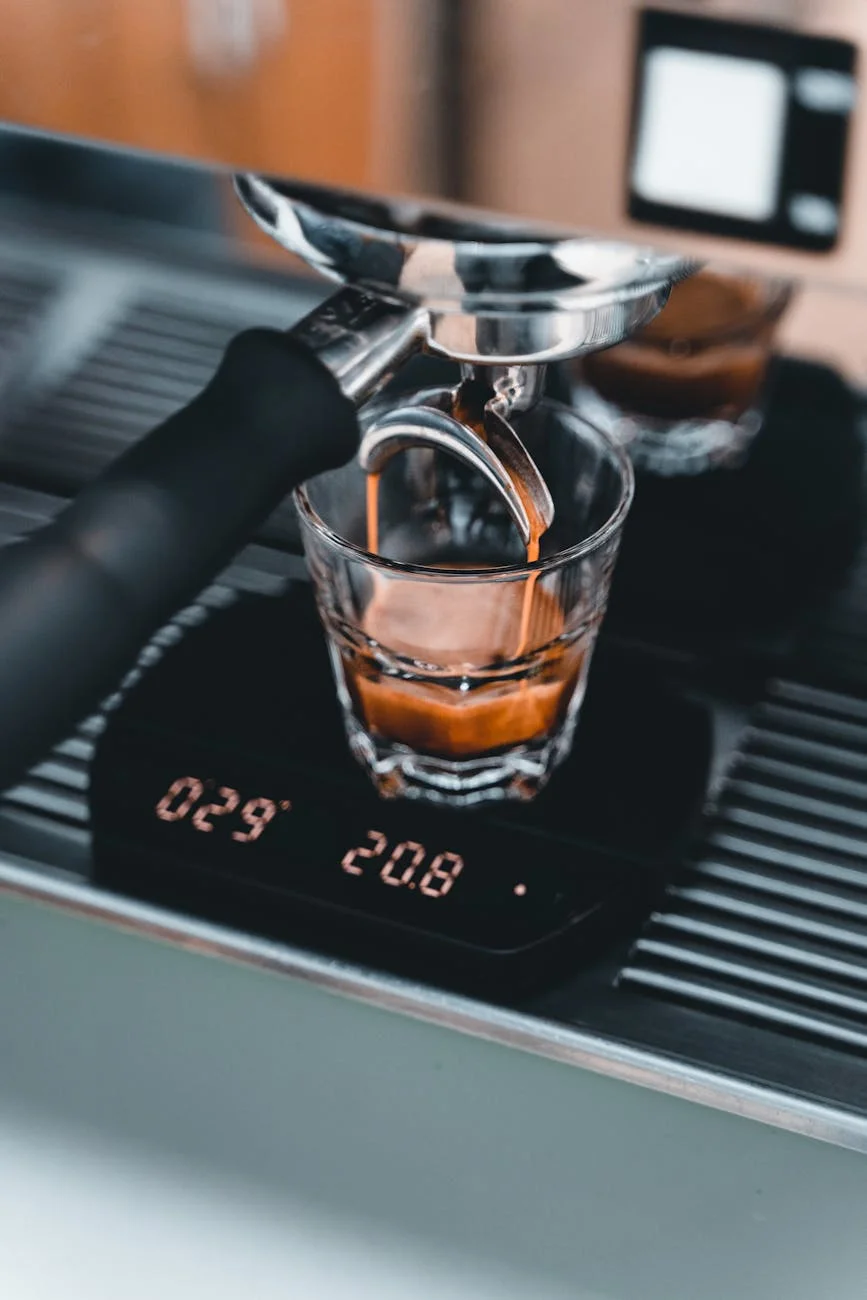
Yield: This is the weight of the liquid espresso in your cup. It’s far more accurate than measuring by volume (like ounces), as the crema can be misleading. A great starting point for espresso is a 1:2 brew ratio. This means for every 1 gram of dry coffee, you want 2 grams of liquid espresso. So, for an 18-gram dose, you would aim for a 36-gram yield.
Time: This is the total time it takes to reach your target yield, starting from the moment you press the brew button. A general benchmark for a balanced shot is between 25 and 30 seconds.
These three elements work together. Your goal is to adjust the grind size (Chapter 2) so that you hit your target yield in your target time. For example, if you are getting 36g of espresso in only 15 seconds, your shot will be sour. You need to grind finer to slow it down. If it takes 45 seconds, it will be bitter, and you need to grind coarser.
| Problem | Likely Cause | Primary Solution |
|---|---|---|
| Sour, acidic, thin taste | Under-extraction | Make the grind size finer to slow the shot down. |
| Bitter, harsh, ashy taste | Over-extraction | Make the grind size coarser to speed the shot up. |
| Shot is both sour and bitter | Uneven extraction (Channeling) | Improve puck prep: distribute grounds evenly and tamp level. |
Beyond the basics: Temperature and tamping
After mastering the relationship between grind, dose, yield, and time, a few final details can elevate your CBTL espresso from good to great. These are puck preparation and temperature stability.
Tamping: The purpose of tamping is not to press as hard as you can, but to create a level and uniformly compressed puck of coffee. If your tamp is uneven, water will find the path of least resistance and create channels through the puck. This is called channeling, and it results in a terrible shot that is simultaneously under-extracted (where the water rushed through) and over-extracted (where the water sat for too long). Focus on a consistent, level tamp every time to ensure the water flows evenly through all of the coffee grounds.
Temperature: Water temperature also plays a role in extraction. If your water is too cool, it can lead to sour, under-extracted shots. If it’s too hot, it can scald the coffee and create bitter flavors. While many home machines don’t offer temperature control, you can still improve stability. A simple trick is to run a “blank shot” (just hot water, no coffee) through your portafilter right before you brew. This preheats all the components, preventing the machine from losing heat when it comes into contact with cold metal, leading to a more stable and consistent extraction temperature.
Conclusion
Achieving a perfectly balanced shot of CBTL espresso at home is not a matter of luck, but a result of understanding and controlling the extraction process. We’ve learned that a sour shot is a sign of under-extraction, meaning the water moved through the coffee too quickly. Conversely, a bitter shot indicates over-extraction, where the water lingered for too long. Your primary tools for correcting this imbalance are your grinder and your scale. By systematically adjusting your grind size, you can control the flow rate of your shot, aiming for a target yield (typically a 1:2 ratio) in a target time of around 25-30 seconds. Paying attention to consistent dosing, tamping, and temperature will further refine your results. Embrace the process of dialing in; taste every shot, make one small adjustment at a time, and you will be rewarded with a delicious, rich, and balanced espresso that truly does justice to your favorite Coffee Bean & Tea Leaf beans.

 No products in the cart.