

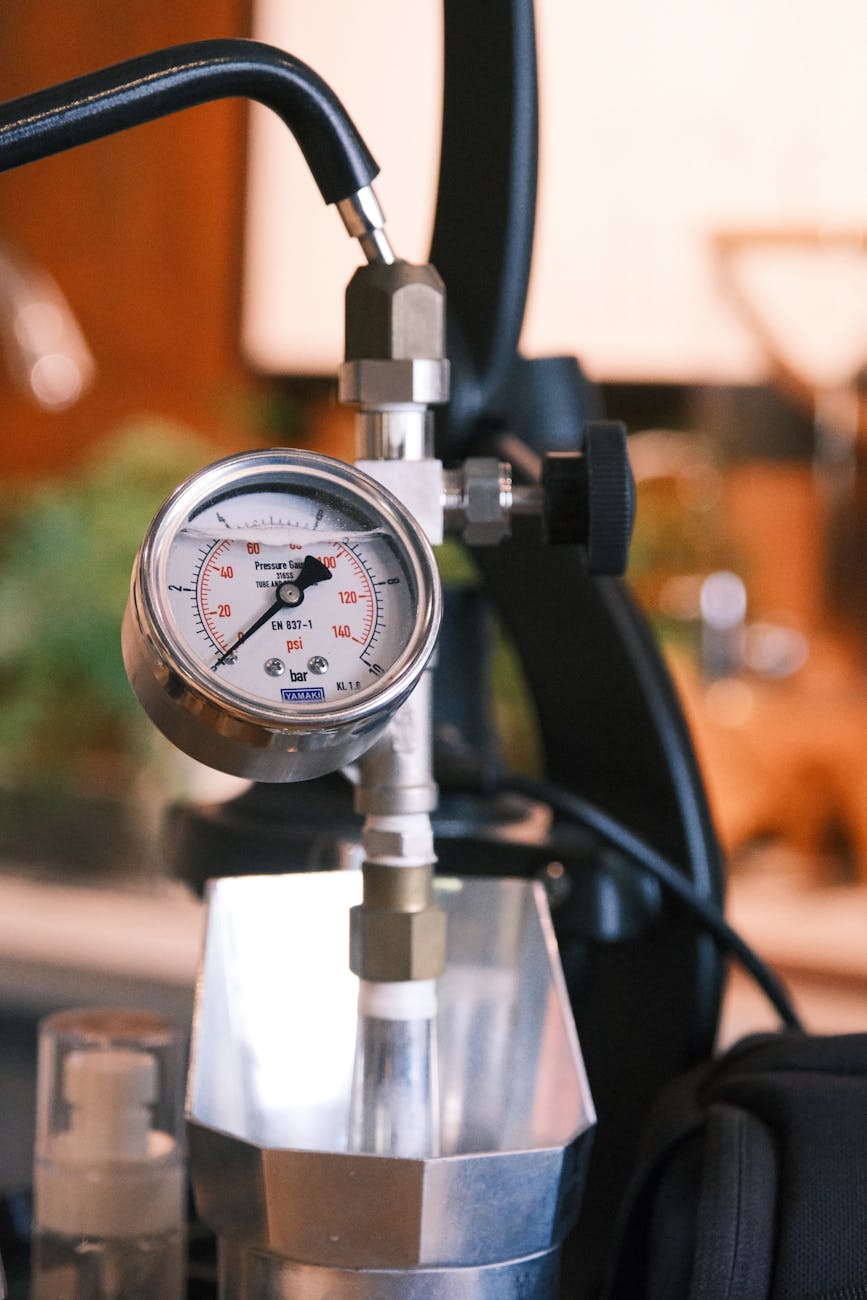
The Gaggia Classic is an icon in the world of home espresso, celebrated for its robust build and potential to produce fantastic coffee. However, its greatest weakness has always been its rudimentary temperature control. The stock machine relies on a simple bimetallic thermostat, leading to wide temperature swings that can make or break an espresso shot. This is where the Gaggiuino project, a comprehensive open-source modification, steps in to revolutionize the machine’s performance. The heart of this upgrade is its advanced PID controller. This article will delve into how the specific PID settings within the Gaggiuino firmware tame the Gaggia Classic’s unruly boiler, achieving a level of temperature stability previously reserved for much more expensive, prosumer machines.
Understanding the Gaggia Classic’s temperature problem
To appreciate the Gaggiuino solution, we must first understand the stock Gaggia Classic’s core issue. The machine’s heating element is controlled by a simple mechanical thermostat. Think of it as a basic light switch for heat. When the boiler temperature drops below a certain point, the thermostat clicks on, sending full power to the heating element. Once it reaches an upper threshold, it clicks off completely. This on/off cycle creates a significant temperature rollercoaster inside the boiler.
This range between the ‘on’ and ‘off’ points is known as the deadband, and in a stock Gaggia Classic, it can be as wide as 10-15°C (18-27°F). This means your brew water could be 98°C for one shot and 88°C for the next, even if you wait the same amount of time. This inconsistency is the enemy of good espresso, leading to shots that can be unpredictably sour (too cold) or bitter (too hot). Experienced users often resort to a technique called “temperature surfing,” a timed routine of flushing water and starting the shot to try and catch the boiler on the right part of its temperature swing. While it helps, it’s an imprecise workaround for a fundamental design limitation.
What is a PID and how does Gaggiuino use it?
The Gaggiuino mod replaces the machine’s crude on/off thermostat with a sophisticated digital brain centered around a PID controller. PID stands for Proportional-Integral-Derivative, and it represents a massive leap in control technology. Instead of a simple on/off switch, a PID controller is like a highly skilled driver with their foot delicately managing the accelerator to maintain a perfect speed.
It works by constantly measuring the boiler’s actual temperature via a thermocouple, comparing it to your desired setpoint (e.g., 93°C), and calculating the precise amount of power to send to the heating element. It doesn’t just switch the heater on or off; it can pulse the power in tiny increments, making continuous, intelligent micro-adjustments. The Gaggiuino firmware integrates this logic, turning the heating element into a precision tool rather than a blunt instrument. This proactive and predictive approach all but eliminates the wide temperature swings of the stock machine, holding the boiler at a remarkably stable temperature.
Decoding the PID settings: P, I, and D
The true power of the Gaggiuino lies in its ability to let you fine-tune the PID algorithm. The three core parameters—P, I, and D—work in concert to achieve perfect stability. Understanding what each one does is key to optimizing your machine.
- P (Proportional): This is the primary workhorse. Its job is to react to the present error. The “error” is the difference between your target temperature and the current temperature. The larger the error, the more power the P component applies. A higher P value creates a more aggressive response, heating the boiler faster. However, if the P value is too high, it’s like flooring the accelerator right up to the stoplight; you’ll overshoot your target temperature significantly.
- I (Integral): This component addresses the past error. It looks at the accumulated error over time. Sometimes, the P-term alone isn’t enough to reach the target, resulting in a stable temperature that’s slightly below the setpoint (known as “droop”). The I-term slowly builds up power to eliminate this small, persistent error, ensuring the boiler settles precisely on your target temperature. It provides the final, perfect push to get you exactly where you need to be.
- D (Derivative): This is the predictive element that looks at the future error. It measures the rate at which the temperature is changing. As the boiler temperature rapidly approaches the setpoint, the D-term anticipates a potential overshoot and begins to reduce power *before* the target is reached. It acts like a brake, dampening the aggressive action of the P-term to prevent a temperature spike and subsequent oscillations around the setpoint.
The Gaggiuino system allows you to adjust these values, but thankfully, it also includes a brilliant autotune function. This process runs the machine through a heating cycle to automatically calculate a very effective set of P, I, and D values for your specific machine, giving you an excellent starting point for rock-solid stability.
The results: Achieving rock-solid brew temperature
The practical impact of a properly tuned Gaggiuino PID is nothing short of transformative. The theoretical dance between the P, I, and D values translates into tangible, repeatable results in the cup. Where you once had to guess and “surf,” you now have digital precision. The temperature displayed on the Gaggiuino screen is the temperature you get, with fluctuations often held to within an incredible ±0.5°C of your setpoint.
This stability removes a major variable from the espresso-making equation. You can now dial in your grinder with confidence, knowing that any changes in taste are due to your grind adjustment, not a random temperature swing. It unlocks the ability to consistently extract the delicate nuances of different coffee beans. A light roast single-origin might shine at 94°C, while a classic Italian blend is best at 91°C. With Gaggiuino, you can set these targets and hit them every single time.
Let’s look at a direct comparison:
| Feature | Stock Gaggia Classic | Gaggiuino-Modded Gaggia Classic |
| Control method | Bimetallic thermostat | Digital PID controller |
| Temperature swing (Deadband) | 10-15°C (18-27°F) | Typically under 1°C (1.8°F) |
| Temperature accuracy | Low and unpredictable | High, set to a specific degree |
| Shot-to-shot consistency | Poor; requires “surfing” | Excellent and repeatable |
Conclusion
In summary, the Gaggia Classic’s primary flaw—its profound temperature instability—is not just managed but completely solved by the Gaggiuino modification. By replacing the archaic thermostat with an intelligent PID controller, the system transforms the machine’s performance. Understanding the roles of the Proportional, Integral, and Derivative settings reveals how this smart system can proactively and precisely manage the boiler’s heat to maintain a stable and accurate brew temperature. The result is the elimination of guesswork and the empowerment of the home barista. The Gaggiuino PID settings elevate the humble Gaggia Classic from a capable entry-level machine to a precision instrument that can produce consistently exceptional espresso, rivaling the performance of equipment many times its price.



 No products in the cart.