


The Gaggia Classic Pro is a legend in the world of home espresso, offering a fantastic platform for aspiring baristas. However, many owners find themselves on a frustrating roller coaster of shot quality. One day you pull a perfect, syrupy shot, and the next, a gusher that tastes sour and thin. This inconsistency often boils down to one tiny, invisible culprit: static electricity in your coffee grounds. Static leads to clumping and uneven distribution, which in turn causes channeling and ruins your extraction. In this guide, we will explore a simple, near-zero-cost solution called the Ross Droplet Technique (RDT) and show you how to seamlessly integrate it into your Gaggia Classic Pro workflow for dramatically improved shot consistency.
Understanding the enemy: static and channeling
Before we introduce the solution, it’s crucial to understand the problem. When you grind coffee beans, the friction created by the burrs generates static electricity, especially with lighter roasts or in dry climates. This static charge causes the tiny coffee particles to cling together, forming clumps. It also makes them stick to your grinder, your dosing cup, and everything else, creating a significant mess.
But the mess is the least of your worries. The real issue is what these clumps do to your espresso puck. When you try to distribute these clumpy grounds in your Gaggia’s portafilter, you create invisible pockets of high and low density. When you tamp, these inconsistencies get locked in. As the Gaggia’s powerful pump forces hot water through the puck, the water naturally seeks the path of least resistance. It will rush through the less dense areas, a phenomenon known as channeling. This means some parts of your coffee are over-extracted (becoming bitter) while other parts are under-extracted (remaining sour), all in the same shot. The result is an unbalanced and disappointing cup of espresso.
The Ross droplet technique (RDT) explained
The Ross Droplet Technique, or RDT, is a brilliantly simple method to eliminate static during grinding. It involves adding a minuscule amount of water to your whole beans right before you grind them. You might think adding water to beans is a cardinal sin, but the amount used is so small that it has no negative impact on the flavor or the grinder burrs when done correctly.
Here’s how it works:
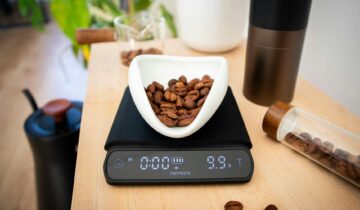
- Weigh your beans: Start your workflow as usual by weighing your desired dose of whole beans into a small cup or container.
- Add a single drop: The key is to use an incredibly small amount of water. The easiest way is with a small spray bottle, giving the beans a single, quick spritz. Alternatively, you can wet the handle of a spoon or even just your fingertip and stir it through the beans. You are aiming to lightly coat the beans, not soak them.
- Shake to distribute: Give the container a good shake for a few seconds. This ensures the tiny amount of moisture is evenly distributed across the surface of all the beans.
The science is straightforward. Water is conductive. The thin layer of moisture on the beans provides a path for the static charge to dissipate, preventing it from building up during the grinding process. The immediate result is noticeably fluffier, clump-free grounds that are far easier to work with.
Integrating RDT into your Gaggia Classic Pro workflow
Now, let’s put it all together. Adding RDT to your existing Gaggia Classic Pro routine is simple and adds only a few seconds, but it pays huge dividends in puck preparation. A well-prepared puck is the foundation of a great shot.
Here is a revised, RDT-inclusive workflow:
- Step 1: Weigh and RDT. Measure your beans and apply your single spritz of water, shaking well to coat them.
- Step 2: Grind. Add the beans to your grinder. You will immediately notice a difference. The grounds will fall neatly into your portafilter or dosing cup with virtually no static cling. Your grinder chute and counter will be significantly cleaner.
- Step 3: Distribute. Because the grounds are now light and fluffy instead of clumpy, distribution becomes much more effective. If you use a Weiss Distribution Technique (WDT) tool, you’ll find the needles glide through the grounds effortlessly, breaking up any minor clumps and creating a perfectly homogenous bed of coffee.
- Step 4: Tamp and pull. Tamp on a level surface with firm, even pressure. Lock the portafilter into your Gaggia Classic Pro and begin your extraction. Watch the magic happen. You should see the espresso emerge as even, syrupy beads across the bottom of the basket, coalescing into a single, stable stream. The dreaded “spritzers” caused by channeling will be greatly reduced or eliminated entirely.
The tangible benefits: RDT vs. no RDT
The difference RDT makes is not just theoretical; it’s something you can see, feel, and most importantly, taste. By creating a more uniform coffee puck, you enable the Gaggia Classic Pro to perform a much more even extraction. This directly translates to a more balanced and repeatable flavor in the cup. Sweetness and complexity are enhanced, while harsh bitter and sour notes caused by poor extraction are minimized.
Let’s compare the workflows side-by-side to see the clear advantages.
| Feature | Workflow without RDT | Workflow with RDT |
|---|---|---|
| Grind Consistency | Clumpy, charged with static | Fluffy, static-free, uniform |
| Puck Preparation | WDT is difficult, hidden clumps persist | WDT is easy and highly effective |
| Extraction Quality | High risk of channeling and spritzing | Even, centered, and stable flow |
| Shot Consistency | Low; results vary wildly shot to shot | High; easily repeatable and reliable shots |
| Cleanup | Messy, with grounds stuck everywhere | Clean and contained |
| Taste Profile | Inconsistent, often unbalanced | Consistent, balanced, and complex |
In conclusion, if you are a Gaggia Classic Pro owner struggling with inconsistent espresso, the Ross Droplet Technique is not just a tweak; it’s a transformative step. By tackling the root cause of poor puck integrity—static electricity—you unlock the true potential of your machine. This simple, free technique leads to fluffier grounds, which allows for better distribution, a more uniform puck, and ultimately, a more even extraction. The reward is a significant leap in shot-to-shot consistency, a cleaner workspace, and most importantly, a more delicious and balanced cup of espresso every single time. Stop fighting with your grinder and your puck; add a single drop of water and elevate your home barista game today.
 No products in the cart.