

Mastering the rush: Workflow tips for pulling back-to-back shots during dessert service
The main courses are cleared, and a new energy fills the restaurant. It’s the dessert rush, a fast-paced and demanding period where dockets for espressos, lattes, and cappuccinos pile up faster than you can say “tiramisu”. For a barista, this is the moment of truth. Juggling multiple orders while maintaining the quality of each coffee is a high-wire act. A clunky workflow can lead to long wait times, inconsistent drinks, and frustrated customers. This article is designed to help you navigate the chaos with confidence. We will explore practical, repeatable workflow tips for pulling perfect back-to-back shots, turning the dessert service from a stressful scramble into a smooth, efficient, and even enjoyable performance.
Setting the stage: Your pre-service checklist
The secret to a flawless performance during the rush begins long before the first dessert order is called. A well-prepared station, often referred to by the classic culinary term mise en place, is the foundation of speed and consistency. Think of your espresso machine and grinder as your cockpit; every essential tool should be within a simple arm’s reach, eliminating wasted steps. Before service, ensure your grinder’s hopper is full and your recipe is dialed in. A few minutes spent perfecting the grind size and dose will save you from making frustrating adjustments when you’re under pressure.
Your workflow efficiency is directly tied to this preparation. Consider these key actions:
- Stock your stations: Ensure your milk fridge is full, with different milk types clearly organized. Stack your cups—demitasses, cappuccino cups, and latte glasses—on top of the machine to keep them warm.
- Prepare your tools: Have a dedicated, damp cloth for your steam wand, a dry one for your portafilter basket, and another for general spills. Your tamper and distribution tool should have a designated home, ready to be grabbed without a second thought.
- Pre-dose for the first wave: For the anticipated initial rush, having one or two portafilters dosed with freshly ground coffee can give you a critical head start.
By arranging your space logically, you create a system of muscle memory. You won’t be searching for a cloth or a lid; your hands will know exactly where to go. This groundwork transforms your process from a series of disjointed tasks into a single, fluid motion.
Developing your espresso rhythm
Once your station is set, the focus shifts to the physical routine of making coffee. The goal is to create a seamless, repeatable rhythm that minimizes downtime between shots. Every second counts. A common mistake is to perform tasks sequentially when they could be overlapped. An efficient espresso rhythm is about turning those small pockets of waiting time, like the 25-30 seconds a shot is pulling, into productive moments.
Let’s break down an optimized cycle for a single espresso-based drink:
- Purge and wipe: After knocking out the used puck, immediately purge the group head to rinse away old grounds and stabilize the temperature. Wipe the basket with your dry cloth as it purges.
- Dose, distribute, and tamp: Grind your coffee directly into the portafilter. Use a distribution tool to level the grounds for an even extraction, then apply a firm, level tamp. This entire step should be a quick, decisive action.
- Brew and prepare: Lock the portafilter into the group head, place your pre-warmed cup and scale underneath, and immediately start the shot. The moment the shot begins pulling is your cue to move. Do not stand and watch it.
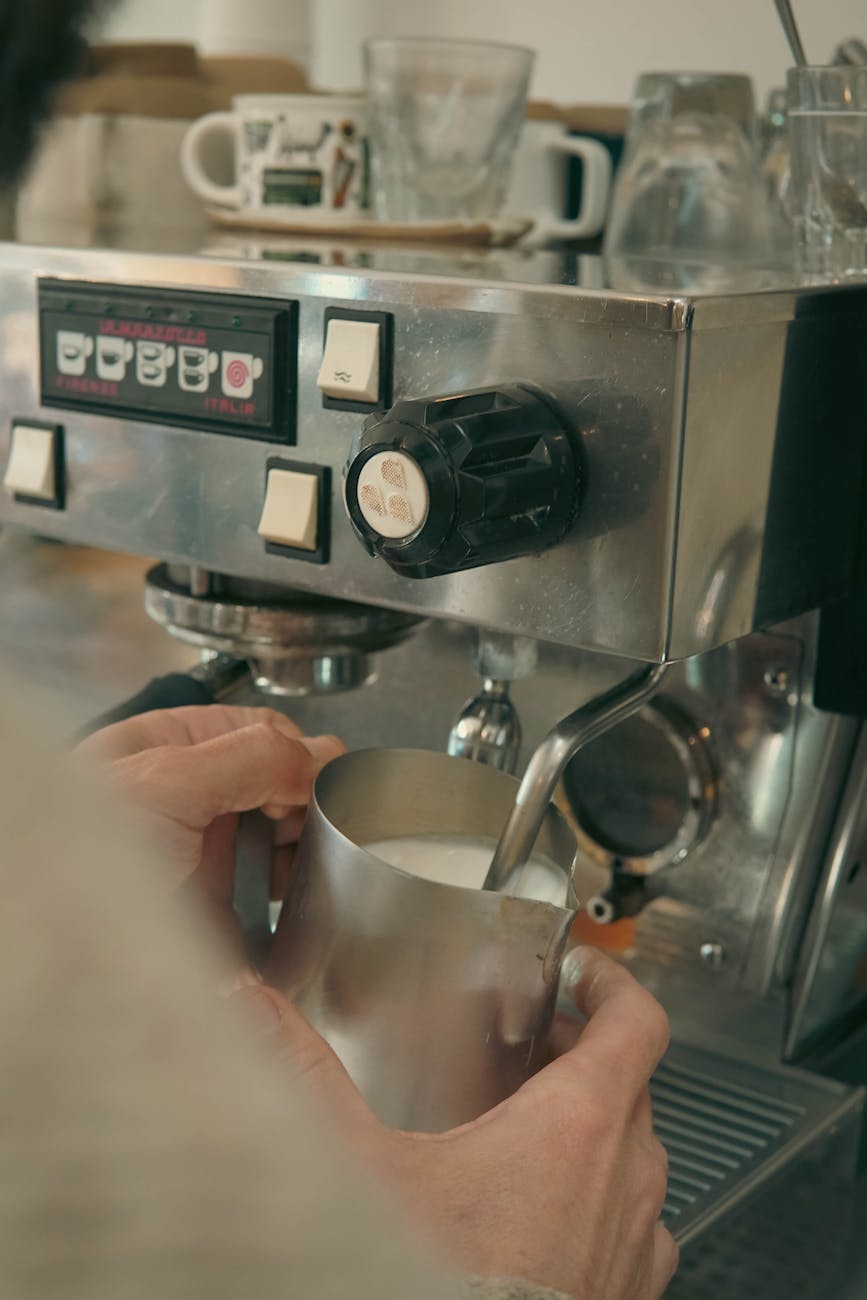
- Steam while brewing: Grab your milk pitcher, purge the steam wand, and begin steaming your milk. With practice, you can time your steaming to finish just as the espresso shot is completing its extraction. This is the single most important multitasking skill for a busy barista.
This rhythm eliminates hesitation. Instead of watching the shot, you’re steaming milk. Instead of waiting for the grinder, you’re wiping the portafilter. Each action flows directly into the next, creating a continuous loop of productivity that allows you to handle back-to-back orders without feeling overwhelmed.
The dual-task dance: Juggling multiple orders
Mastering the individual drink rhythm is step one. The real challenge of dessert service is managing a docket with three, four, or even five different coffees. This requires a higher level of mental organization and workflow strategy. The key is to group similar tasks together and keep the machine working for you at all times. Avoid making drinks one by one from start to finish. Instead, think like a line cook: find efficiencies through batching.
If an order comes in for two lattes and a flat white, don’t make them in series. Pull your first shot and while it’s extracting, prepare the portafilter for the second shot. As soon as the first is done, swap the portafilters and start the second extraction. While that one is pulling, you can steam a larger pitcher of milk for both lattes simultaneously. This approach keeps the group heads constantly engaged and reduces the number of times you need to steam milk. For orders with different milk types or temperatures, you’ll have to steam separately, but you can still streamline the espresso production line.
Prioritize your workflow based on the drinks ordered. A simple espresso or long black requires no milk, so you can pull that shot while preparing the portafilter and milk for a more complex latte that follows. Always be thinking one step ahead, sequencing your actions to maximize output without sacrificing the quality of any single drink.
Beyond the barista: Tools and communication
While individual skill is crucial, a barista is only as effective as their tools and their team. Modern espresso equipment can be a game-changer for consistency and speed. Likewise, clear communication between the barista, the floor staff, and the kitchen prevents bottlenecks and ensures a smooth customer experience.
On the equipment front, volumetric espresso machines that can be programmed to dispense a precise amount of water are invaluable. They allow you to start a shot and confidently turn your attention to steaming milk, knowing the extraction will stop automatically. Similarly, grinders with timed dosing and tools like auto-tampers reduce variables and save precious seconds on every single drink.
However, technology is only part of the equation. Communication is the glue that holds the service together. Establish a clear, concise system for calling orders. Servers should know how to clearly articulate modifications, and the barista should audibly confirm the drinks as they are being made. This prevents errors and avoids the time-wasting process of remaking an incorrect order.
| Area of Focus | Standard Approach | High-Efficiency Upgrade |
|---|---|---|
| Shot Pulling | Manually starting and stopping the shot. | Using a volumetric machine with programmed shot yields. |
| Tamping | Manual hand tamping. | Using a calibrated or automatic tamper for consistency. |
| Order Calling | Servers verbally call out drinks as they arrive. | A printed ticket system (POS) for clear, sequenced orders. |
| Workflow | Making one complete drink at a time. | Batching tasks: pulling all shots first, then steaming milk. |
Ultimately, a successful service is a team effort. When the barista is supported by great tools and clear communication, they are empowered to focus on what truly matters: crafting delicious coffee.
Conclusion
Thriving during a hectic dessert service is not about magic; it’s about method. It begins with meticulous preparation—a mise en place that puts everything you need at your fingertips. From there, it’s about cultivating a personal rhythm, a fluid and efficient routine that turns individual actions into a seamless dance of productivity. By learning to overlap tasks, such as steaming milk while your shot extracts, you unlock the secret to handling back-to-back orders. Expanding this skill to juggle multiple dockets through smart batching and clear communication elevates your workflow from competent to masterful. Speed and quality are not mutually exclusive. By implementing these strategies and leveraging the right tools, any barista can transform the pressure of the rush into an opportunity to shine, ensuring every customer’s meal ends on a high note with a perfectly crafted coffee.

 No products in the cart.