

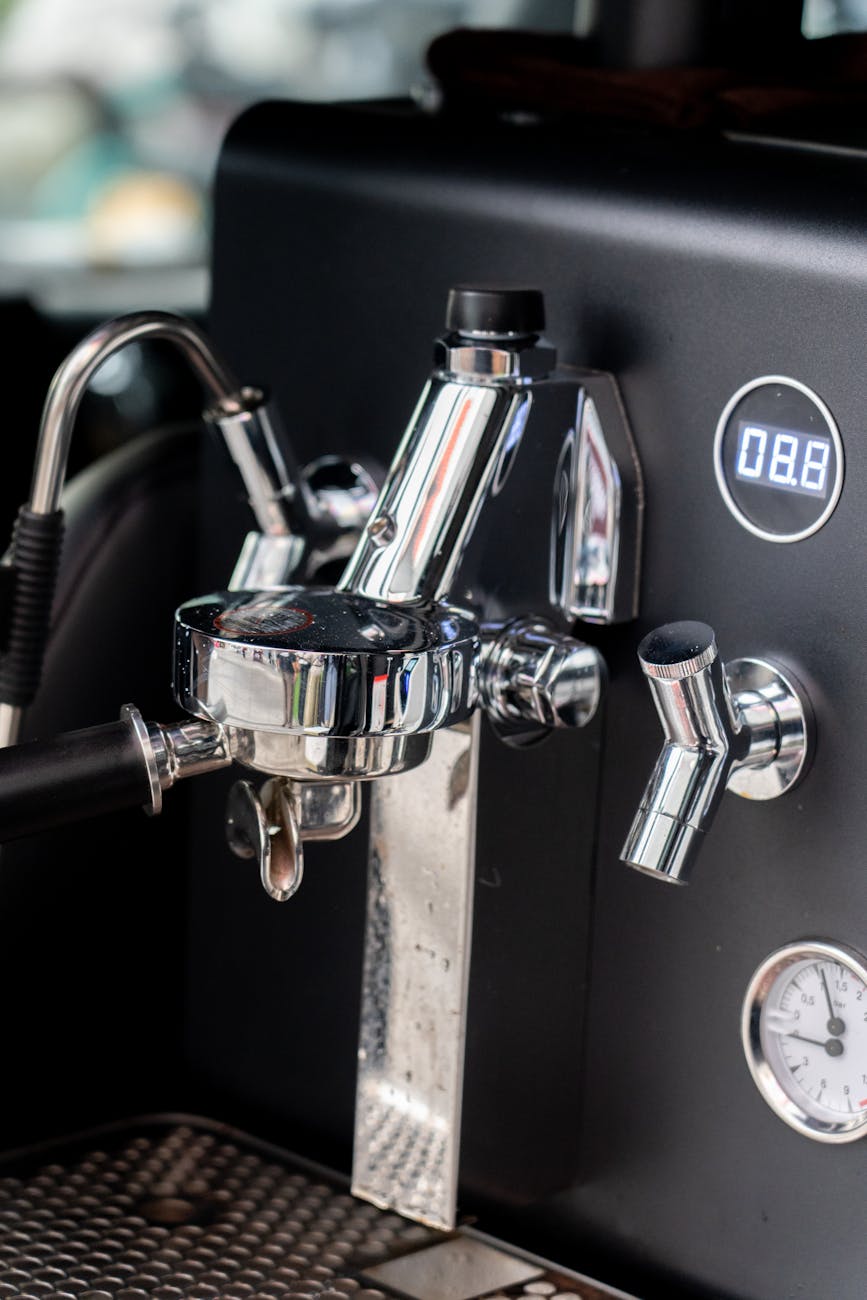
Why Your Espresso Tastes Burnt: A Guide to Mastering Heat Cycles
There’s nothing more disappointing than the acrid, bitter taste of a burnt espresso shot. You invested in a great machine and premium beans, yet the result is far from the rich, balanced flavor you crave from your favorite cafe. This common problem often leaves home baristas frustrated and confused. The culprit, more often than not, isn’t your coffee or your technique, but something more fundamental: heat. An uncontrolled brew temperature is the fastest way to ruin a shot. This article will demystify why your espresso tastes burnt, focusing specifically on the crucial role of temperature. We’ll explore how your machine’s heating system works and provide actionable steps to manage heat cycles, transforming your bitter shots into delicious, repeatable espresso.
The link between high temperature and over-extraction
That unpleasant burnt flavor is a direct result of a phenomenon called over-extraction. Think of coffee extraction as a process where water dissolves solids and oils from the coffee grounds to create your beverage. The first compounds to extract are acids and salts, which give coffee its brightness. Next come the sugars, which provide sweetness and body. Finally, the bitter-tasting organic compounds are extracted. A perfect espresso shot stops right after the sweetness is maximized and before the bitterness takes over.
When your brew water is too hot, it acts as an overly aggressive solvent. It dissolves all the desirable compounds far too quickly and then immediately begins stripping the bitter, astringent elements from the coffee puck. This supercharged extraction process is what creates that harsh, burnt, and hollow taste. While other factors like an overly fine grind or a shot that runs too long can also cause over-extraction, temperature is the most powerful and often overlooked variable. Getting it wrong guarantees a bad shot, even if every other part of your process is perfect.
Understanding your espresso machine’s heating system
Not all espresso machines handle heat the same way. To control your brew temperature, you first need to understand the type of boiler system you’re working with. This knowledge is the foundation for mastering heat management and achieving consistency.
- Single Boiler (SB): Common in entry-level machines, a single boiler is responsible for heating water for both brewing (around 90-96°C) and steaming (around 120-130°C). Because it can’t do both at once, it’s prone to wide temperature swings. After steaming milk, the boiler is far too hot for brewing, and you must actively cool it down. Even when only brewing, the temperature fluctuates as the heating element cycles on and off, making active management essential.
- Heat Exchanger (HX): A step up, HX machines have a large steam boiler that is always kept at steaming temperature. A copper tube, the heat exchanger, runs through this boiler. Cold water from the reservoir passes through this tube, flash-heating it to brew temperature on its way to the grouphead. When the machine is idle, the water in this tube can overheat, requiring a “cooling flush” before pulling a shot to bring it down to the correct temperature.
- Dual Boiler (DB) & PID: This is the gold standard for temperature stability. As the name suggests, these machines have two separate boilers: one for brewing and one for steaming. A PID (Proportional-Integral-Derivative) controller, essentially a very precise digital thermostat, maintains the brew boiler at an exact temperature with minimal fluctuation. This system removes the guesswork and provides ultimate control.
Practical techniques for managing heat cycles
Now that you understand your machine’s system, you can apply the right technique to control it. The goal is to deliver water at a stable, correct temperature to your coffee puck every single time.
For Single Boiler machines, the technique is called temperature surfing. Because the temperature fluctuates, you need to “catch the wave” at the right moment. A common method is to turn on the brew switch with no portafilter until the heating light turns off (indicating the boiler has reached its peak temperature). At this point, the water is too hot. Start flushing water through the grouphead for a few seconds to bleed off the excess heat. The exact timing depends on your machine, but this is how you manually bring the temperature into the ideal brew range right before pulling your shot.
For Heat Exchanger machines, you’ll perform a cooling flush. The water sitting in the heat exchanger gets superheated while the machine is idle. Before you brew, lock in your empty portafilter and run the pump. You’ll see sputtering, steamy water. Continue flushing until the water flow becomes smooth and steady. This indicates the overheated water has been purged and you’re now getting fresh, correctly heated water from the reservoir. This flush can last anywhere from 3 to 10 seconds.
For Dual Boiler machines with a PID, the job is much simpler. You just need to set your desired temperature. The machine will do the hard work of keeping it stable. Your main task is dialing in the right temperature for your specific coffee beans.
Beyond temperature: other causes of a burnt taste
While temperature is the primary suspect, a few other issues can contribute to or mimic a burnt flavor. If you’ve stabilized your temperature but are still getting bitter shots, it’s time to investigate these other variables. First, consider your coffee beans. Very dark roasts, especially those that are oily and black, have been roasted to a point where the natural sugars are carbonized. They will inherently have roasty, smoky, and sometimes burnt flavor notes, regardless of your brewing perfection.
Second, check your equipment cleanliness. The grouphead, shower screen, and portafilter accumulate coffee oils over time. If not cleaned regularly, these oils go rancid and will impart a foul, bitter taste to every shot you pull. A consistent backflushing and cleaning routine is not optional; it’s critical for good espresso.
Here is a general guide for setting your brew temperature based on roast level, particularly useful for those with PID-equipped machines:
| Roast Level | Recommended Temperature Range (°C) | Reasoning |
| Light Roast | 92 – 96°C | Higher temperatures are needed to properly extract the delicate, acidic, and fruity flavors from denser, less-soluble beans. |
| Medium Roast | 90 – 93°C | A balanced starting point that preserves sweetness and body without introducing excessive bitterness. |
| Dark Roast | 88 – 91°C | Lower temperatures prevent over-extraction of the more soluble and delicate compounds in these brittle, porous beans, reducing bitterness. |
Diagnosing a burnt-tasting espresso begins with understanding extraction and the powerful role heat plays. A shot that’s too hot will always be a bitter, over-extracted one. By identifying your machine’s heating system, whether it’s a single boiler, heat exchanger, or dual boiler, you can unlock the correct management technique. Learning to temperature surf, perform a cooling flush, or simply set your PID gives you direct control over the final taste in your cup. Remember to also consider other factors like the roast level of your beans and the cleanliness of your equipment. Taking command of these variables, especially heat, is the most important step in moving from frustrating, inconsistent shots to consistently delicious espresso you can be proud of.
 No products in the cart.