

Why your espresso shot flow is inconsistent every morning
There is no greater morning ritual for a coffee lover than pulling the perfect espresso shot. The rich aroma, the syrupy flow, the beautiful crema. But there is also no greater frustration than when that ritual becomes a game of chance. One day you pull a “god shot,” and the next, you get a gushing, sour mess or a choked, bitter dribble. This inconsistency can make you want to give up and head to the local cafe. The truth is, espresso is a delicate science. Achieving a consistent, delicious shot flow day after day isn’t about luck; it’s about controlling a handful of critical variables. This article will guide you through the most common culprits, from your coffee beans to your machine, helping you diagnose the problem and build a repeatable routine for success.
It all starts with the bean and the grind
Before you even touch your espresso machine, the foundation for a great (or terrible) shot has already been laid. The coffee itself and how you grind it are arguably the most significant factors in shot consistency. Think of your coffee puck as a filter; its density and uniformity determine how easily water can pass through it.
Coffee freshness is paramount. As roasted coffee beans age, they release carbon dioxide (CO2). This gas, when present in fresh beans, helps create resistance during extraction, contributing to a richer crema and a more balanced flow. Stale beans have less gas, causing water to rush through the puck too quickly, leading to a fast, under-extracted, and thin shot. For best results, use beans within one to four weeks of their roast date.
More importantly, your grind size is your primary tool for controlling the flow rate. A finer grind creates more surface area and less space between particles, slowing down the water. A coarser grind does the opposite, speeding it up. Because beans change as they age and react to environmental factors like humidity, you must be prepared to make tiny adjustments to your grinder every morning. This process, known as dialing in, is fundamental to consistency.
The crucial art of puck preparation
Once you have your coffee ground, how you prepare the “puck” in your portafilter is the next critical stage. Any inconsistencies here will create weak spots, and water, under nine bars of pressure, will exploit them ruthlessly. This phenomenon is called channeling, and it is the number one enemy of a good extraction.
- Dosing: Using a consistent amount of coffee is non-negotiable. Even a half-gram difference can dramatically alter your shot time. Ditch the scoop or timed grinding and use a scale that measures to at least 0.1 grams. Weighing your dose ensures you have the same amount of resistance in the basket every single time.
- Distribution: When grounds fall from a grinder, they often form clumps and mounds. If you tamp this uneven bed of coffee, you will create dense and loose pockets. Water will rush through the loose areas, under-extracting them, while barely touching the dense spots. To fix this, use a simple distribution technique like the Weiss Distribution Technique (WDT), which uses a tool with fine needles to break up clumps and evenly distribute the grounds.
- Tamping: The goal of tamping is not to press as hard as you can, but to compact the coffee into a uniform and level puck. A level tamp is far more important than the exact pressure you apply. An uneven tamp will cause water to flow faster down one side, leading to a lopsided and poorly extracted shot. Focus on keeping your elbow at a 90-degree angle and applying gentle, consistent pressure.
Your machine’s role in the equation
While technique is vital, your equipment can also be a source of frustrating inconsistency. Understanding your machine’s behavior and maintaining it properly will remove another layer of unpredictability from your morning routine.
Temperature stability is a major factor. Water temperature directly affects how soluble the flavor compounds in coffee are. If your machine’s temperature fluctuates, your shots will swing between sour (too cold) and bitter (too hot). Many entry-level machines have wider temperature swings. You can mitigate this by ensuring your machine is fully preheated for at least 20-30 minutes and by flushing a few ounces of water through the group head right before you pull your shot. This helps stabilize the temperature of the components your water will touch.
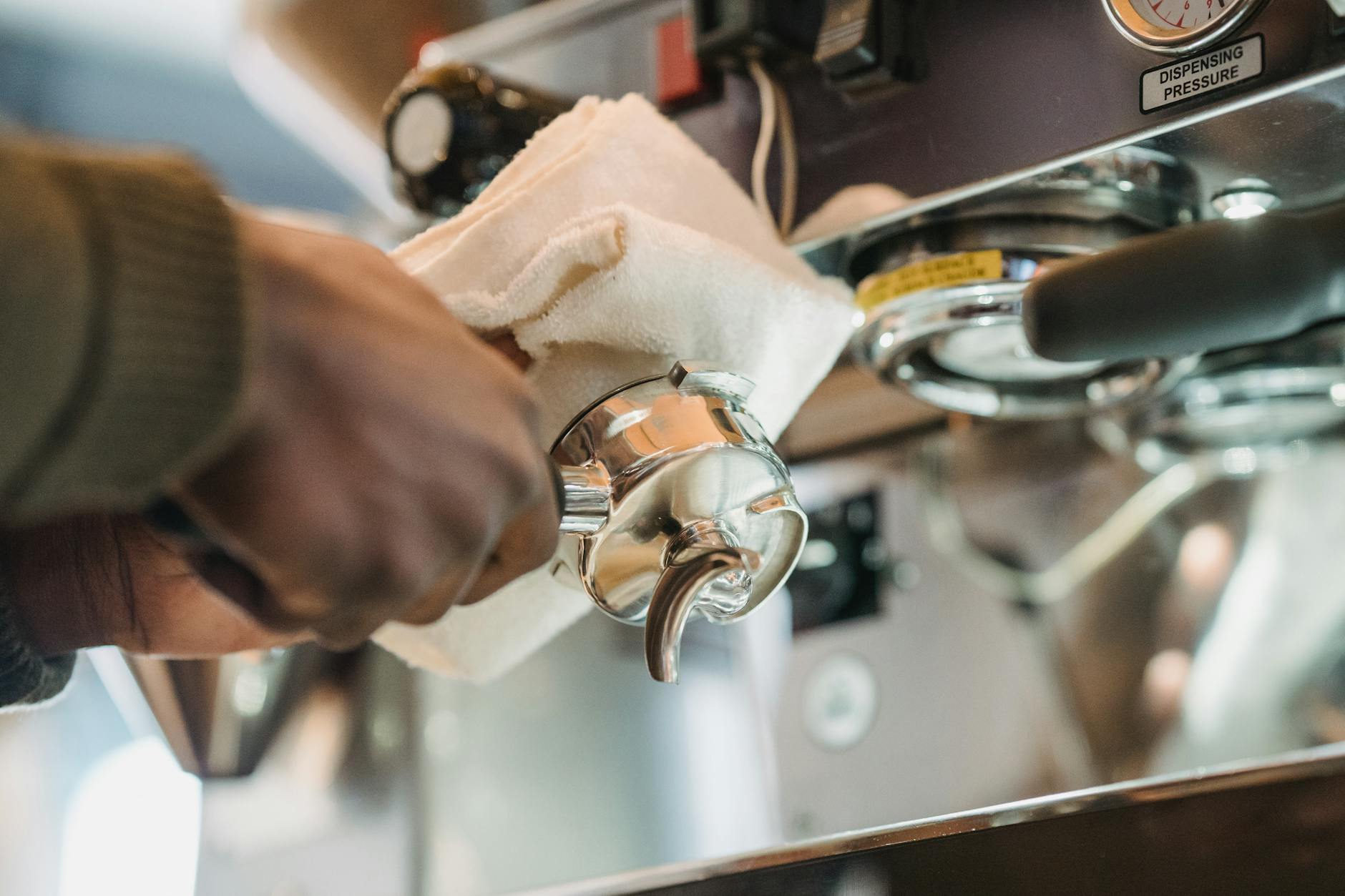
Finally, a clean machine is a consistent machine. Old coffee oils build up in the group head and shower screen, which can not only impart rancid flavors but also disrupt the even flow of water onto your coffee puck. A regular cleaning routine, including daily water flushes, weekly backflushing with a cleaning detergent, and periodic descaling, is essential for maintaining both the flavor and functional consistency of your espresso shots.
Creating a repeatable workflow
The secret to consistency is not having a magical touch; it’s developing a methodical, repeatable workflow where you control as many variables as possible. When troubleshooting, remember the golden rule: change only one variable at a time. If you change your grind size and your dose simultaneously, you’ll never know which one fixed the problem. By creating a precise routine and using simple tools, you can systematically eliminate sources of inconsistency.
The following table provides a quick guide to diagnosing and fixing common shot flow issues:
| Problem (Symptom) | Common Cause(s) | How to Fix It |
|---|---|---|
| Shot flows too fast | Grind is too coarse. Dose is too low. Channeling from poor puck prep. |
Grind finer. Increase your dose slightly. Improve distribution (WDT) and tamping. |
| Shot flows too slow (choked) | Grind is too fine. Dose is too high. |
Grind coarser. Decrease your dose slightly. Ensure your dose isn’t too large for the basket. |
| Uneven streams from spouts | Channeling. Uneven distribution or tamp. |
Use a WDT tool to break up clumps. Ensure your tamp is perfectly level. |
| Sour taste | Under-extracted (shot flowed too fast). Water temperature is too low. |
Grind finer to slow the shot down. Allow the machine to fully preheat. |
| Bitter taste | Over-extracted (shot flowed too slow). Water temperature is too high. |
Grind coarser to speed the shot up. Flush a bit of water before pulling the shot. |
By following a consistent workflow and using this table as a guide, you can begin to make informed adjustments instead of guessing, turning your unpredictable morning ritual into a reliable science.
Conclusion
The journey from inconsistent espresso to daily perfection is a process of elimination. As we’ve seen, unpredictable shot flow is rarely caused by a single issue but rather a combination of factors. It begins with your core ingredients, demanding fresh beans and a precise, consistent grind. It continues with your technique, where meticulous puck preparation, including accurate dosing, even distribution, and a level tamp, is essential to prevent channeling. Finally, it involves your equipment, requiring a properly heated and clean machine to provide a stable brewing environment. By adopting a methodical workflow and adjusting only one variable at a time, you transform brewing from a game of chance into a controlled craft. This attention to detail is what separates frustrating mornings from the simple, repeatable pleasure of a truly great cup of espresso.


 No products in the cart.