

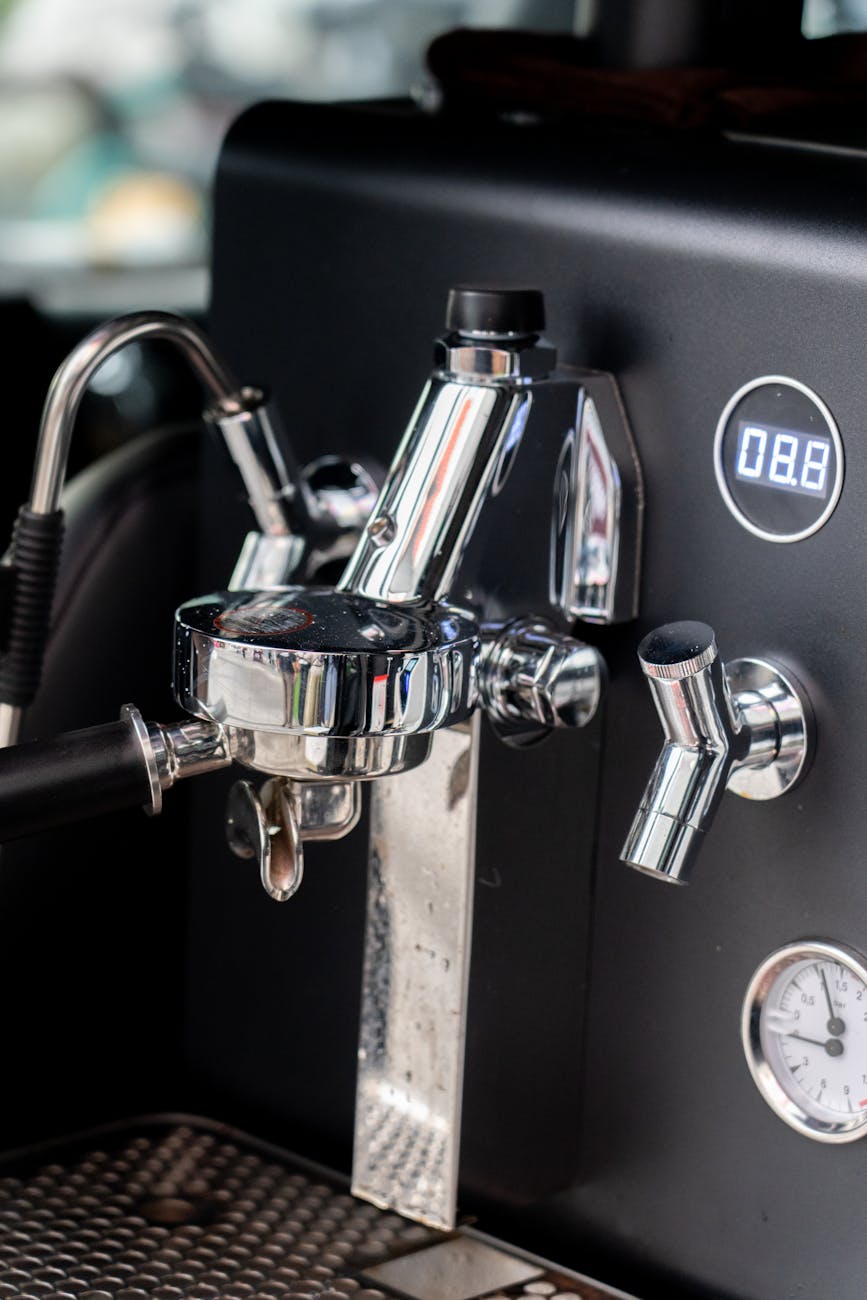
The iconic E61 group head is a symbol of espresso history and quality, instantly recognizable to any coffee enthusiast. If you own a machine with this legendary component, however, you’re also intimately familiar with “the wait.” You turn on your machine, eager for your morning coffee, only to face a 30 to 45-minute countdown before it’s ready to pull a shot. This delay can feel like a design flaw in our fast-paced world. But is it? The truth is, this extended heat-up time is not an oversight; it’s a fundamental consequence of the very design that makes the E61 so revered. This article will delve into the engineering behind this wait, exploring the concepts of thermal mass, the clever thermosyphon system, and why patience is the key to unlocking espresso perfection.
The design of an icon: Brass, weight, and thermal mass
At its core, the reason for the long warm-up lies in the E61’s physical construction. Patented in 1961, the design specifies a large, heavy component forged from chrome-plated brass. A typical E61 group head weighs around 4 kilograms (or 9 pounds). This isn’t just for aesthetics or durability; it’s a deliberate engineering choice centered on the principle of thermal mass. Thermal mass refers to an object’s ability to absorb, store, and slowly release heat. Brass is an excellent material for this, as it heats up relatively slowly but, once hot, retains that heat with incredible stability.
Think of it like a cast-iron skillet. It takes a while to get hot on the stove, much longer than a thin aluminum pan. But once it reaches temperature, it holds that heat evenly and doesn’t suffer a major temperature drop when you place a cold steak on it. The E61 group head operates on the same principle. Its significant mass acts as a heat reservoir, ensuring that the 90-95°C (195-205°F) water required for brewing doesn’t lose temperature as it passes through the group and hits the coffee grounds. This initial wait is simply the time it takes for this massive piece of metal to become fully heat-saturated.
The engine within: How the thermosyphon system works
The group head doesn’t just heat up passively by being attached to a hot boiler. It is actively heated by an ingenious, non-mechanical system called a thermosyphon. This system creates a continuous loop of water that circulates between the boiler and the group head, working on a simple principle of physics: hot water is less dense than cold water.
Here’s how it unfolds:
- Water in the heat exchanger or boiler heats up, expands, and becomes less dense.
- This lighter, hotter water naturally rises and flows through a copper tube into the upper chamber of the E61 group head.
- As the water circulates through the channels within the massive brass group, it transfers its thermal energy, heating the metal.
- In doing so, the water cools slightly, becomes denser, and sinks.
- This cooler, denser water then flows back to the boiler through a lower tube to be reheated, and the cycle repeats.
This constant, gentle circulation is what ensures the entire 4kg mass of brass is heated uniformly. It’s a slow but incredibly effective process. The 30-minute wait is the time required for this thermosyphon loop to complete enough cycles to bring the entire group head up to a stable, brew-ready temperature.
The ultimate goal: Unparalleled temperature stability
Now we understand the what and the how, but the most important question is why. Why go through all this trouble for a slow, heavy design? The answer is one word: stability. Temperature is one of the most critical variables in espresso extraction. A fluctuation of just one or two degrees can turn a potentially sweet, balanced shot into a sour, underdeveloped one (if too cold) or a bitter, over-extracted one (if too hot). The E61’s entire design is a fortress against temperature instability.
When you start your shot, water from the boiler travels through the group head. The massive, pre-heated thermal mass acts as a buffer, ensuring the water temperature is precisely maintained as it hits the coffee puck. This creates a remarkably consistent extraction environment from the first drop to the last, shot after shot. This stability, born from that long wait, is what has kept the E6-1 design relevant for over 60 years and why it remains the gold standard in many high-end home and commercial machines.
Comparing heat-up times: E61 vs modern alternatives
To put the E61’s warm-up time in perspective, it’s helpful to compare it to other common technologies found in espresso machines. While modern systems have prioritized speed, they often achieve it through different engineering trade-offs. The E61 unapologetically prioritizes thermal stability above all else.
| Group head type | Heating mechanism | Typical heat-up time | Key advantage |
|---|---|---|---|
| E61 group | Thermosyphon loop from boiler | 30 – 45 minutes | Exceptional thermal stability |
| Saturated group | Group is an extension of the brew boiler | 20 – 30 minutes | Excellent stability, slightly faster |
| Ring group | Smaller, electrically heated group | 15 – 25 minutes | Good stability with faster warm-up |
| Thermoblock / Thermocoil | On-demand flash heating | 1 – 5 minutes | Speed and convenience |
As the table shows, systems like thermoblocks offer near-instant readiness but can struggle with the shot-to-shot consistency that the E61 provides effortlessly. Saturated groups, found on premium commercial machines, offer comparable stability and a slightly faster warm-up but at a significantly higher cost and complexity. The E61 occupies a unique space, offering pro-level thermal performance through a robust and time-tested mechanical design.
In conclusion, the 30-minute warm-up time of your E61 group head is not a frustrating bug but an essential feature. It is the necessary period for its massive brass construction to fully absorb heat via the elegant thermosyphon system. This process is the foundation of the group head’s legendary thermal stability, which is the key to brewing consistently delicious and well-balanced espresso. While faster technologies exist, they often compromise on this critical aspect. For the E61 user, the wait is a small price to pay for unparalleled control and quality in the final cup. It transforms the act of making coffee from a hurried task into a deliberate ritual, where patience is rewarded with a truly exceptional espresso experience.


 No products in the cart.