

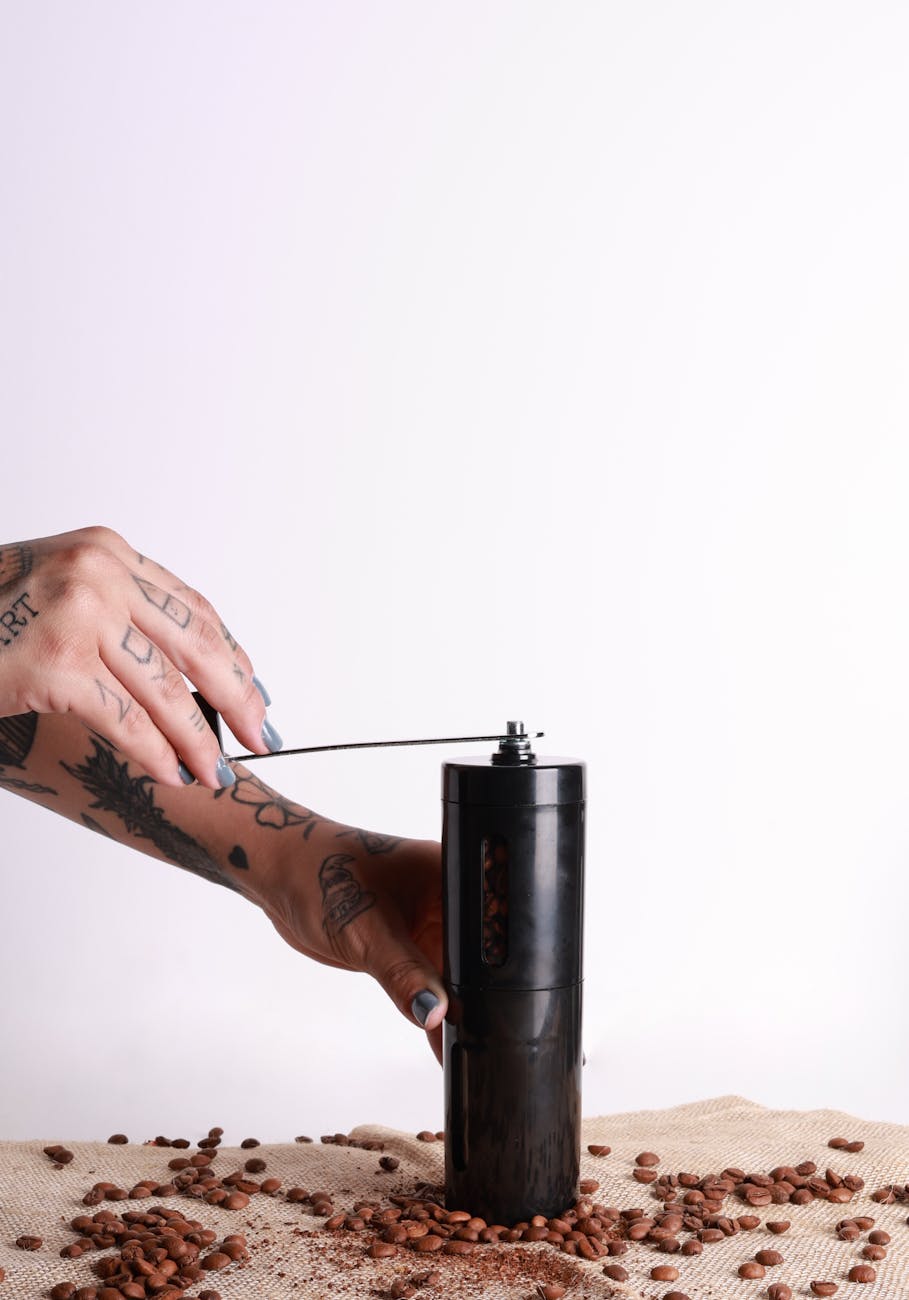
The journey to crafting the perfect espresso shot is often paved with expensive machines, precise scales, and meticulous techniques. Yet, many coffee enthusiasts overlook the single most critical component in their setup: the grinder. It’s a well-known secret among professional baristas that your grinder is more important than your espresso machine. But why? The answer lies beyond simply making coffee beans smaller. It’s about how it makes them smaller. This article will delve into the science of particle size distribution (PSD), exploring why the best espresso grinders are engineered with an obsessive focus on this one characteristic. We will uncover how the consistency of your coffee grounds directly translates into the quality, balance, and repeatability of the shot you pull.
Beyond grind size: What is particle size distribution?
When you adjust the setting on your coffee grinder, you are choosing a target grind size. However, no grinder is perfect. Instead of producing particles of a single, uniform size, it creates a range of different-sized particles. This range, and the proportion of particles at each size, is known as the particle size distribution. Think of it not as a single number, but as a bell curve. An ideal espresso grinder produces a very narrow and tall bell curve, meaning most of the particles are extremely close to the target size. This is often called a unimodal distribution.
In contrast, lower-quality grinders produce a wide, flat curve with multiple peaks. This messy distribution includes three main components:
- Target particles: The grounds that are the desired size for proper extraction.
- Fines: Dust-like particles that are much smaller than the target.
- Boulders: Coarse particles that are significantly larger than the target.
The goal of a high-performance grinder isn’t just to hit an average size, but to minimize the creation of fines and boulders, thereby achieving a tight, consistent distribution of grounds. This precision is the first and most critical step in controlling extraction.
The direct impact of distribution on espresso extraction
Particle size distribution is not just an abstract concept for engineers; it has a direct and profound impact on how your espresso tastes. Water is a solvent, and during a 25-30 second shot, it needs to extract the same amount of soluble compounds from every coffee ground to achieve a balanced flavor. When the particle size distribution is wide and inconsistent, even extraction becomes impossible.
Fines have a massive surface area and extract very quickly. Too many fines will cause the coffee puck to become dense and compacted, restricting water flow. This can lead to channeling, where water violently punches a hole through the puck, over-extracting the coffee it touches and leaving the rest under-extracted. The result is a shot that is simultaneously bitter, astringent, and weak. On the other hand, boulders have a low surface area and extract very slowly. Water flows right past them, leaving their flavors behind. This contributes sour, acidic, and underdeveloped notes to the final cup.
A grinder that produces a tight, unimodal distribution allows water to flow through the coffee puck evenly, ensuring all grounds are extracted at a similar rate. This is the key to unlocking a truly balanced shot—one that is sweet, complex, and free of the clashing sour and bitter notes that plague inconsistent grinds.
How grinder design achieves a superior distribution
Achieving a narrow particle size distribution is a feat of precision engineering. The best grinders accomplish this through the synergy of several key design elements. The most important of these is the burr set. High-quality grinders use either flat or conical burrs made from hardened steel or ceramic. The specific geometry of the burr’s cutting edges is meticulously designed to cut and shear beans into uniform particles rather than shattering them into a chaotic mix of sizes.
Beyond the burrs themselves, alignment is paramount. The two burrs must be perfectly parallel to each other. Even a microscopic misalignment can cause an uneven gap, resulting in some beans being ground coarser than others. Premium grinders are built with extremely tight manufacturing tolerances and robust chassis to ensure the burrs remain perfectly aligned, even under the heavy torque of grinding dense, light-roast beans.
Finally, the motor plays a crucial role. A powerful, low-RPM (revolutions per minute) motor provides the necessary torque to grind consistently without generating excess heat or vibration. Heat can bake the grounds and introduce unpleasant flavors, while vibrations can compromise burr alignment. This combination of superior burrs, perfect alignment, and a stable motor is what allows a top-tier grinder to produce the consistent grounds necessary for exceptional espresso.
Measuring consistency from grinder to cup
The difference in performance between a standard grinder and a high-end espresso grinder is not just theoretical; it can be measured. Coffee labs use laser diffraction analyzers to precisely map particle size distribution, but even at home, the results are evident in the cup. A superior grinder provides a much wider “sweet spot” when dialing in a shot, making it easier to pull delicious, repeatable espresso. You have more control and forgiveness because you are not constantly battling the random variable of an inconsistent grind.
The table below illustrates the practical differences:
| Feature | Standard Blade/Low-End Burr Grinder | High-End Espresso Grinder |
|---|---|---|
| Particle Distribution | Wide, multimodal (many peaks) | Narrow, unimodal (one main peak) |
| Fines & Boulders % | High percentage | Minimal percentage |
| Extraction Result | Uneven; prone to channeling | Even and consistent |
| Typical Flavor Profile | Muddled; simultaneously sour and bitter | Balanced, clear, sweet, and complex |
Investing in a grinder that focuses on particle size distribution is an investment in control and quality. It transforms espresso-making from a game of chance into a craft you can refine and perfect with every shot.
In conclusion, the pursuit of excellent espresso is fundamentally a quest for controlled, even extraction. As we’ve seen, this is utterly dependent on the consistency of the coffee grounds, a factor defined by particle size distribution. A grinder that produces a tight, unimodal cluster of particles with minimal fines and boulders provides the perfect canvas for a beautiful shot. This is achieved not by accident, but through intentional, high-precision engineering of burrs, alignment, and motor systems. By minimizing the variables of an inconsistent grind, you gain the control and repeatability needed to unlock the true flavor potential of your coffee beans. Ultimately, this is why the best espresso grinders focus on particle size distribution—it is the true foundation upon which exceptional espresso is built.
 No products in the cart.