

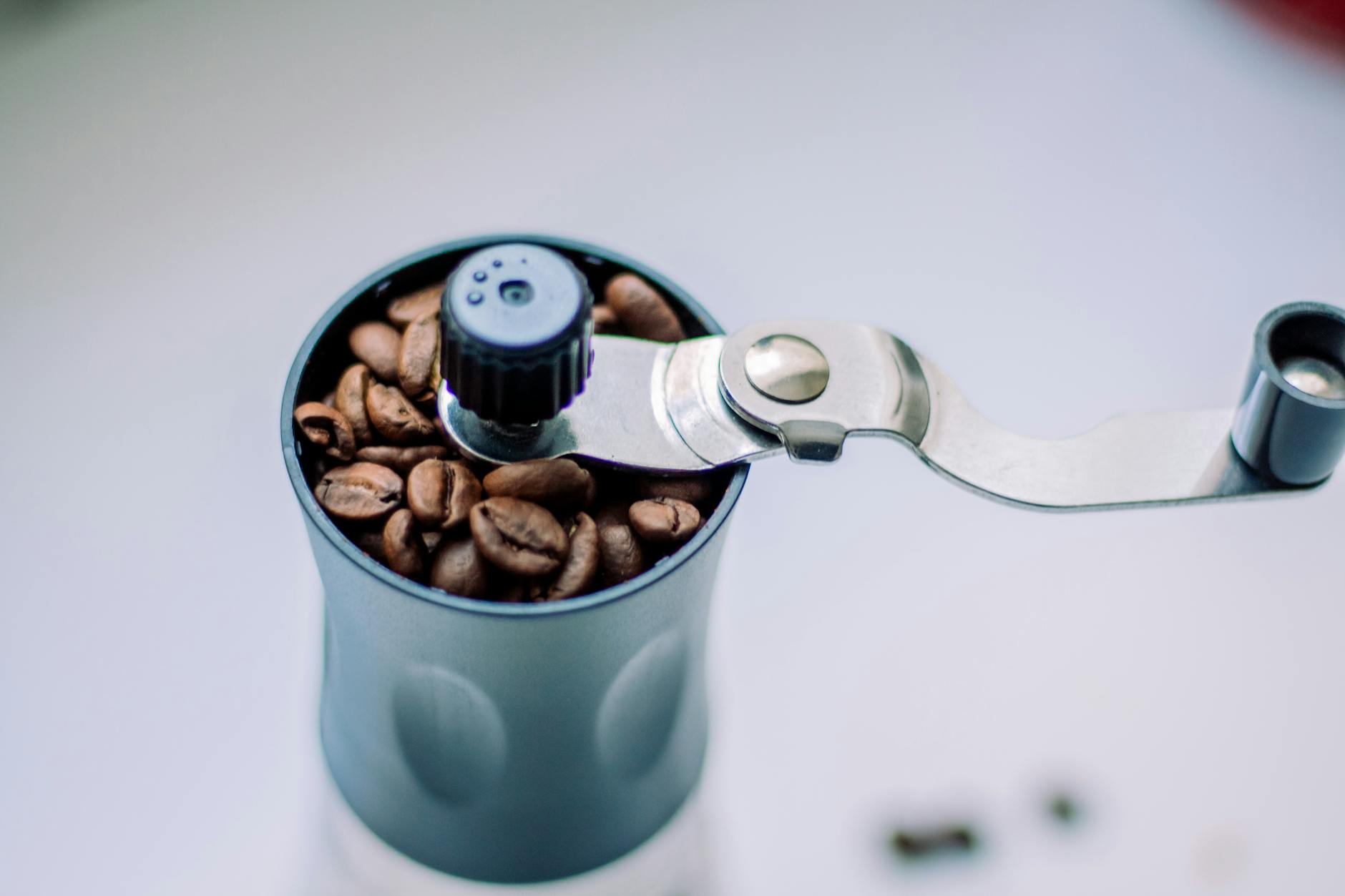
Why hopper design is crucial for your coffee grinder
When coffee enthusiasts discuss grinders, the conversation almost always gravitates toward the burrs. Are they flat or conical? What size are they? What material are they made from? While burrs are undoubtedly the heart of any grinder, we often overlook the component that starts the entire process: the hopper. It’s more than just a plastic container for your beans; its design is a critical piece of engineering that directly influences the consistency of your grind and the final quality in your cup. An poorly designed hopper can lead to inconsistent feeding, which in turn creates a chaotic grinding environment. In this article, we will explore the physics of bean flow, how hopper design impacts grind quality, and what to look for when evaluating this unsung hero of your coffee setup.
The physics of bean flow in a hopper
At its core, a coffee grinder hopper has one primary job: to hold a supply of beans and feed them into the grinding chamber in a predictable, consistent manner. The ideal scenario is a process called mass flow, where the entire column of beans moves downward uniformly, like a slow-moving piston. This maintains constant pressure on the beans entering the burrs, ensuring each one is fed at a steady rate. However, poor design can lead to two common problems:
- Bridging: This occurs when beans interlock and form a stable arch above the hopper’s exit, stopping the flow entirely even when the hopper is full.
- Rat-holing: This happens when beans in the center of the hopper flow directly down into the burrs, while the beans along the sides remain stationary. This creates an empty funnel, or “rat-hole,” drastically reducing the weight and pressure on the beans being ground.
The single most important design element to combat these issues is the angle of the hopper’s walls. Hoppers with steep, smooth walls (typically angled greater than 60 degrees from the horizontal) promote mass flow. Shallower angles are more prone to funnel flow and bridging. The material also plays a role; slick surfaces reduce friction, but some plastics can create static, causing chaff and fine particles to cling to the sides and disrupt flow.
How inconsistent feed creates inconsistent grinds
Now, let’s connect the physics of the hopper to the action at the burrs. When the pressure from the column of beans is inconsistent due to rat-holing or other flow issues, the feed rate becomes erratic. This leads to a phenomenon known as popcorning. Instead of being pulled smoothly into the burrs by the weight of the beans above them, individual beans have room to bounce and jump around on top of the rapidly spinning burrs. When a bean “popcorns,” it isn’t ground cleanly in one pass.
Instead, it gets shattered into multiple large fragments before being properly ground. This process creates a much wider particle size distribution in your final grounds. You end up with too many large particles (boulders) and too many very fine particles (fines). This lack of uniformity is disastrous for extraction. During brewing, the fines will over-extract, contributing bitter and astringent flavors, while the boulders will under-extract, adding sour, undeveloped notes. The result is a cup that tastes muddy and unbalanced. A well-designed hopper that maintains constant pressure minimizes popcorning, allowing the burrs to do their job properly and produce a more uniform grind.
Key design elements to look for
When assessing a grinder, paying attention to its hopper can reveal a lot about its overall performance. Beyond the basic angle of the walls, several elements contribute to a superior design.
First is the shape and material. Simple, conical shapes with smooth, steep walls are generally most effective for consistent flow. Materials that minimize static, like certain types of treated plastic, glass, or metal, are preferable.
Second, consider the size. While a large hopper is convenient in a café, for home use it can encourage you to store beans in it, where they are exposed to light and air, causing them to go stale. A smaller hopper is often better for home baristas who value freshness.
This leads to the modern trend of single dosing. Many high-end grinders now feature very small “hoppers” designed for a single dose of beans. This method eliminates staleness and flow issues like bridging. However, it can increase popcorning because there is no weight from a column of beans. To combat this, single-dose grinders often incorporate features like:
- An auger or other mechanism to actively feed beans into the burrs.
- A weighted cap that sits on top of the beans to provide consistent pressure.
- Silicone bellows that let you puff air through the grind chamber to expel any retained grounds.
Comparing hopper designs and their impact
Different brewing contexts demand different hopper solutions. A design that excels in a high-volume café would be impractical for a home user focused on single-origin espresso. The table below compares common hopper types and their ideal use cases.
| Hopper type | Key design feature | Pros | Cons | Best for |
|---|---|---|---|---|
| Standard large hopper | Large volume (250g+), often with a bean shut-off gate. | Maintains consistent bean pressure, convenient for high volume. | Beans can go stale, not suitable for frequent bean switching. | Cafés, offices, or home users who use one type of bean quickly. |
| Short/mini hopper | Reduced capacity (~50-150g), more compact design. | Fresher beans, lower profile fits under cabinets. | Less bean weight can lead to more popcorning near the end. | Home baristas who want convenience without sacrificing freshness. |
| Single-dose hopper (with bellows) | Small funnel for one dose, often with bellows to clear grounds. | Maximum freshness, zero retention, easy to switch beans. | Requires weighing beans for every shot, prone to popcorning without mitigation. | Coffee hobbyists focused on precision, quality, and variety. |
As you can see, the choice is not about which hopper is universally “best,” but which is best engineered for its intended purpose. The commercial hopper uses the weight of a massive bean column to ensure consistency. The single-dose hopper, by contrast, throws out that principle in favor of freshness and relies on other design elements to achieve a consistent feed for a much smaller batch of beans.
Conclusion
The journey of a coffee bean from whole to ground is a delicate one, and it begins in the hopper. This often-ignored component is not passive storage; it is an active participant in determining grind quality. A well-engineered hopper uses physics—gravity, friction, and pressure—to deliver beans to the burrs with unwavering consistency. This prevents issues like bridging, rat-holing, and the dreaded popcorning effect, which are direct causes of an uneven grind size. An inconsistent grind makes a balanced extraction impossible, leading to a disappointing cup. So, the next time you are evaluating a coffee grinder, look past the shiny burrs for a moment. Examine the hopper’s shape, its angle, and its features. This crucial first step in the grinding process is a powerful indicator of the grinder’s quality and its ability to help you achieve a truly exceptional brew.

 No products in the cart.