

Understanding the difference between traditional demitasse and modern espresso vessels
The world of coffee is steeped in tradition, and few items are as iconic as the classic espresso cup. But as coffee culture evolves, so do the vessels we use to enjoy it. From the ornate, historical demitasse to the sleek, minimalist designs of today, the cup you choose is more than just a container; it’s an integral part of the sensory experience. This article explores the journey of the espresso vessel, delving into the differences between the traditional demitasse and its modern counterparts. We will examine their history, the functional design principles behind them, and how the shift in coffee appreciation has inspired a new generation of cups designed to enhance the complex flavors and aromas of a perfect shot.
The rich history of the demitasse cup
The story of the espresso cup begins not with espresso, but with strong, dark coffee served in the bustling coffee houses of 18th and 19th century Europe. The term demitasse is French for “half-cup,” a fitting name for a small vessel designed to hold a concentrated, potent brew. Traditionally crafted from thick porcelain, the classic demitasse was born out of a desire for both elegance and practicality. Porcelain, a material prized for its beauty and durability, also possessed excellent heat-retaining properties, which was crucial for keeping the small volume of coffee hot. The design was simple and effective: a small bowl, often with a slight taper, a delicate handle, and a matching saucer. This wasn’t just a cup; it was a statement of sophistication and a key part of the coffee-drinking ritual.
Functionality and tradition in design
Every element of the traditional demitasse cup was deliberate. Its small size, typically 2 to 3 ounces (60-90 ml), was perfectly proportioned for a single or double shot of espresso, leaving just enough room for the rich, hazelnut-colored crema to form on top. The most critical feature, however, was its thickness. The heavy porcelain walls act as a heat sink, preventing the espresso from cooling too quickly. A cold cup can shock the espresso, instantly dissipating its crema and muting its volatile aromatic compounds. By pre-warming a thick demitasse, a barista ensures the coffee’s temperature remains stable, preserving its flavor and texture from the machine to your lips. The narrow opening also helps to concentrate the aromas, directing them towards the nose as you sip. The accompanying saucer served a practical purpose, providing a place for the spoon and a sugar cube, completing the classic espresso service.
The third-wave shift to modern vessels
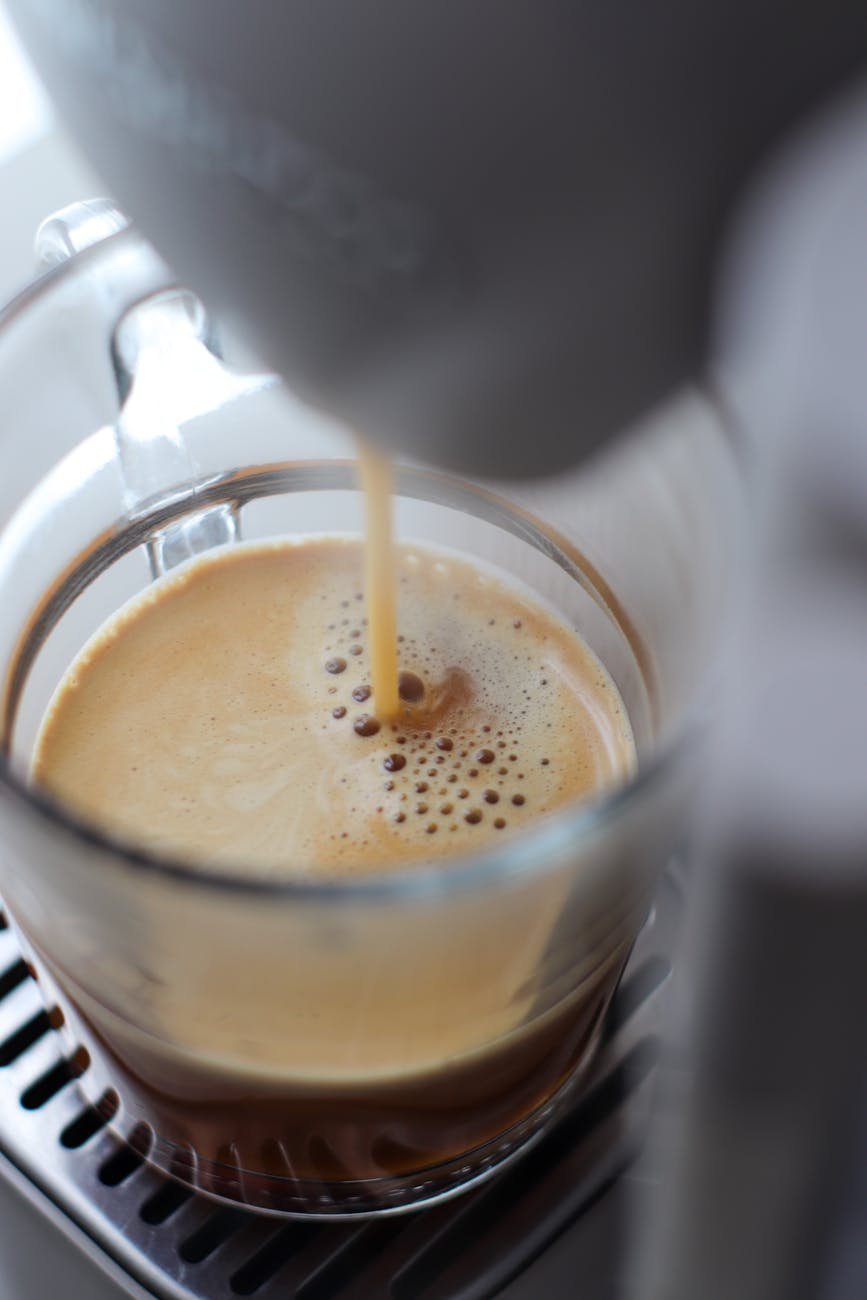
As the specialty coffee movement, or “third wave,” gained momentum, the focus shifted from the social ritual of coffee to the deconstruction of its flavors. Coffee began to be treated like fine wine, with an emphasis on origin, processing methods, and specific taste notes. This new appreciation demanded a new kind of vessel. Baristas and coffee connoisseurs realized that the traditional demitasse, while excellent at retaining heat, wasn’t always the best for sensory analysis. Modern espresso vessels began to emerge, prioritizing aesthetics and the enhancement of aroma and flavor perception. Glass became a popular material, allowing the drinker to visually appreciate the distinct layers of the espresso and the quality of the crema. Shapes also began to change, moving away from the classic straight-walled design to more experimental forms.
How material and shape influence the modern experience
Modern espresso vessels are a playground of material science and ergonomic design. The choice of material profoundly impacts the drinking experience. While porcelain remains a favorite for its classic feel and heat retention, other materials offer unique benefits.
- Glass: Double-walled glass cups provide excellent insulation without obscuring the view. Seeing the beautiful separation of the espresso’s body and crema is a key part of the modern experience.
- Ceramic: Often handcrafted, ceramic cups offer a rustic, artisanal feel. Their thickness can vary, allowing for a range of heat retention properties.
- Stoneware: Heavier and more robust, stoneware offers a unique texture and excellent thermal stability.
Shape has also become a critical factor. Wider, bowl-shaped cups increase the surface area of the espresso, allowing its aromas to open up more fully, similar to a wine glass. A tulip shape, which flares out before tapering back in, is designed to capture and concentrate volatile aromatics, delivering an intense olfactory experience before the first sip. This focus on sensory details has transformed the espresso cup from a simple container into a tool for tasting.
| Attribute | Traditional Demitasse | Modern Espresso Vessel |
|---|---|---|
| Primary material | Thick porcelain | Glass, ceramic, stoneware |
| Key design focus | Heat retention and durability | Aroma enhancement and visual aesthetics |
| Typical shape | Tapered, thick-walled with handle | Varied (bowl, tulip, handleless) |
| Visuals | Opaque; crema is only visible from the top | Often transparent to showcase crema and layers |
| Ideal for | Classic Italian espresso, dark roasts | Specialty single-origin espresso, light roasts |
Conclusion
In the end, the choice between a traditional demitasse and a modern espresso vessel comes down to personal preference and the type of coffee you are enjoying. The classic demitasse remains the undisputed champion for serving a traditional, robust Italian-style espresso, where heat preservation is paramount to enjoying the rich, syrupy body. Its design is a testament to a century of coffee tradition. On the other hand, modern vessels are tools of exploration, designed for the nuanced world of specialty coffee. They invite you to see, smell, and taste your espresso in a new way, uncovering the subtle notes of fruit, flowers, or spice. Neither is inherently better; they are simply different expressions of coffee culture, each offering a unique and valid path to enjoying the perfect shot.
 No products in the cart.