

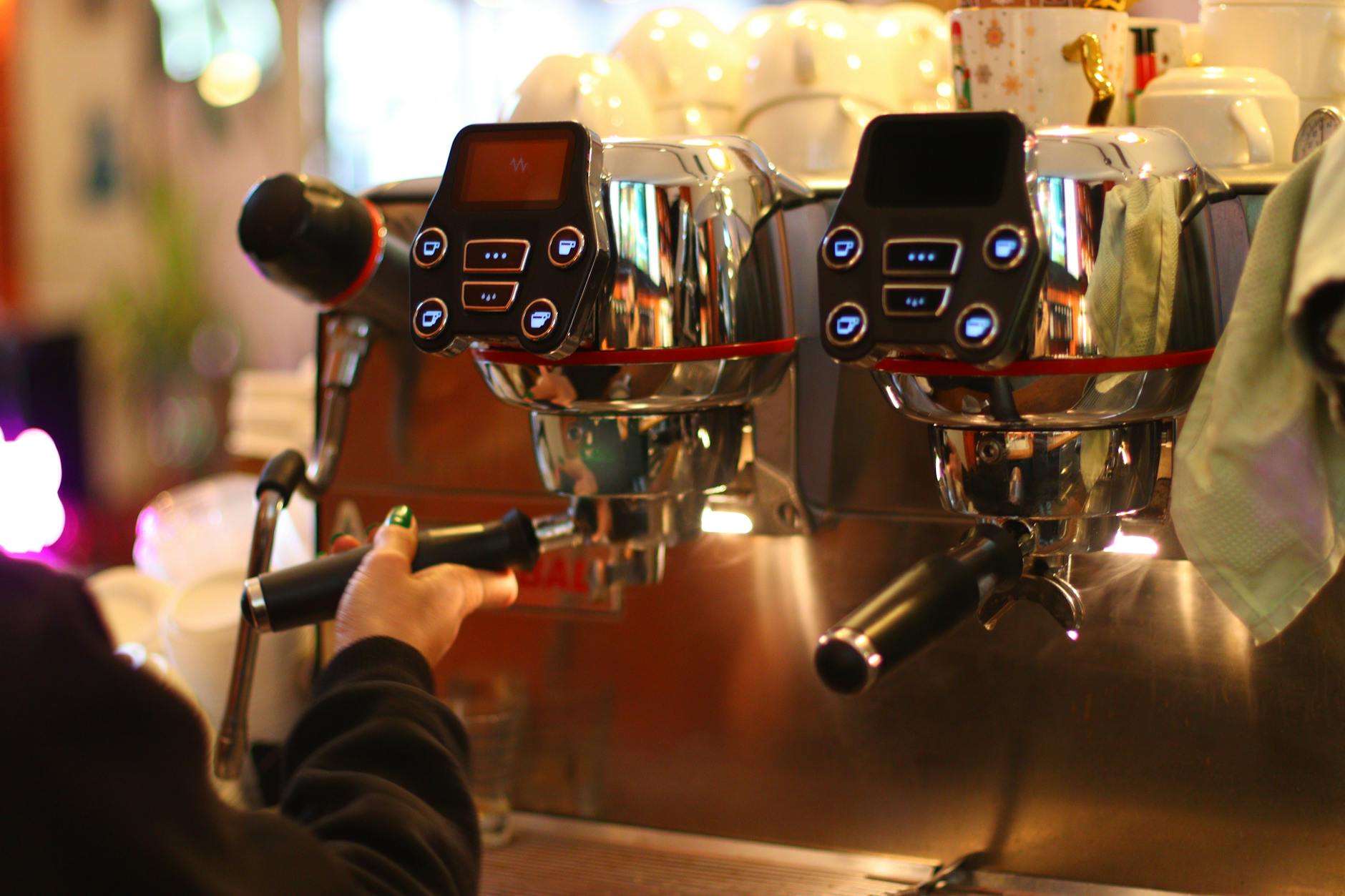
If you’ve ever shopped for a home espresso machine, you’ve undoubtedly encountered the numbers: 9 bars, 15 bars, sometimes even 19 bars of pressure. The marketing often implies that a higher number means a more powerful, professional machine capable of delivering a better shot of espresso. But is more pressure truly better? The world of specialty coffee has a surprisingly clear-cut answer that might contradict what the box tells you. This article will delve into the science and tradition behind espresso extraction, demystifying the role of pump pressure. We will explore what a “bar” actually is, why the professional standard is set at 9 bars, and what the 15-bar rating on many consumer machines really means for your morning coffee.
What is bar pressure and why does it matter?
Before comparing numbers, it’s essential to understand what we’re measuring. A bar is a unit of atmospheric pressure. One bar is roughly equivalent to the atmospheric pressure at sea level. When we talk about an espresso machine, “bar pressure” refers to the amount of force the pump uses to push hot water through the tightly compacted puck of finely ground coffee.
This pressure is the cornerstone of the entire espresso process. It’s not just about moving water; it’s about achieving a very specific type of extraction. Proper pressure performs several critical functions:
- Resistance: It overcomes the immense resistance created by the finely ground coffee that has been tamped into a dense puck.
- Extraction: It forces the water to saturate the grounds evenly and extract the coffee’s soluble solids, oils, and aromatic compounds in a concentrated form.
- Crema: The high pressure emulsifies the coffee’s oils and dissolves CO2 gas present in the freshly roasted beans, creating espresso’s signature rich, reddish-brown foam known as crema.
The amount of pressure directly impacts the extraction speed and the final taste. Too little pressure results in a weak, sour, and under-extracted shot. Too much pressure can blast through the coffee puck, creating channels and resulting in a bitter, harsh, and over-extracted shot. The goal is to find the perfect balance.
The 9-bar standard: The professional’s choice
Walk into any specialty coffee shop, and you’ll find their high-end commercial espresso machine is calibrated to operate at approximately 9 bars of pressure at the group head. This isn’t an arbitrary number; it’s the industry-wide standard, refined over decades of practice and scientific research. The prestigious Italian Espresso National Institute (INEI) itself certifies that true “Espresso Italiano” must be extracted at a pressure of 9 bars.
So, why 9 bars? This level of pressure is considered the sweet spot for a balanced extraction. It’s powerful enough to extract all the desirable flavor compounds—the sweet sugars, the nuanced floral and fruity notes, and the rich oils—without also pulling out the excessive bitter compounds that ruin the shot. At 9 bars, the flow of water through a properly prepared coffee puck is steady and controlled, allowing for an extraction time of around 25-30 seconds. This timing is crucial for developing the espresso’s complexity and achieving a harmonious balance of acidity, sweetness, and bitterness.
The 15-bar myth: Marketing vs reality
If 9 bars is the professional standard, why are so many home espresso machines advertised as having 15 or even 19 bars of pressure? The answer lies in a combination of marketing and mechanics. For the average consumer, a higher number sounds more powerful and therefore better. It’s an easy-to-advertise specification that suggests superior performance.
The reality is a bit more technical. Many entry-level and mid-range home machines use small, inexpensive vibratory pumps. These pumps are capable of producing a maximum pressure of 15 bars, but this is not the ideal pressure for brewing. In fact, brewing with a full 15 bars of pressure would be detrimental to the coffee. It would force water through the puck so aggressively that it would create “channels”—small tunnels where water bypasses the coffee grounds—leading to a fast, uneven, and terribly bitter extraction.
To counteract this, better-quality machines include an Over-Pressure Valve (OPV). This crucial component is a safety valve that bleeds off excess pressure, regulating it down to a more usable level, which is—you guessed it—typically set to 9 or 10 bars. Therefore, a machine advertised as “15 bars” is simply telling you the maximum output of its pump, not the actual pressure it uses to make your coffee. The presence and quality of an OPV are far more important than the pump’s maximum rating.
Comparing the results: 9 bars vs 15 bars in the cup
Let’s imagine two scenarios: one shot pulled at a stable 9 bars and another pulled at an unregulated 15 bars. The difference in the final cup would be dramatic. The quest for perfect espresso is about control and balance, not brute force. While a 15-bar rating on a machine isn’t necessarily bad (as long as it’s regulated), a true extraction at that pressure would be undesirable.
Here is a breakdown of what to expect:
| Feature | 9-Bar Extraction (Ideal) | 15-Bar Extraction (Unregulated) |
|---|---|---|
| Extraction Flow | Steady and consistent, like warm honey. Approx. 25-30 seconds. | Very fast and turbulent, often gushing. Under 15 seconds. |
| Flavor Profile | Balanced, sweet, and complex with well-defined acidity and body. | Harsh, bitter, and hollow. Lacks sweetness and complexity. |
| Crema | Thick, persistent, and a rich hazelnut color. | Thin, foamy, and pale with large, quick-to-dissipate bubbles. |
| Puck Prep Forgiveness | Requires a consistent grind and tamp but is manageable. | Extremely prone to channeling, punishing any tiny imperfection in the puck. |
As the table illustrates, the controlled force of 9 bars coaxes flavor from the coffee, while the aggressive force of 15 bars simply strips it away. The former creates a delightful sensory experience; the latter produces a cup that is often undrinkable for anyone who appreciates good coffee.
In conclusion, when it comes to espresso pump pressure, the battle between 9 bars and 15 bars is decisively won by the lower number. The 9-bar standard is the time-tested gold standard for a reason, providing the optimal force for a balanced, sweet, and flavorful extraction. The higher 15-bar figure seen on many consumer machines is largely a marketing tool that reflects the pump’s maximum potential, not the actual brewing pressure. For aspiring home baristas, the key is to look beyond the big number on the box. Instead, focus on machines that can deliver a stable pressure of around 9 bars, often indicated by the inclusion of an Over-Pressure Valve. This, combined with a quality grinder and fresh beans, is the true formula for café-quality espresso at home.


 No products in the cart.