

Troubleshooting inconsistent shot temperatures on E61 machines: A home barista’s guide
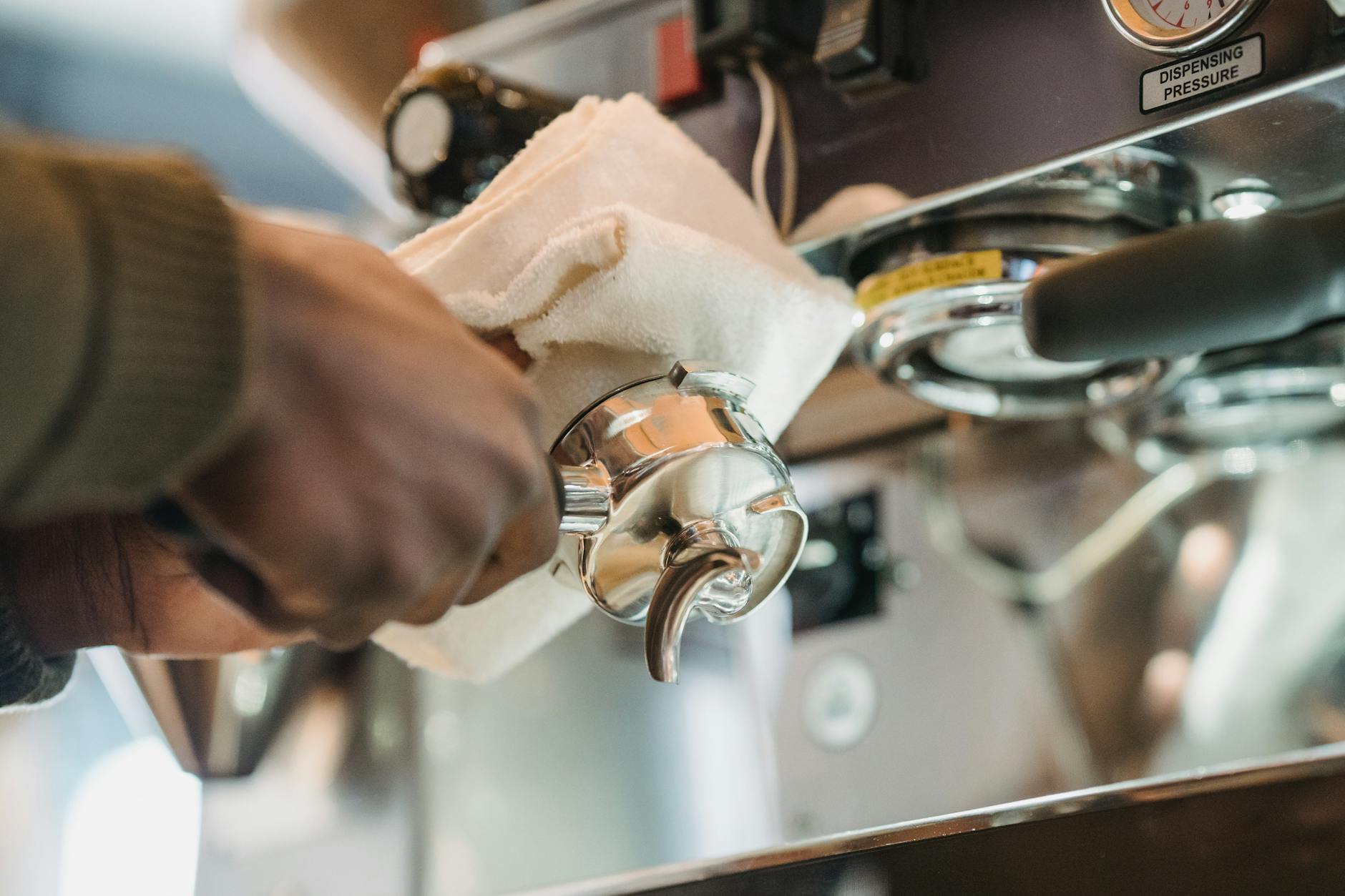
The E61 group head is an icon in the world of espresso. Patented in 1961, its beautiful, heavy-duty chrome design is instantly recognizable. More importantly, its thermosyphon system was engineered for one primary purpose: thermal stability. By circulating hot water from the boiler through the massive brass group head, it’s designed to maintain a consistent temperature, shot after shot. Yet, many home baristas with E61 machines struggle with the very problem it was designed to solve: inconsistent shot temperatures that lead to sour or bitter espresso. This article will serve as your comprehensive guide to understanding why this happens and how to troubleshoot it, transforming your espresso-making from a game of chance into a repeatable science.
Understanding the E61 thermal system
Before you can fix a problem, you must understand the system. The E61 group head isn’t just a tap for hot water; it’s an active part of your machine’s thermal loop. In most E61 machines, particularly heat exchanger (HX) models, a continuous loop of tubing called a thermosyphon runs from the boiler, through the group head, and back to the boiler. Hot water naturally rises into the group, displaces cooler water which sinks back to the boiler, and this constant circulation keeps the nearly 9 pounds of brass at a stable, ready-to-brew temperature.
This massive thermal mass is both a blessing and a curse. While it provides stability, it also means the group can easily overheat when the machine is left idle. The water in the heat exchanger can become superheated, well above the ideal brewing temperature of 195-205°F (90-96°C). This is why a proper user routine, which we will discuss next, is not just recommended but essential for managing an E61 machine. Understanding this principle is the first step in diagnosing why your shots might be tasting wildly different, even when you haven’t changed your coffee beans or grind setting.
The critical role of your brewing routine
More often than not, inconsistent shot temperatures on an E61 are not due to a machine fault but to an inconsistent user routine. The single most important technique to master is the cooling flush. Because the group head and the water inside it get too hot during idle periods, you must flush a specific amount of water through the group immediately before preparing your shot. This serves two purposes: it purges the superheated water and cools the metal of the group head down to your target brewing temperature.
Inconsistency arises when this flush is random. Flushing for two seconds one time and eight seconds the next will produce drastically different brew temperatures. The key is repeatability.
- Time your flush: Use a timer. Start with a 4-5 second flush and see how your espresso tastes. Adjust from there.
- Watch the water dance: A common technique is to flush until the sputtering water (a sign of boiling) turns into a smooth, steady stream.
- Mind the rebound: After the flush, the group temperature will start to creep back up. This is the “rebound”. You must be consistent with the time between ending your flush and starting your shot. Aim for a consistent 20-30 second window to lock in your portafilter and begin extraction.
Without a consistent, timed routine for flushing and pulling the shot, you are simply guessing at your brew temperature, undermining the very stability the E61 design offers.
Diagnosing hardware and maintenance issues
If you’ve perfected your routine and still face temperature swings, it’s time to investigate the machine itself. Several components can fail or degrade over time, directly impacting the thermosyphon’s efficiency and the boiler’s stability.
The most common culprit is limescale buildup. If you use hard water and don’t descale regularly, mineral deposits can clog the narrow passages of the thermosyphon loop or the gicleur (a small jet that controls water flow). This restriction slows down water circulation, preventing the group head from heating properly or causing it to behave erratically. A thorough descaling may be all that’s needed to restore performance.
For machines without a PID (Proportional-Integral-Derivative) controller, a faulty pressurestat can be the problem. This component regulates boiler temperature by monitoring pressure. If it’s failing, it may allow for a very wide pressure/temperature deadband, causing the boiler to swing from too hot to too cold. For PID-equipped machines, the issue could be a faulty temperature probe (thermocouple) or poorly tuned PID settings. Finally, the ultimate diagnostic tool is a group head thermometer. This device screws into the front of the E61 group and provides a real-time digital readout of the temperature where it matters most, taking all the guesswork out of your cooling flush.
A systematic troubleshooting approach
Tackling temperature inconsistency should be a methodical process of elimination. Don’t start by taking the machine apart. Instead, follow a logical path from the simplest solution to the most complex. This approach saves time and helps you accurately pinpoint the root cause of the problem.
Start with what you can control: your own actions. Only after you have established a rock-solid, repeatable routine should you begin to suspect a hardware issue. The table below outlines a clear, step-by-step process to guide your troubleshooting efforts.
| Step | Action | Rationale |
|---|---|---|
| 1. Standardize Routine | For one week, use a timer for every cooling flush and the rebound time before pulling a shot. Keep a log of time and taste results. | Eliminates user error as the primary variable. This is the most common cause of inconsistency. |
| 2. Install a Thermometer | Fit a dedicated E61 group head thermometer. This provides objective data about your brew temperature. | Removes guesswork. You can see if your flush is effective and if the group is stable, too hot, or too cold. |
| 3. Descale the Machine | Perform a full descaling procedure according to your machine’s manual, especially if you have hard water or it hasn’t been done in over a year. | Clears potential blockages in the thermosyphon loop, heat exchanger, and gicleur that impede water flow and heat transfer. |
| 4. Check Core Components | Observe the boiler pressure gauge (on HX machines) to see if the pressure swings are excessively wide. Check PID readings for stability. | Identifies potential failure of the pressurestat, PID controller, or temperature probe, which are the machine’s “brain” for heat management. |
Conclusion
Achieving temperature stability on an E61 machine is a partnership between the barista and the hardware. While the iconic design provides a fantastic foundation for thermal consistency, it is not an automatic process. Inconsistent shot temperatures are most often traced back to an inconsistent user routine, specifically a poorly managed cooling flush. By first mastering a repeatable workflow, you unlock the machine’s true potential. If problems persist, a systematic investigation into common maintenance issues like limescale or component failure is the next logical step. Ultimately, the single greatest investment you can make in your E61 journey is a group head thermometer. It provides the crucial data needed to master your technique and diagnose any underlying issues, ensuring every shot you pull is as delicious as the last.

 No products in the cart.