

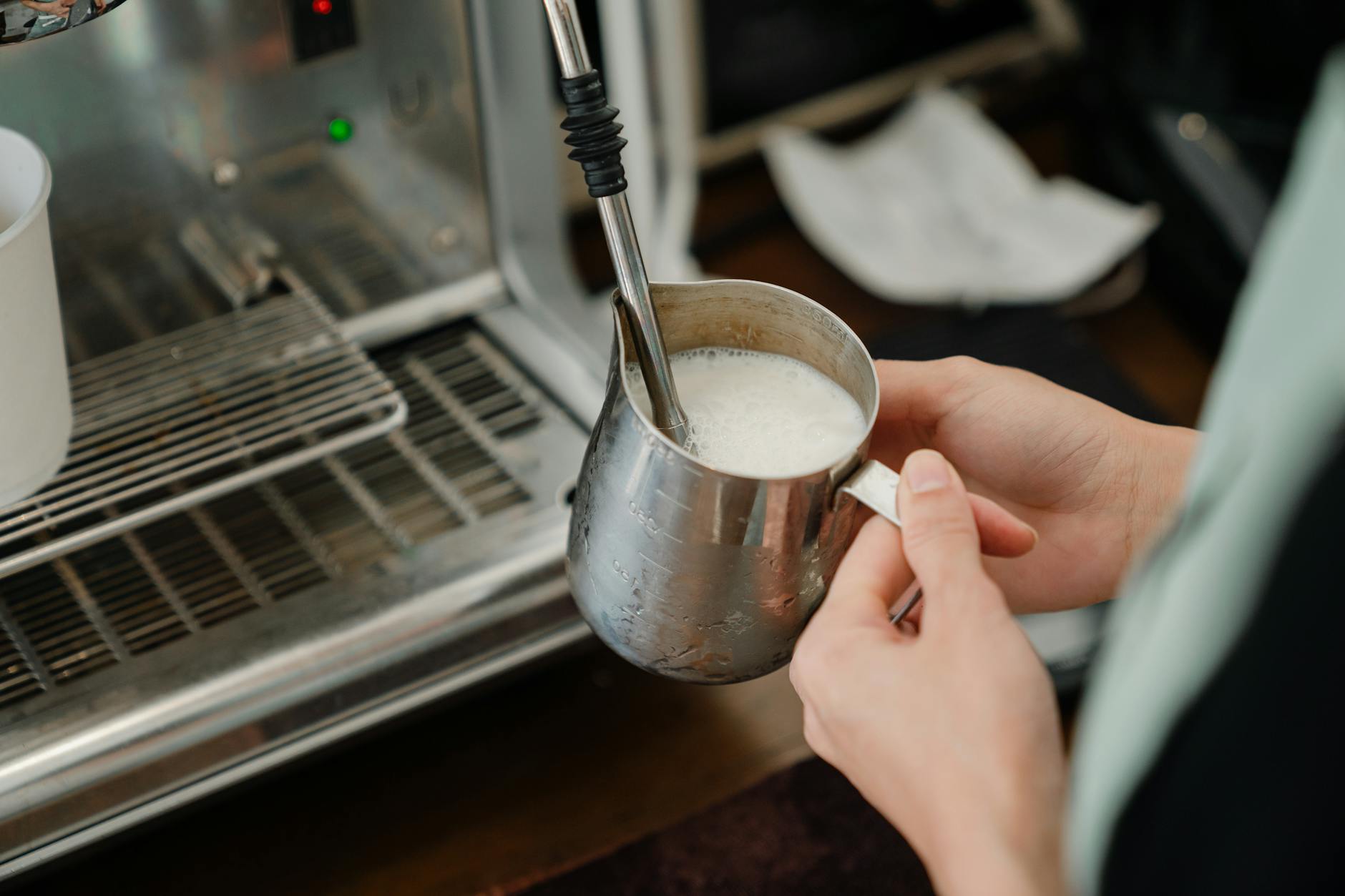
That creamy, velvety milk in your Starbucks latte is often the hardest part to replicate at home. You have the espresso, you have the syrup, but the drink just doesn’t feel the same. Many home baristas end up with either a mountain of stiff, bubbly foam or simply hot, watery milk. The good news is that the secret isn’t a special machine or a magic ingredient. It’s a specific technique that transforms cold milk into silky smooth microfoam, the liquid gold of the coffee world. This article will guide you through the entire process, from choosing the right milk to mastering the two-phase steaming method with your home espresso wand. Prepare to elevate your homemade coffee from mediocre to magnificent.
Understanding the magic: What is microfoam?
Before you can create something, you need to understand what it is. The milk in a quality latte isn’t just “frothed milk.” It’s microfoam. This is a term for milk that has been heated and aerated in such a way that the air bubbles are so small and numerous they are invisible to the naked eye. The result is not a layer of foam sitting on top of hot milk, but rather a seamless, integrated texture that is thick, velvety, and has a glossy sheen like wet paint. It pours like liquid, allowing for the creation of latte art, and has a sweet, rich taste that complements espresso perfectly.
This is completely different from the “macrofoam” or dry foam you might find on an old-fashioned cappuccino. Macrofoam has large, visible bubbles, is light and airy, and separates quickly from the milk. Microfoam is created by a precise process: introducing a small amount of air into the milk at the beginning of the steaming process and then using the steam to create a vortex. This vortex breaks down large bubbles and folds them evenly throughout the milk, creating that signature silky texture.
Your tools for success: Milk, pitcher, and machine
You don’t need a commercial-grade setup, but having the right tools makes a world of difference. Your success starts with three key components.
- The milk: The type of milk you use is arguably the most critical factor. The proteins in milk create the foam structure, while the fat contributes to the rich flavor and creamy mouthfeel. For beginners, whole milk is the easiest to work with and yields the creamiest results. Starbucks’ default is 2% milk, which also works wonderfully but produces a slightly lighter foam. While skim milk can create a lot of foam, it’s often dry and lacks the desired velvety texture. For non-dairy options, “barista blend” versions are essential as they contain added emulsifiers to help them steam properly. Oat milk is generally the best-performing plant-based alternative.
- The pitcher: A stainless steel frothing pitcher is non-negotiable. The metal conducts heat efficiently, allowing you to gauge the temperature with your hand. A pitcher with a sharp, defined spout will also be your best friend when you’re ready to try pouring latte art. For a single drink, a 12oz (350ml) pitcher is a perfect size.
- The steam wand: Home espresso machine wands are typically less powerful than commercial ones, but that just means your technique has to be more precise. Before you start, and after you finish, you must “purge” the wand by turning on the steam for a couple of seconds. This clears out any condensed water, ensuring you’re only adding pure, dry steam to your milk.
The two-phase technique: Stretching and texturing
This is where the magic happens. Mastering this two-step process is the key to perfect milk every time. Remember to start with very cold milk in a cold pitcher, filled to just below the base of the spout.
Phase 1: Stretching (Aeration)
This is the phase where you introduce air. After purging your steam wand, submerge the tip just below the surface of the milk, positioning it slightly off-center. Turn the steam on to full power. You should hear a consistent, gentle hissing sound, often described as “paper tearing.” This is the sound of air being pulled into the milk. Your goal is to continue this process until the volume of the milk has increased by about 20-30% and the outside of the pitcher feels lukewarm, like your body temperature (around 100°F or 37°C). This phase is very short, usually lasting only 5-10 seconds.
Phase 2: Texturing (Emulsifying)
Once you’ve introduced enough air, it’s time to create the microfoam. Raise the pitcher slightly, sinking the steam wand deeper into the milk. This should stop the hissing sound. Now, focus on angling the wand to create a powerful vortex, or whirlpool, in the pitcher. This vortex is crucial; it forcefully spins the milk, breaking down any large air bubbles and folding them into the liquid, creating that unified, silky texture. Continue heating the milk while maintaining this vortex until the pitcher becomes hot to the touch—you should be able to hold it for a second or two before it gets uncomfortable. This is around 140-150°F (60-65°C). Turn the steam off before removing the wand from the milk.
After steaming, immediately wipe the wand clean and purge it. Tap the pitcher firmly on the counter to eliminate any remaining large bubbles, and swirl the milk gently. If you did it right, it will have a beautiful, glossy sheen.
Common mistakes and how to fix them
Don’t be discouraged if your first few attempts aren’t perfect. Steaming milk is a skill that requires practice. Here are some common problems and how to solve them.
| Problem | Cause | Solution |
| Big, bubbly foam | Too much air was introduced, or the aeration phase was too long. | Keep the “stretching” phase short. Submerge the wand deeper into the milk sooner to begin the texturing phase. |
| No foam, just hot milk | The wand was submerged too deeply from the start, preventing air from being introduced. | Start with the tip just at the surface to hear that distinct “paper tearing” sound before moving into the texturing phase. |
| Loud, screeching noise | The steam wand is too deep or pushed against the bottom or side of the pitcher. | Adjust the wand’s depth and angle to find the “sweet spot” that creates a quiet, rolling vortex. |
| Milk is too hot or tastes burnt | You overheated the milk, scalding the sugars and denaturing the proteins too much. | Stop heating as soon as the pitcher becomes too hot to comfortably hold. For precision, use a frothing thermometer and aim for 140-150°F (60-65°C). |
In conclusion, achieving that coveted Starbucks milk texture at home is entirely within your reach. It’s not about owning an expensive commercial machine but about understanding and applying the right technique. By starting with the correct tools—very cold milk, a proper steel pitcher, and a clean steam wand—you set the stage for success. The secret lies in mastering the two distinct phases: a brief “stretching” phase to introduce air, followed by a longer “texturing” phase to create a vortex that refines that air into a silky microfoam. While troubleshooting is part of the learning curve, consistency and practice are your greatest allies. With a little patience, you will soon be pouring creamy, delicious lattes that rival those from your favorite coffee shop.

 No products in the cart.