

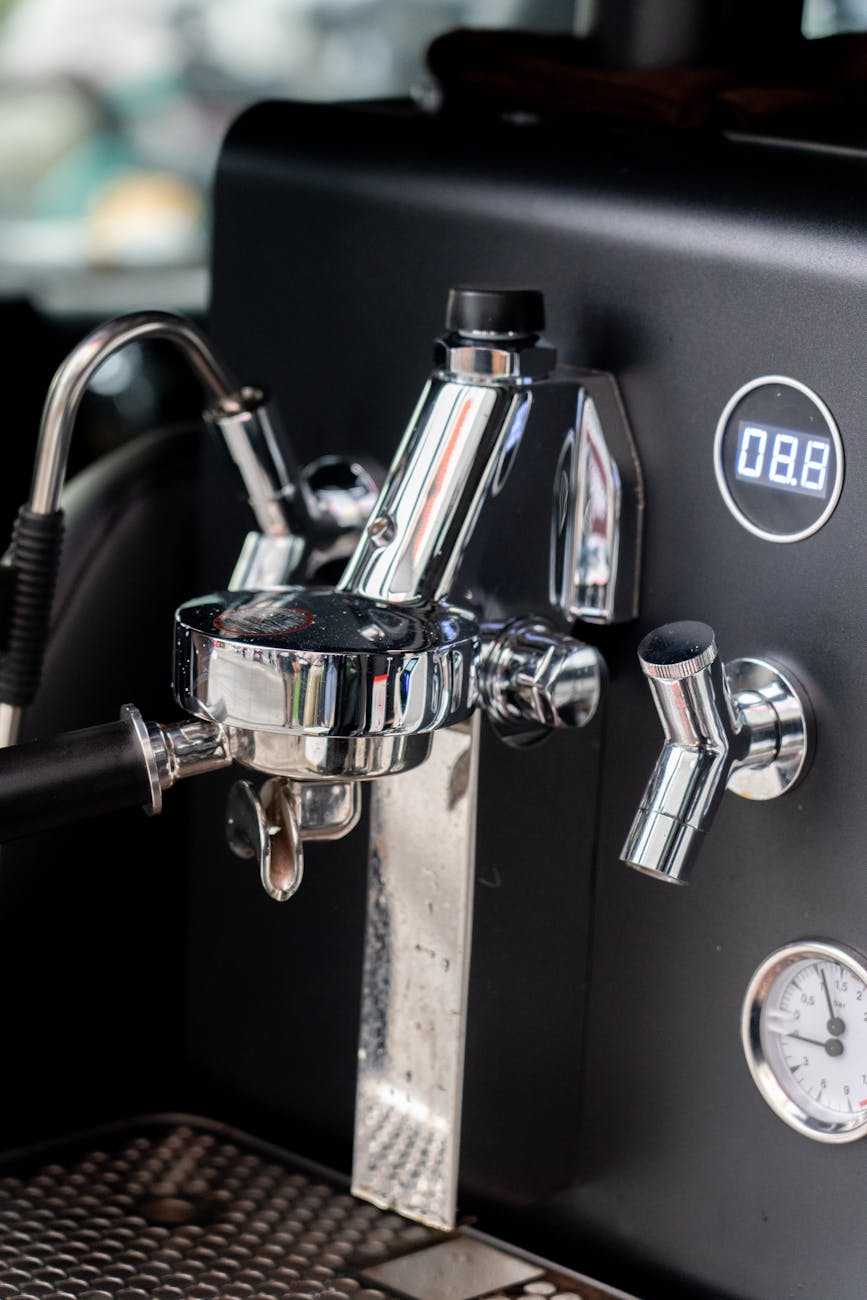
In the relentless pursuit of the perfect espresso shot, baristas and home enthusiasts obsess over countless variables: bean origin, grind size, dose, and tamping pressure. Yet, one of the most critical and often misunderstood factors is the temperature stability of the group head. This component, the final point of contact before water meets coffee, plays a monumental role in what you taste in the cup. An unstable group head, with fluctuating temperatures, can turn a potentially sweet and balanced shot into a sour or bitter disappointment. This article will delve into the profound impact of group head temperature stability on espresso flavor, exploring the science behind extraction and providing insight into how you can gain control over this crucial variable for consistently delicious results.
What is a group head and why does its temperature matter?
The group head is the heart of an espresso machine’s brewing system. It’s a heavy, typically metal component that serves a dual purpose: it locks the portafilter into place and delivers heated, pressurized water through a dispersion screen to evenly saturate the coffee puck. Its primary role in flavor creation comes from its thermal mass. A component with high thermal mass, like a heavy brass group head, can absorb and hold a lot of heat, making it resistant to sudden temperature changes. This stability is paramount.
When you initiate a shot, cooler water from the boiler or heat exchanger enters the system. A cold group head will instantly sap heat from this brew water, causing the initial extraction temperature to be far too low. Conversely, an overheated group head will scald the coffee grounds. True stability means the group head maintains a consistent, desired temperature not only before the shot but during the entire 25-30 second extraction process. Different designs aim to achieve this in various ways:
- The E61 group head: A classic design that uses a thermosyphon system to constantly circulate hot water from the boiler through the group head, keeping it hot. It’s known for great thermal mass but can require a “cooling flush” to bleed off overheated water before a shot.
- Saturated group heads: Found on many high-end commercial machines, these are essentially an extension of the brew boiler itself. Water completely surrounds the group, ensuring it remains at the exact same temperature as the boiler, offering exceptional stability.
Ultimately, the goal is to eliminate temperature as an unwanted variable, allowing the brew water to do its work precisely as intended.
The chemistry of extraction at different temperatures
To understand why a few degrees matter so much, we need to look at the chemistry of coffee extraction. Espresso brewing is a process of using hot water to dissolve soluble flavor compounds from roasted coffee grounds. Temperature acts as a powerful catalyst in this reaction. Different chemical compounds within the coffee dissolve at different rates and at different temperatures.
Think of it as a hierarchy of solubility. The first compounds to extract are the acids and salts, which contribute brightness and fruity notes. As the extraction continues, sugars (sweetness) and oils (body and texture) are dissolved. Finally, the heavier, less soluble compounds, like melanoidins and other bitter elements, are pulled out. An unstable group head temperature throws this delicate sequence into chaos. A temperature drop mid-shot can halt the extraction of desirable sugars, while a spike can aggressively pull out harsh, bitter compounds prematurely, creating an unbalanced and unpleasant cup.
The flavor impact of temperature swings
The practical result of temperature instability is a wildly inconsistent and often flawed espresso flavor profile. Even a fluctuation of one or two degrees Celsius during the shot can have a noticeable impact. A stable temperature ensures you are extracting the intended range of flavors from the coffee bean, while an unstable one leads directly to either under-extraction or over-extraction, regardless of other parameters like grind size or time.
For example, if the group head is too cool at the start of the shot, the initial water hitting the puck will be below the ideal range. This fails to properly dissolve the sugars and oils, resulting in a thin-bodied, overwhelmingly sour shot that tastes grassy or vegetal. On the other hand, if the group head is too hot, it will “flash boil” the water as it hits the coffee, scorching the grounds and extracting an excess of bitter, astringent compounds. The resulting shot will taste burnt, hollow, and intensely bitter, masking any of the coffee’s inherent sweetness or complexity.
The following table illustrates the general flavor profiles you can expect at different, stable brew temperatures:
| Temperature Range (Celsius) | Primary Flavor Outcome | Common Tasting Notes |
|---|---|---|
| Below 88°C (190°F) | Under-extracted | Sour, acidic, salty, grassy, thin body |
| 90°C – 94°C (194°F – 201°F) | Balanced / Ideal | Sweet, balanced acidity, rich body, complex aromatics |
| Above 96°C (205°F) | Over-extracted | Bitter, astringent, burnt, chalky, hollow |
Achieving stability for the perfect shot
Gaining control over group head temperature is the key to repeatable, high-quality espresso. Modern technology has made this easier than ever. The most significant advancement is the PID (Proportional-Integral-Derivative) controller. This digital thermostat constantly monitors the temperature and makes tiny, predictive adjustments to the heating element to hold the brew water at a precise temperature, often with a stability of +/- 0.5 degrees.
However, technology is only part of the solution. Proper technique is just as crucial:
- Proper warm-up: Always allow your machine to fully warm up for at least 30 minutes. This gives the heavy group head enough time to absorb heat and reach thermal equilibrium with the rest of the system.
- Portafilter management: Keep your portafilter locked into the group head when not in use. This keeps it at the same temperature as the group, preventing it from acting as a heat sink and cooling your brew water.
- Pre-shot flushing: A short flush of water (2-3 seconds) right before you brew can stabilize the temperature at the screen and purge any old water. This technique varies by machine type; for an E61, a longer flush may be needed to cool the group to the target temperature, while for a saturated group, it’s more about clearing the screen.
By combining a thermally stable machine design with meticulous preparation, you remove temperature fluctuations from the equation and gain true control over the final taste of your espresso.
In conclusion, the temperature stability of the group head is not a minor detail but a foundational pillar of excellent espresso. As we’ve seen, it directly governs the chemical extraction process, dictating which flavor compounds are dissolved from the coffee grounds and in what proportion. An unstable temperature leads to a chaotic extraction, resulting in unpredictable and often unpleasant flavors, from sharp sourness to harsh bitterness. By understanding the role of different group head designs, the chemistry at play, and the practical techniques for achieving stability, a barista can eliminate one of the most significant sources of inconsistency. Mastering group head temperature, whether through advanced PID technology or disciplined technique, empowers you to unlock the full, balanced, and delicious potential hidden within every coffee bean.


 No products in the cart.