

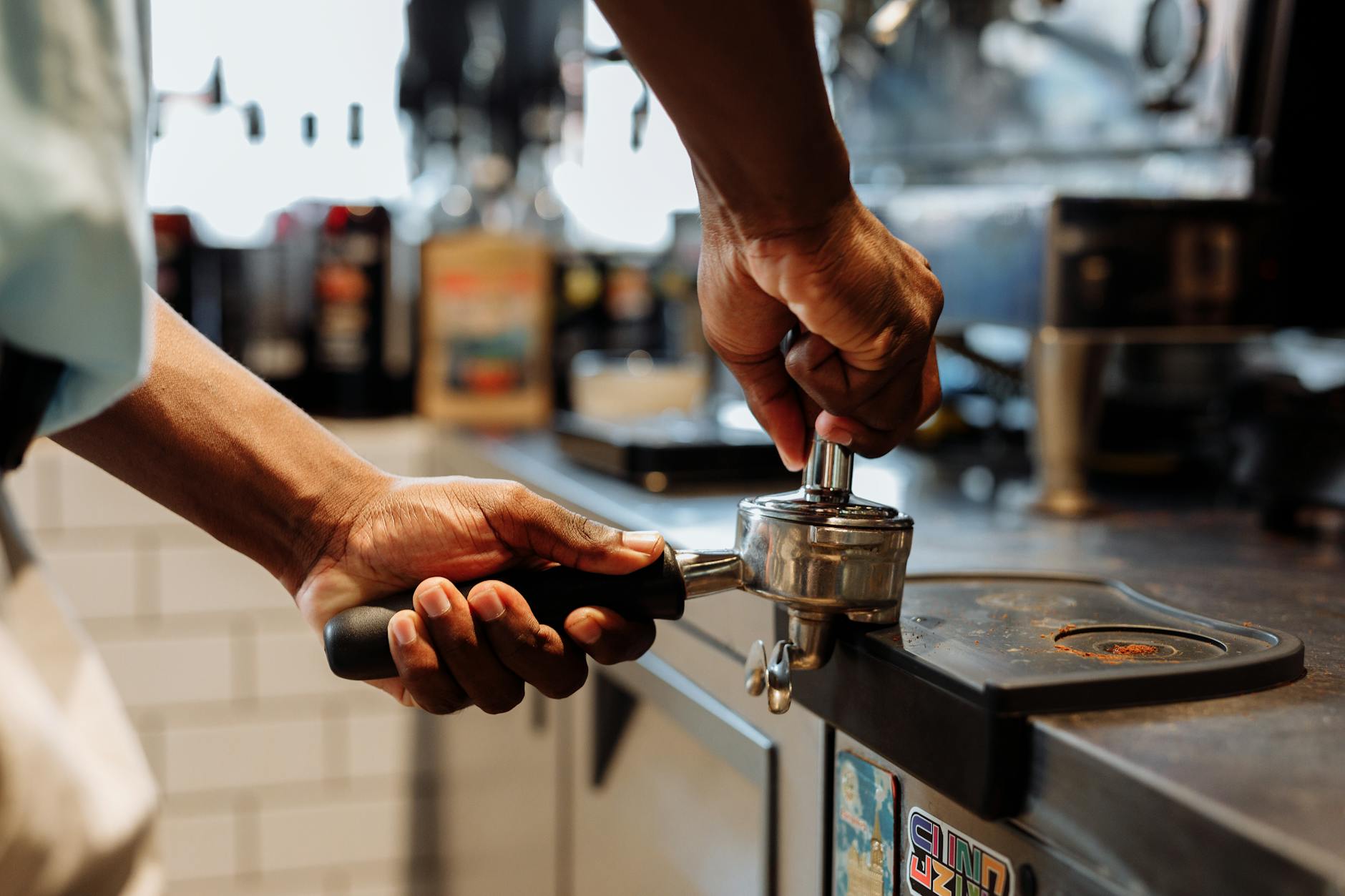
Beyond the dose: How basket size redefines your manual espresso technique
For the dedicated manual espresso enthusiast, the pursuit of the perfect shot is a journey of constant refinement. We obsess over bean origin, roast level, grind size, and pressure profiles. Yet, one of the most fundamental components of the brewing process is often treated as a mere container: the filter basket. Many brewers see it simply as a vessel that dictates the dose—single, double, or triple. But the impact of basket size extends far beyond the amount of coffee you use. It fundamentally alters the physics of extraction, demanding significant adjustments to your entire brewing technique, from grind size to the pressure you apply with your own hands. This article explores how a change in basket size is a change in the game itself.
Understanding basket fundamentals and puck geometry
Before we can adjust our technique, we need to understand why basket size matters. A filter basket is defined by its diameter (e.g., 58mm, 54mm, 49mm) and its depth, which determines its intended dose capacity. A 7-gram “single” basket is much shallower than a 22-gram “triple” basket. This difference in depth is the critical factor that influences what we call puck geometry.
When you dose 18 grams of coffee into a standard 18-gram basket, you create a coffee puck of a specific height and density. If you try to dose that same 18 grams into a larger 22-gram basket, the puck will be shallower, leaving excessive headspace. Conversely, dosing it into a 14-gram basket would make it too tall, leaving no headspace. The correct pairing of dose to basket size creates a puck with optimal headspace—the small gap between the tamped coffee and the shower screen. This space is crucial for allowing water to pre-infuse the puck evenly before pressure is applied, preventing immediate channeling and ensuring a uniform extraction.
The physics of flow: How depth changes everything
The most significant impact of basket size is on water flow dynamics. A larger dose in a deeper basket creates a taller, more compact coffee puck. Think of it as a longer, more challenging maze for the water to navigate. This has several direct consequences for the manual brewer:
- Increased Resistance: A deeper puck offers significantly more resistance to water. To achieve the same flow rate as a shallower puck, you must either grind coarser or apply more pressure. For a manual lever machine user, this translates to a tangible difference in the force required to pull the shot.
- Longer Contact Time: Because water travels more slowly through a deeper puck, the total contact time between water and coffee grounds is naturally extended. This can lead to higher extraction yields, but also carries the risk of over-extraction if not managed properly.
- Channeling Risk: While a well-prepared deep puck can be surprisingly forgiving, any flaws in your distribution or tamping are magnified. A channel in a triple basket can become a “super-highway” for water, leading to a disastrously uneven extraction that is both sour and bitter. A shallow single basket, on the other hand, is less resistant overall but is highly susceptible to being disturbed or fractured by a poor pre-infusion.
This interconnection means you cannot simply change your basket size and keep all other variables the same. You must adapt your entire approach to accommodate the new physics inside the portafilter.
Adapting your technique: A practical guide
Changing your basket size requires a holistic adjustment to your workflow. Treating a 10-gram single shot the same as a 22-gram triple shot is a recipe for frustration. Instead, you need to recalibrate your grind, tamp, and pressure profile to suit the puck’s new geometry.
For single baskets (7-12g), the puck is very shallow. The primary challenge is creating enough resistance for a proper extraction. This means you must:
- Grind significantly finer than you would for a double shot.
- Focus on a perfectly level tamp, as any unevenness will lead to instant channeling.
- Employ a very gentle, long pre-infusion. Ramping up to full pressure too quickly can blast a hole right through the delicate puck. A slow, controlled ramp is key.
For triple baskets (20-25g), the challenge is the opposite: managing the high resistance of the deep puck. Your technique should shift to:
- Grind coarser to allow water to penetrate the dense puck without choking the machine or requiring superhuman force.
- Ensure your distribution is flawless to prevent side-channeling, which is common in deep baskets.
- You can be more aggressive with pre-infusion. Many find success with pressure profiles that hold at a high pressure (e.g., 9-10 bars) before tapering off toward the end of the shot to prevent over-extraction.
The standard double basket (14-20g) remains the most forgiving and flexible, which is why it’s the industry standard. It provides a balanced level of resistance, making it the ideal starting point for dialing in any new coffee bean before experimenting with other basket sizes.
At a glance: Comparing basket brewing strategies
To truly master manual espresso, you must see the basket, dose, grind, and pressure profile not as separate elements, but as interconnected parts of a single system. Changing one requires adjusting all the others. The table below provides a simplified comparison of the adjustments required for different basket sizes.
| Variable | Single Basket (7-12g) | Double Basket (14-20g) | Triple Basket (20-25g+) |
|---|---|---|---|
| Puck Depth | Shallow | Moderate | Deep |
| Relative Grind Size | Very Fine | Medium (Baseline) | Coarser |
| Puck Resistance | Low | Balanced | High |
| Pre-infusion Strategy | Gentle & Long | Standard / Flexible | Can be more forceful |
| Primary Challenge | Preventing fast flow & channeling | General dialing-in | Preventing choking & over-extraction |
Conclusion
The filter basket is far more than a simple measurement tool for your coffee dose. It is an active variable that dictates the physical environment in which your espresso is born. As we’ve seen, the depth of the coffee puck—determined by your basket and dose—fundamentally alters the resistance, flow rate, and contact time during extraction. A shallow single basket demands a fine grind and a delicate touch, while a deep triple basket requires a coarser grind and a confident, controlled application of force. By understanding these principles, the manual espresso brewer can move beyond a one-size-fits-all approach and begin to use different basket sizes intentionally, not just to change the yield, but to unlock new brewing dynamics and explore the full flavor potential of every coffee.

 No products in the cart.