

Unlocking flavor: The impact of basket prep on your Coffee Bean & Tea Leaf extractions
For many of us, the rich aroma and balanced flavor of an espresso from The Coffee Bean & Tea Leaf is a cherished part of our day. We buy their signature beans, eager to replicate that cafe-quality experience at home. Yet, often the result is a cup that tastes… off. It might be too bitter, disappointingly sour, or just lack that depth we crave. The culprit is rarely the beans or the machine alone; it’s a crucial, often overlooked, series of steps known as basket preparation. This article will delve into the art and science of preparing your portafilter basket, exploring how proper techniques like distribution and tamping can prevent common issues and unlock the true flavor potential of your favorite Coffee Bean & Tea Leaf espresso blend.
The foundation of a great shot: Understanding extraction
At its heart, making espresso is a simple concept: forcing hot, pressurized water through a tightly compacted puck of finely ground coffee. The goal is to extract the perfect balance of oils, sugars, and acids that create a delicious shot. The success of this entire process hinges on the uniformity of that coffee puck. If the grounds are clumpy or unevenly packed, water will exploit the path of least resistance. This phenomenon, known as channeling, is the primary enemy of good espresso. Water will gush through the weak spots, over-extracting those areas (causing bitterness) while completely neglecting denser clumps, leaving them under-extracted (causing sourness). When using a classic roast like The Coffee Bean & Tea Leaf’s Espresso Roast, which is known for its smooth, balanced profile with notes of caramel, channeling can turn that delightful complexity into a muddled, unpleasant mix of bitter and sour.
The essential steps of basket preparation
Moving from a flawed extraction to a flawless one involves a deliberate and consistent routine before you even lock the portafilter into your machine. This routine is your basket preparation, and it consists of several key stages that build upon one another.
First is dosing and grinding. It’s vital to use a consistent dose of coffee, measured with a scale, to ensure repeatability. The grind must be fine and uniform. If the grind is inconsistent, it creates an uneven landscape for water to flow through, encouraging channeling before you’ve even started.
Next, and perhaps most importantly, is distribution. Simply grinding into the basket leaves a mound of coffee with clumps and varying densities. To fix this, we use a technique to create a homogenous bed of grounds. The most effective method is the Weiss Distribution Technique (WDT). This involves using a tool with very fine needles to stir the grounds in a circular motion, breaking up all clumps and evenly distributing the coffee from top to bottom. This single step does more to prevent channeling than any other.
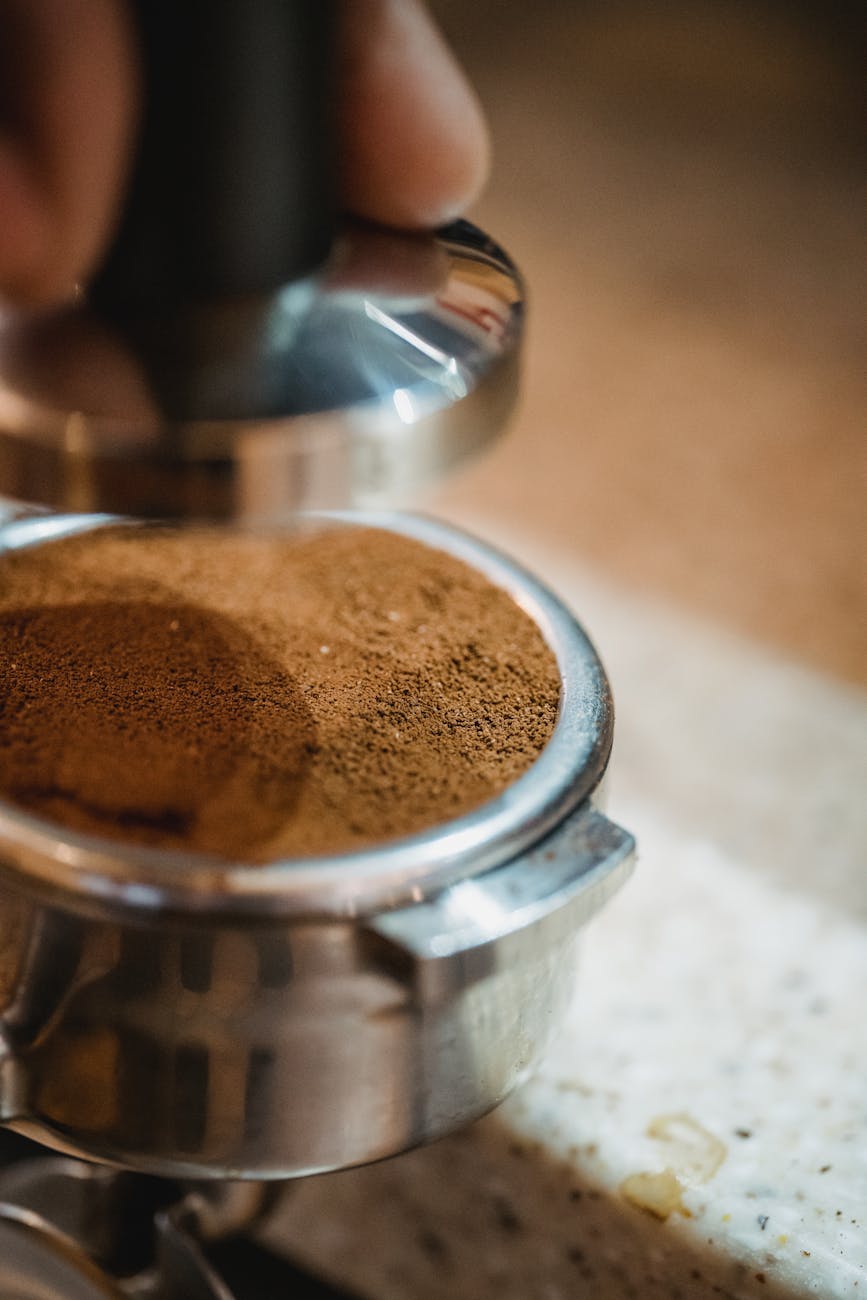
Finally, there is tamping. The purpose of tamping is not to press as hard as you can, but to compact the now-distributed grounds into a level and uniformly dense puck. The key is a firm, even pressure to remove any air pockets and create a flat surface. An uneven tamp will create a sloped puck, forcing water to run to the lower side and, once again, causing an uneven extraction.
From technique to taste: The flavor impact
So, how do these meticulous steps translate to the final taste in your cup? The difference is night and day. When you properly prepare your basket, you force the water to percolate evenly through the entire coffee puck. This ensures a balanced extraction where all the coffee grounds contribute equally to the final shot.
For a Coffee Bean & Tea Leaf blend, this means you’ll finally taste the flavors as the roaster intended. The harsh bitterness from over-extraction disappears, replaced by a deep, rich chocolatey base. The sharp sourness from under-extraction vanishes, allowing the subtle, sweet caramel and nutty notes to shine through. The body of the shot becomes fuller and more viscous, with a syrupy mouthfeel instead of a thin, watery one. Furthermore, the crema—that beautiful reddish-brown foam on top—will be thick, stable, and persistent, a visual indicator of a well-pulled shot. Proper prep turns a game of chance into a reliable process for brewing delicious, cafe-quality espresso every single time.
A tale of two pucks: Poor vs. proper preparation
The visual and sensory differences between a poorly prepared shot and a properly prepared one are stark. To illustrate the direct impact of these techniques, let’s compare the two scenarios side-by-side. This highlights how each step in the preparation process contributes to the quality of the final extraction when using your favorite Coffee Bean & Tea Leaf beans.
| Observation | Poor basket prep | Proper basket prep |
|---|---|---|
| Puck appearance | Clumpy, uneven surface before tamping. May be sloped after tamping. | Fluffy, evenly distributed grounds. A perfectly level and polished surface after tamping. |
| Shot extraction | Blonding happens very quickly. Spurts or jets of liquid (channeling) are visible. | Flow begins as slow drips, coalescing into a single, steady, centered stream. “Tiger striping” may be visible. |
| Extraction time | Typically too fast (under 20 seconds) or stalls and then gushes. | Consistent and controlled, usually within the target 25-32 second range. |
| Crema quality | Thin, light in color, with large bubbles. Dissipates quickly. | Thick, rich, reddish-brown color. Stable and long-lasting. |
| Taste profile | A jarring mix of bitter and sour notes. Thin body and a harsh, lingering aftertaste. | Balanced and sweet. Clear notes of chocolate, caramel, and nuts. Full, syrupy body. |
Conclusion
In the pursuit of the perfect home espresso, it’s clear that what you do before you lock in the portafilter is just as important as the beans you use or the machine you own. Basket preparation is not an obsessive detail for professionals; it is the fundamental practice that lays the groundwork for a delicious extraction. By focusing on a consistent routine of dosing, effective distribution with a WDT tool, and a level tamp, you eliminate the primary cause of flawed espresso: channeling. This ensures an even flow of water, leading to a balanced shot that truly honors the flavor profile of your Coffee Bean & Tea Leaf beans. Mastering this process elevates your coffee making from a daily chore to a rewarding craft, consistently delivering that cafe-quality experience in your own kitchen.
 No products in the cart.