

The espresso lover’s guide to Moccamaster grind size adjustments
Welcome, espresso aficionado. You’ve perfected the art of the 9-bar pull, you can dial in a new bean in your sleep, and your palate is finely tuned to the nuances of a perfect extraction. Now, you’ve brought a legendary Technivorm Moccamaster into your home, expecting the same level of coffee excellence in a larger format. But you quickly discover a critical truth: the ultra-fine, powdery grind that produces your syrupy espresso shot is the sworn enemy of a world-class drip coffee. This guide is for you. We will bridge the gap between your espresso expertise and the world of percolation brewing, helping you adjust your grinder to unlock the full, vibrant potential of your Moccamaster and brew a truly exceptional cup.
Why your espresso grind is a disaster for drip coffee
The first step to mastering your Moccamaster is understanding why it operates on a completely different set of principles than your espresso machine. An espresso machine uses immense pressure—typically around 9 bars—to force hot water through a tightly packed puck of very fine coffee grounds in about 25-30 seconds. This method is all about intense, rapid extraction.
Your Moccamaster, on the other hand, is a master of percolation. It heats water to an optimal temperature (between 92° and 96°C) and gently showers it over a bed of coffee grounds. Gravity is the only force at play here, as the water slowly trickles through the grounds and the paper filter. This process takes several minutes, not seconds. If you were to use an espresso-fine grind in the Moccamaster’s brew basket, the tiny particles would compact and form a dense, muddy barrier. Water wouldn’t be able to flow through properly, leading to a backed-up brew basket, a potential overflow all over your counter, and a horribly over-extracted, bitter, and astringent cup of coffee.
Finding the Moccamaster sweet spot: From powder to coarse sand
So, if espresso-fine is out, where do you start? The ideal grind for a Moccamaster is a medium to medium-coarse grind. Imagine the texture of coarse sand or kosher salt. This particle size is the key to a balanced extraction in a drip brewer. It’s large enough to allow water to flow through the coffee bed at a steady, consistent rate, but small enough to provide sufficient surface area for the water to extract all the desirable flavour compounds—the sweetness, acidity, and complex origin notes of your beans.
Getting this wrong has immediate consequences for taste:
- Too fine (approaching espresso): The water takes too long to pass through, resulting in over-extraction. Your coffee will taste bitter, harsh, and hollow.
- Too coarse (like breadcrumbs): The water rushes through the grounds too quickly, resulting in under-extraction. Your coffee will taste sour, weak, and grassy.
The goal is to find that perfect middle ground where the brew time for a full pot is around 4 to 6 minutes, producing a cup that is sweet, balanced, and vibrant.
A practical guide to dialing in your grind
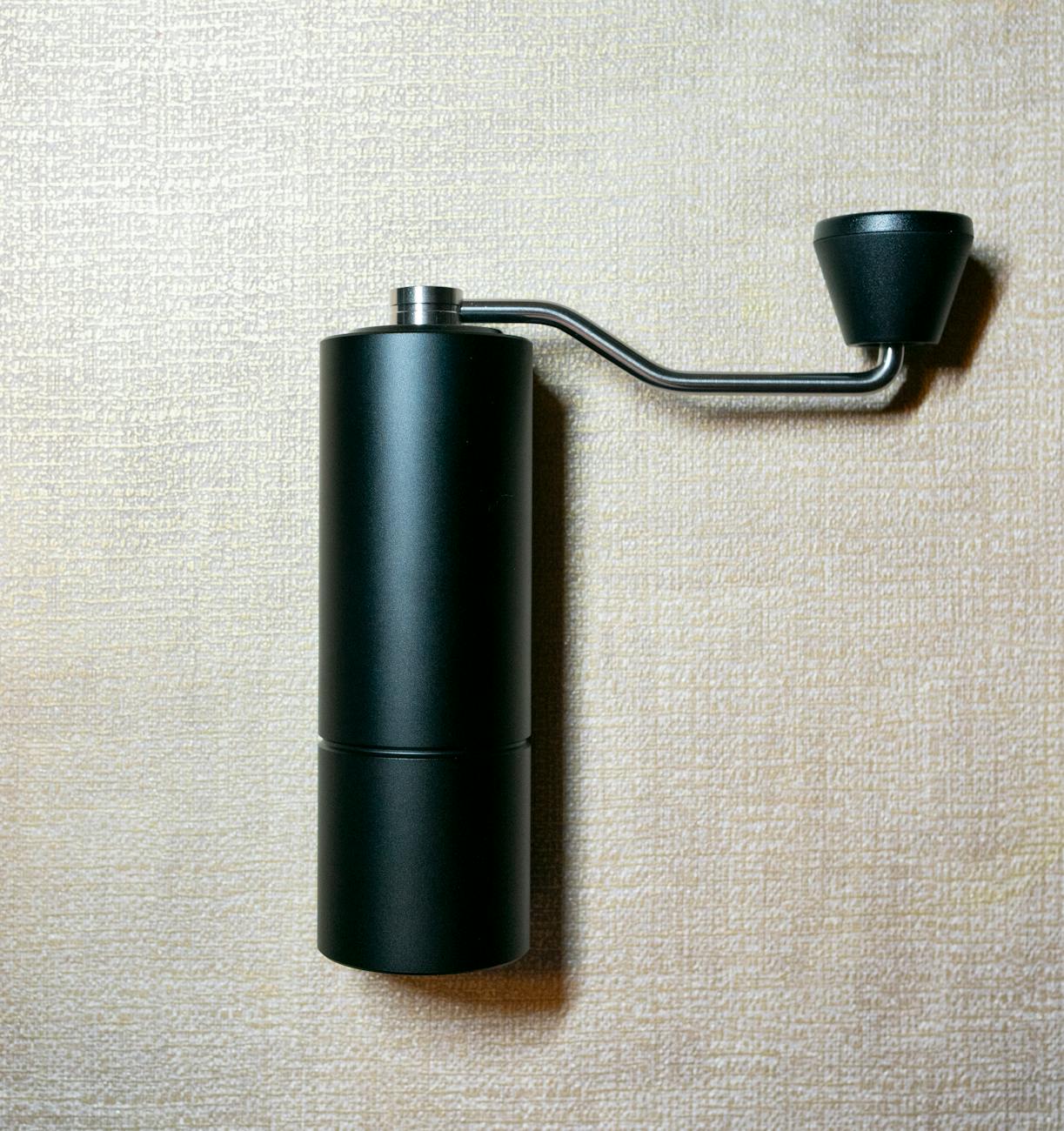
Dialing in your Moccamaster is a sensory process, much like dialing in an espresso shot, but the feedback loop is longer. You’ll need a quality burr grinder, as blade grinders produce an inconsistent mix of boulders and dust that makes balanced extraction impossible. Here’s a step-by-step method to find your perfect setting.
1. Establish a baseline: Start with a medium setting on your burr grinder. If your grinder has a numerical range, aim for the middle. Brew a half-batch of coffee using your standard ratio (a good starting point is 1:16, or 30g of coffee for 500g of water).
2. Taste and evaluate: Let the coffee cool slightly and taste it. Is it unpleasantly sour or acidic? That’s a clear sign of under-extraction. Is it overwhelmingly bitter, with a dry, lingering aftertaste? That points to over-extraction.
3. Make one adjustment at a time: Based on your tasting notes, adjust the grind setting.
- If it’s sour, make the grind finer. This increases the surface area and slows the water flow, increasing extraction.
- If it’s bitter, make the grind coarser. This reduces surface area and speeds up the water flow, decreasing extraction.
Make small, incremental changes. Move the dial only one or two steps on your grinder before brewing and tasting again. Keeping notes can be very helpful during this process.
To help you visualize the differences, here is a general guide to coffee grind sizes:
| Grind Size | Visual Texture | Primary Brew Method |
|---|---|---|
| Extra Fine | Like flour or powder | Turkish Coffee |
| Fine | Finer than table salt | Espresso, Moka Pot |
| Medium | Like table salt or coarse sand | Drip brewers (Moccamaster), Aeropress |
| Coarse | Like kosher salt | French Press, Chemex |
| Extra Coarse | Like cracked peppercorns | Cold Brew |
Beyond the grind: Other variables for the perfect cup
While grind size is arguably the most critical variable you control, it doesn’t exist in a vacuum. As an espresso lover, you know that a perfect shot is a symphony of correct variables. The same is true for your Moccamaster. Once you have your grind in the right ballpark, consider these other factors to elevate your brew.
First is the coffee-to-water ratio. The Specialty Coffee Association (SCA) Golden Cup Standard suggests a ratio between 1:15 and 1:18. For a Moccamaster, starting with 60 grams of coffee per 1 liter (1000g) of water is an excellent baseline. Second, use fresh, quality beans. Stale coffee will taste flat and boring, no matter how perfect your grind is. Finally, use filtered water. Your coffee is over 98% water, so its quality will have a massive impact on the final taste, preventing scale buildup in your brewer and allowing the coffee’s true character to shine.
By treating your drip coffee with the same attention to detail you give your espresso, you’ll be rewarded with an outstanding cup every time.
Mastering the grind for your Moccamaster is a journey of unlearning the strict rules of espresso and embracing the gentler physics of drip brewing. It requires shifting your focus from a fine, powdery texture to a medium, sand-like consistency that facilitates a balanced, gravity-fed extraction. The process is a simple, iterative cycle: start with a medium grind, brew a small batch, and taste critically. Adjust finer to correct sourness and coarser to eliminate bitterness. By combining this meticulous approach to grind size with other key variables like a precise coffee-to-water ratio and high-quality beans, you can successfully translate your espresso palate to the world of percolation. You’ll unlock the nuanced, clean, and consistently delicious coffee your Moccamaster was built to produce.

 No products in the cart.