

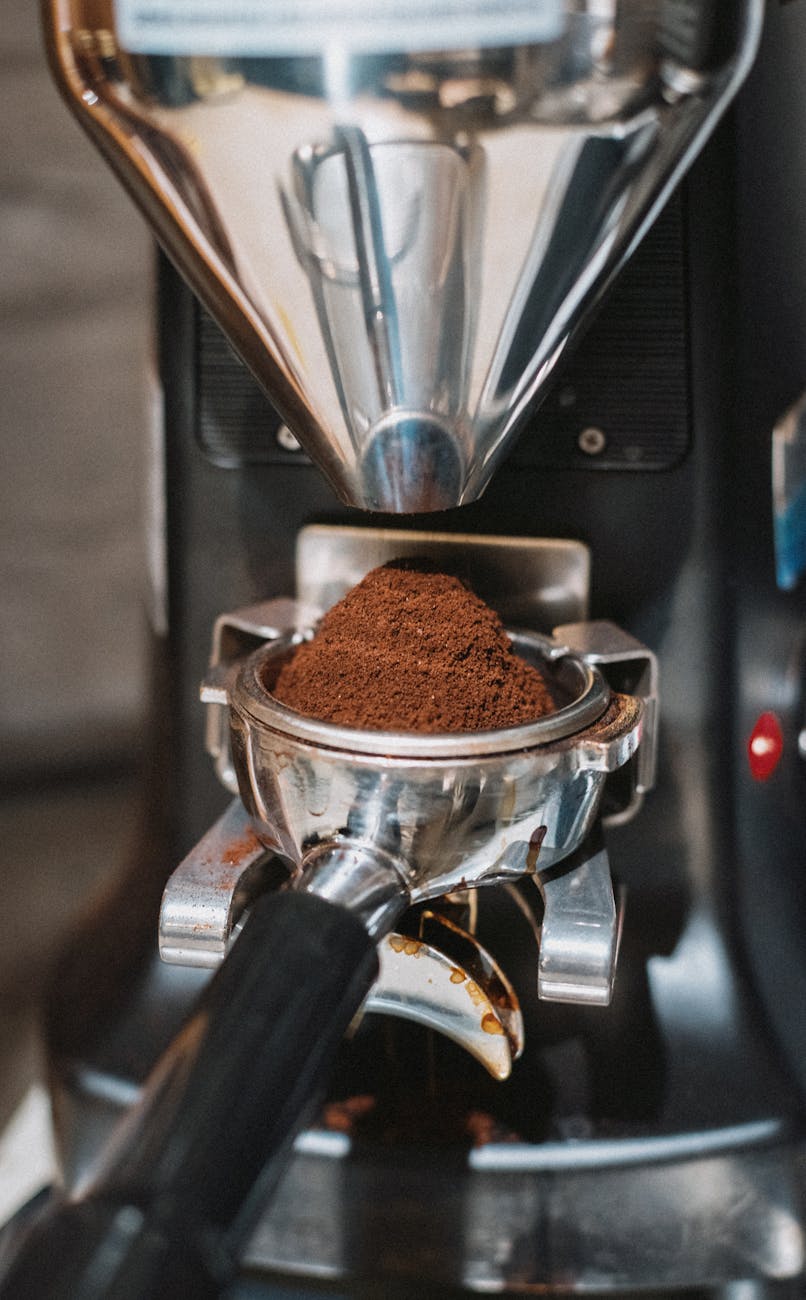
The pursuit of the perfect espresso shot is a journey filled with variables. From the origin of the bean to the pressure of the machine, every detail matters. Yet, one of the most critical and often overlooked components in this complex equation is the coffee grinder, and more specifically, the size of its burrs. While many focus on the type of burr, flat or conical, the actual diameter of these cutting surfaces plays a monumental role in the final quality of your brew. This article will delve into the physics and practical effects of burr size, exploring how it directly influences the uniformity of your espresso grind and, consequently, the taste that ends up in your cup. We will explore why bigger often means better in the world of espresso grinding.
What is grind uniformity and why does it matter?
Before we can discuss burr size, we must first understand the concept of grind uniformity. In simple terms, this refers to how consistent the size of the individual coffee particles are after grinding. An ideal grind for espresso isn’t perfectly uniform; it’s typically a bimodal distribution, meaning it has one large peak of particles at the target size and a smaller, controlled amount of very fine particles, known as “fines.” The problem arises when this distribution becomes too wide, with a chaotic mix of large chunks (boulders) and an excessive amount of fines.
This consistency is paramount for a balanced extraction. Water is a lazy solvent; it will always follow the path of least resistance.
- Boulders: Water rushes past these large particles, failing to extract their soluble flavors, leading to a sour, weak, and under-extracted taste.
- Fines: An excess of fines can compact and choke the espresso puck, forcing water to carve paths, or “channels,” around them. The fines in the water’s path get over-extracted, contributing bitter and astringent flavors.
When you have poor uniformity, you get the worst of both worlds in a single shot: a confusing and unpleasant combination of sourness and bitterness. Achieving a tight, consistent grind distribution is the first step toward unlocking a sweet, balanced, and flavorful espresso.
The mechanics of how burr size works
So, how does the physical size of a grinder’s burrs impact this crucial uniformity? It comes down to a few key mechanical principles. Think of a burr set as a complex series of cutting edges designed to shatter and shear coffee beans into smaller and smaller pieces.
A larger burr, for instance, an 83mm flat burr compared to a 50mm one, has a significantly larger surface area and a longer cutting path. As a coffee bean enters the burrs, it has to travel a greater distance from the center to the outer edge where it is expelled. This longer journey allows for a more gradual and controlled size reduction. Instead of being crudely shattered in a short, violent pass, the bean is progressively milled down. This process is inherently more precise and results in a tighter particle size distribution with fewer unwanted fines and boulders.
Furthermore, larger burrs can achieve a high grind output at a lower rotational speed (RPM). Smaller burrs must spin much faster to grind the same amount of coffee in a reasonable time. This high speed generates more friction and, consequently, more heat. Heat is the enemy of fresh coffee, as it can prematurely release volatile aromatic compounds, essentially “baking” your grounds before they even touch water. This results in a less aromatic and dull-tasting espresso.
A direct comparison: large vs. small burrs in action
The theoretical advantages of larger burrs translate directly into tangible differences in the grinding process and the final cup quality. When we place small and large burr grinders side by side, the distinctions become clear. A typical entry-level grinder might feature 40-50mm burrs, while high-end “prosumer” and commercial grinders often use 64mm, 83mm, or even 98mm burrs.
The most noticeable difference is speed. A grinder with 83mm burrs can grind an 18-gram dose for espresso in as little as 3-4 seconds, while a smaller burr grinder might take 10-15 seconds. While this is a major workflow benefit in a café, the more important factor for quality is what’s happening during that time. The slower, hotter grind of a small burr set produces a wider particle distribution. This often leads to espresso shots with a heavier, thicker body due to the higher percentage of fines, but this can come at the cost of flavor clarity. The flavors tend to be more blended and muddled.
In contrast, the uniform particles produced by large burrs allow for a more even extraction. This translates to a flavor profile with much greater clarity and flavor separation. Delicate floral or fruity notes that would be lost in a muddy extraction become distinct and vibrant. The resulting espresso often has a higher perceived sweetness and a more pleasant, lingering aftertaste, free from the harshness of over-extraction.
Is bigger always better? Practical realities and cost
While the evidence points towards larger burrs producing a technically superior grind, it doesn’t automatically mean everyone should run out and buy a 98mm grinder. The “law of diminishing returns” is very much at play. The jump in quality from a 50mm burr set to a high-quality 64mm set is significant and immediately noticeable to most palates. The improvement from a 64mm to an 83mm is still there, but more subtle, and the leap to 98mm is something that might only be fully appreciated by professionals or dedicated hobbyists tasting very light roasts.
The primary barrier is, of course, cost. Grinders with large burrs require more powerful motors, more precise manufacturing, and heavier-duty construction, all of which drive the price up exponentially. A great 64mm grinder might be considered an investment for a home user, whereas an 83mm or 98mm grinder represents a serious commercial-grade expense.
The table below provides a simplified summary of the key differences:
| Feature | Small Burrs (e.g., < 55mm) | Large Burrs (e.g., > 64mm) |
|---|---|---|
| Grind Uniformity | Good, but with a wider particle distribution | Excellent, with a tight and consistent particle distribution |
| Fines Production | Higher and less predictable | Lower and more controlled |
| Grind Speed | Slower | Significantly faster |
| Heat Generation | Higher due to faster RPM requirement | Lower due to slower RPM operation |
| Typical Flavor Profile | Heavier body, blended flavors, potential for bitterness | Higher clarity, flavor separation, enhanced sweetness |
| Cost | Lower | Significantly Higher |
For most serious home baristas, the 64mm burr size category often represents the sweet spot, offering a massive leap in performance over entry-level options without venturing into the extreme cost of commercial-grade equipment.
In conclusion, the size of a grinder’s burrs is not just a specification on a data sheet; it is a fundamental factor that defines the potential quality of your espresso. We’ve seen that larger burrs provide a more precise and gentle grinding process due to their longer cutting path and ability to operate at lower, cooler RPMs. This directly results in superior grind uniformity—a tighter particle size distribution with a more controlled level of fines. This improved consistency is the key to unlocking a more even extraction, which in turn produces espresso that is sweeter, clearer, and more complex. While the investment for larger burr grinders is considerable, for anyone serious about elevating their espresso, it is arguably the single most impactful upgrade you can make to your setup.



 No products in the cart.