

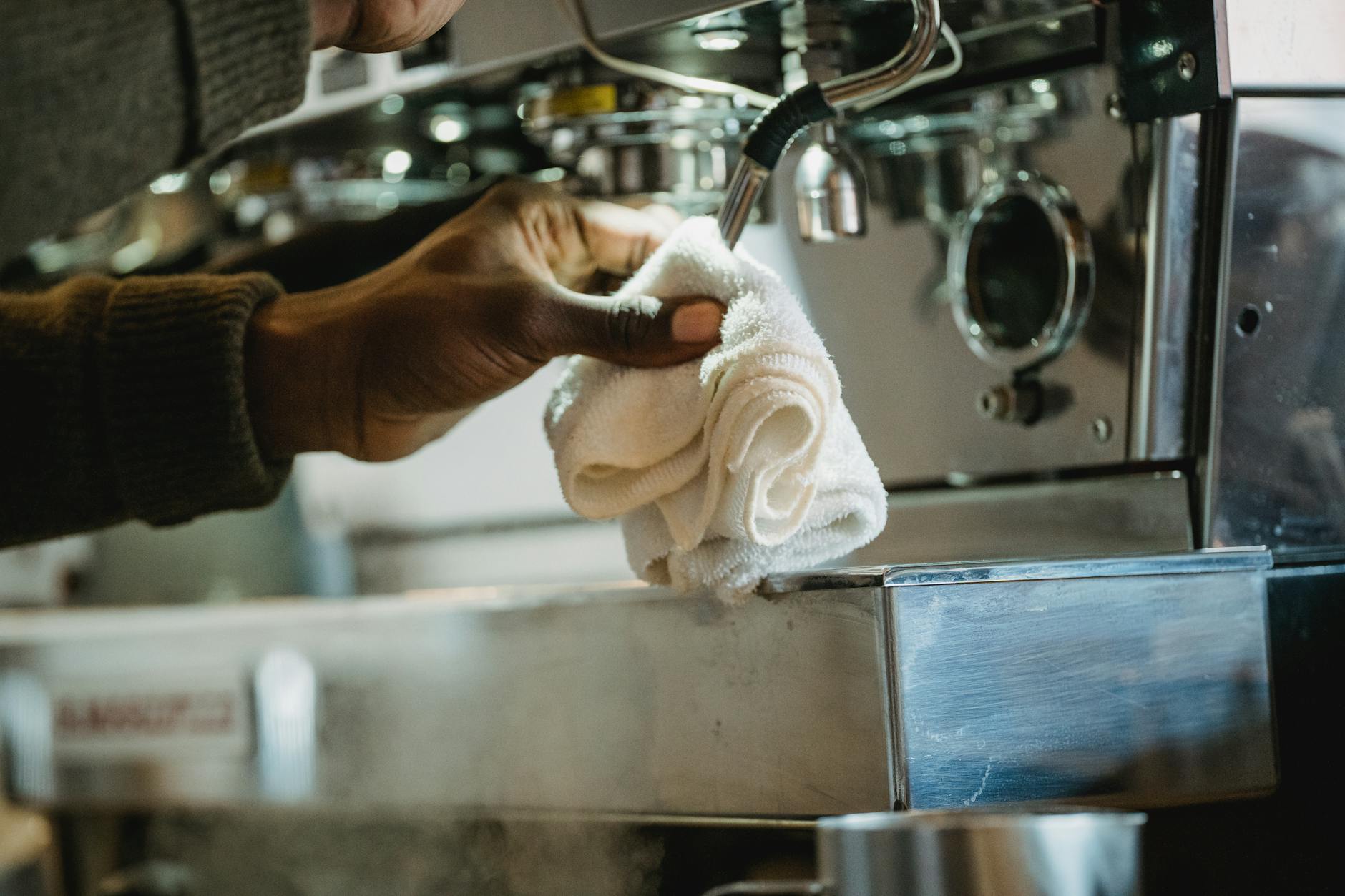
Your Profitec Go is a fantastic single boiler espresso machine, capable of producing café-quality shots right in your kitchen. But like any high-performance machine, it requires regular maintenance to keep it running smoothly. One of the most critical, and often misunderstood, maintenance tasks is descaling. Done correctly, it protects your machine’s internals and ensures consistent performance. Done incorrectly, it can lead to the very problem you’re trying to prevent: clogs in the delicate water pathways. This article will serve as your definitive guide to the correct descaling procedure for your Profitec Go, focusing specifically on techniques that minimize the risk of dislodging scale and creating blockages, ensuring your machine has a long and productive life.
Understanding scale and its impact on your machine
Before we dive into the how, it’s crucial to understand the what and why. “Scale” is simply the buildup of mineral deposits—primarily calcium and magnesium—that are left behind as water is heated and evaporates inside your machine’s boiler and tubing. The harder your water, the faster this scale will accumulate. For a machine like the Profitec Go, which features a compact single boiler and precise water pathways, this buildup is particularly problematic.
Scale acts as an insulator, forcing the heating element to work harder and less efficiently to reach the target temperature. This can lead to temperature instability, which directly impacts the quality and consistency of your espresso shots. More dangerously, scale can flake off in chunks. If a dislodged piece is large enough, it can travel through the system and get stuck in a narrow point, such as the three-way solenoid valve, the gicleur (a small jet that controls flow to the group head), or the over-pressure valve (OPV). A clog in any of these components can result in low or no flow from the group head, a sputtering steam wand, or even a complete machine failure. The goal of proper descaling isn’t just to remove scale, but to do so gently, dissolving it rather than breaking it off in large, clog-inducing pieces.
Choosing your weapon: The right descaler and timing
The first step in a successful descaling operation is selecting the appropriate descaling solution. You have two primary choices: a pre-made commercial descaler or a simple citric acid solution. Both are effective, but they have their own set of pros and cons. Commercial descalers are formulated specifically for coffee machines and often contain inhibitors to protect metals like brass and copper. Citric acid is a cost-effective and readily available alternative that works very well when mixed to the correct concentration.
A common mistake is using a solution that is too strong. This can be overly aggressive, causing large chunks of scale to break free and increasing the risk of both clogs and corrosion. A gentle, controlled approach is always better. For citric acid, a common recommendation is a solution of 1-2 tablespoons per liter (or quart) of water. For commercial descalers, always follow the manufacturer’s instructions for dilution.
So, how often should you descale? This depends entirely on your water hardness. If you are using properly softened or filtered water (which is highly recommended), you may only need to descale once every 6 to 12 months. If you are using moderately hard tap water, you may need to descale as often as every 2 to 3 months. A simple water hardness test strip can give you a precise answer and help you create a proper maintenance schedule.
| Feature | Commercial descaler (e.g., Dezcal) | Citric acid |
|---|---|---|
| Effectiveness | Excellent, formulated to dissolve scale efficiently. | Excellent, when mixed to the correct concentration. |
| Safety | Often includes agents to protect internal metal components. | Generally safe for brass and stainless steel, but can be corrosive if too concentrated. |
| Ease of use | Simple to use, often pre-portioned. Instructions are clear. | Requires you to measure and mix the solution yourself. |
| Cost | More expensive per use. | Very inexpensive and widely available. |
The safe, step-by-step descaling procedure
This process is designed to dissolve scale gently. Remember to work with a cool machine and follow each step carefully. The key is to allow the solution to work without causing a sudden, aggressive reaction.
- Prepare the machine: Make sure your machine is turned off and completely cool. Remove the portafilter and empty the drip tray and water reservoir.
- Mix your solution: Prepare your chosen descaling solution in a separate container according to the recommended dilution. Pour this solution into the Profitec Go’s water reservoir.
- Fill the boiler: Turn the machine on. Place a large container under the group head. Activate the brew switch to run the pump. Let about 4-6 ounces of the descaling solution run through the group head. This ensures the boiler is now filled with the descaling solution.
- The crucial wait: Turn the machine off. Let it sit for 20-30 minutes. This is the most important step for preventing clogs. By allowing the cool solution to sit, it begins to gently dissolve the scale without the aggressive reaction caused by heat. This “softens up” the scale before you apply any heat.
- Activate and distribute: After the initial wait, turn the machine on and let it heat up. Once it reaches temperature, run another 4-6 ounces through the group head. Then, with a container under the steam wand, open the steam valve and run about 4-6 ounces of solution through it.
- Repeat and rest: Turn the machine off again and let it sit for another 20 minutes. This allows the now-warm solution to continue working. Repeat the process of running small amounts of water through the group head and steam wand until the reservoir is empty.
Post-descaling flush and preventative care
Simply removing the descaling solution isn’t the end of the job. A thorough flush is non-negotiable to remove any remaining dissolved minerals and, more importantly, all traces of the acidic descaling solution. Any leftover descaler can corrode internal components and will certainly make your coffee taste terrible. This final stage is just as important as the descaling itself.
First, remove and thoroughly rinse the water reservoir. Fill it with fresh, clean water. Turn the machine on and place your container under the group head. Flush at least one full reservoir of fresh water through the group head by repeatedly activating the brew switch. Next, flush another full reservoir of water through the steam wand. This might seem excessive, but it’s the best way to ensure the entire system is completely clean. Once you’re done flushing, you’re ready to lock in your portafilter and pull a “sacrificial” shot to season the group head and clear out any final residue. The best way to avoid frequent descaling and the risk of clogs is prevention. Using soft, filtered water is the single most effective thing you can do for your machine’s longevity.
In conclusion, descaling your Profitec Go doesn’t have to be a daunting task that risks clogging your machine. The key lies in a methodical and gentle approach rather than an aggressive chemical attack. By understanding that the goal is to dissolve, not dislodge, scale, you can perform this essential maintenance with confidence. Remember to use a properly diluted solution, allow it to work on a cool machine first before introducing heat, and follow a patient cycle of flushing and resting. Most importantly, a thorough multi-reservoir flush with fresh water afterward is critical to protect your machine’s components and the taste of your coffee. Combine this safe descaling method with the preventative measure of using soft water, and your Profitec Go will be well-equipped to pull delicious espresso shots for years to come.

 No products in the cart.