

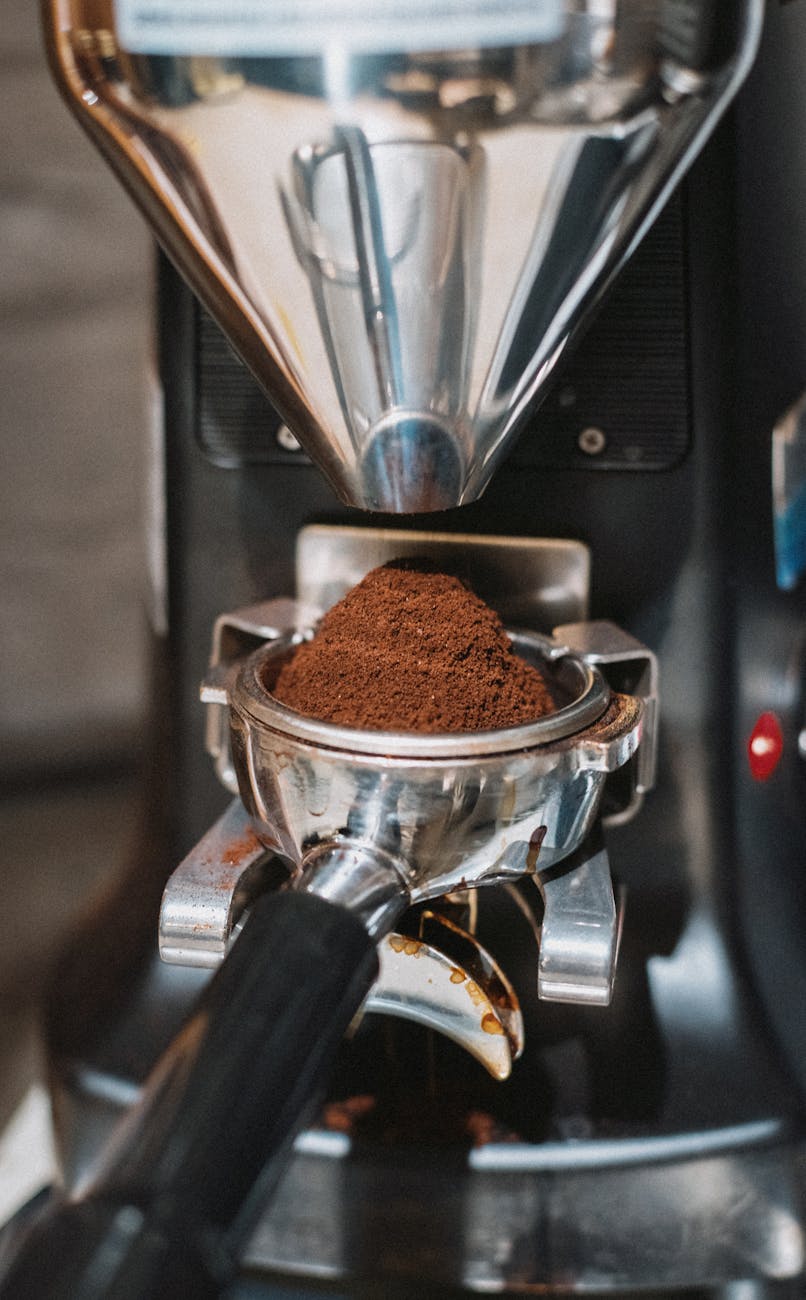
The quest for the perfect shot of espresso is a journey many coffee lovers embark on. You have the high-quality beans and the state-of-the-art espresso machine, yet your shots are inconsistent—sometimes sour, sometimes bitter. The secret to unlocking consistently delicious espresso often lies in the unsung hero of your setup: the coffee grinder. Specifically, the debate between stepped and stepless grinders is central to achieving that perfect extraction. This choice directly impacts your ability to “dial in” your grind size with the precision needed for espresso. In this article, we will delve into the mechanics of both systems, explore their distinct advantages and disadvantages, and help you determine which type of grinder will best suit your coffee-making ambitions and daily routine.
Understanding the core difference
At the heart of the home barista’s toolkit is the grinder, and the mechanism it uses for adjustment is a critical feature. The fundamental distinction between stepped and stepless grinders lies in how you control the distance between the burrs, which in turn determines the fineness of your coffee grounds. This single mechanical difference creates two very different user experiences and has significant implications for dialing in the perfect espresso shot.
A stepped grinder operates with a series of pre-defined, lock-in settings or “clicks”. As you turn the adjustment collar or knob, it clicks into place at a specific distance. This makes the process straightforward and highly repeatable. In contrast, a stepless grinder has no fixed settings. It uses a worm-drive or threaded screw mechanism that allows for a smooth, continuous adjustment. This provides a theoretically infinite number of settings between the finest and coarsest points, offering unparalleled precision.
The case for the stepped grinder: Simplicity and repeatability
The primary advantage of a stepped grinder is its user-friendliness. The numbered clicks provide clear, tangible reference points that make it incredibly easy to use and maintain consistency. If you know that your favorite dark roast tastes best at setting 8, you can switch to a different setting for a French press and then return directly to 8 the next day with absolute certainty.
This repeatability is a huge asset for a few types of users:
- Beginners: For those new to home espresso, the vast world of micro-adjustments can be overwhelming. Stepped grinders simplify the process, allowing you to focus on other variables like dose and tamping.
- Multi-method brewers: If your grinder pulls double duty for espresso, pour-over, and French press, a stepped grinder is far more convenient. Jumping from a fine espresso setting (e.g., 6) to a coarse French press setting (e.g., 35) is quick and effortless.
- Consistency seekers: For those who value a “set it and forget it” approach, stepped grinders deliver reliable results day after day without much fuss.
The main drawback, however, is that the perfect grind setting for a particular coffee bean might lie between two clicks. You might find setting 7 produces a shot that’s too fast and sour, while setting 6 produces one that’s too slow and bitter. You are limited by the manufacturer’s pre-defined steps.
The pursuit of perfection with a stepless grinder
For the dedicated espresso enthusiast, the stepless grinder is often considered the ultimate tool. Espresso is notoriously finicky; tiny changes in humidity, bean age, or ambient temperature can require small adjustments to your grind size to keep your shot time and extraction yield perfect. This is where the stepless design shines.
With a stepless grinder, you are not bound by clicks. If your shot is running a few seconds too fast, you can make an infinitesimal adjustment—a tiny nudge of the collar—to slow it down. This level of control allows you to fine-tune your grind to perfectly match your beans and machine on any given day. This process, known as dialing in, is central to achieving cafe-quality espresso at home. The ability to make these micro-adjustments is what separates a good shot from a truly exceptional one.
The trade-off is a steeper learning curve. Without fixed settings, it can be harder to make large adjustments and return to your starting point. Many baristas will only use their stepless grinder for espresso to avoid the hassle of finding that sweet spot again. It demands more attention and a more methodical approach from the user.
Making the right choice for your coffee journey
Ultimately, the decision between a stepped and stepless grinder depends entirely on your goals, budget, and how you intend to use it. There is no single “best” option, only the best option for you. A stepped grinder offers convenience and is perfectly capable of producing excellent coffee, while a stepless grinder offers the precision required to chase espresso perfection. To help you decide, consider the following points in this comparison table:
| Feature | Stepped Grinder | Stepless Grinder |
|---|---|---|
| Precision | Limited by pre-set “clicks” | Infinite, allowing for micro-adjustments |
| Ease of Use | Very easy, great for beginners | Requires more practice and patience |
| Repeatability | Excellent; easy to return to a specific setting | Challenging; requires careful notation or markers |
| Versatility | Great for switching between different brew methods | Best when dedicated to a single method, like espresso |
| Ideal User | Beginners, multi-method brewers, those valuing convenience | Espresso purists, coffee hobbyists, perfectionists |
If you are a budding coffee enthusiast who enjoys various brewing styles and wants a reliable, fuss-free experience, a high-quality stepped grinder is an excellent choice. If your passion is solely focused on pulling the perfect espresso shot and you enjoy the meticulous process of dialing in, then the precision of a stepless grinder is an invaluable asset that will elevate your craft.
In conclusion, the stepped versus stepless grinder debate is not about which is definitively superior, but about which aligns with your personal coffee-making philosophy. We’ve seen that stepped grinders offer unparalleled ease of use and repeatability, making them ideal for beginners or those who frequently switch between brew methods like pour-over and espresso. Their predictable “clicks” remove guesswork. Conversely, stepless grinders are the tool of choice for the espresso perfectionist. Their infinite adjustment capability provides the micro-control necessary to combat daily variables and truly dial in a flawless shot. Your final decision should be a reflection of your priorities: do you value convenience and versatility, or do you crave the ultimate precision in your pursuit of the perfect espresso?

 No products in the cart.