

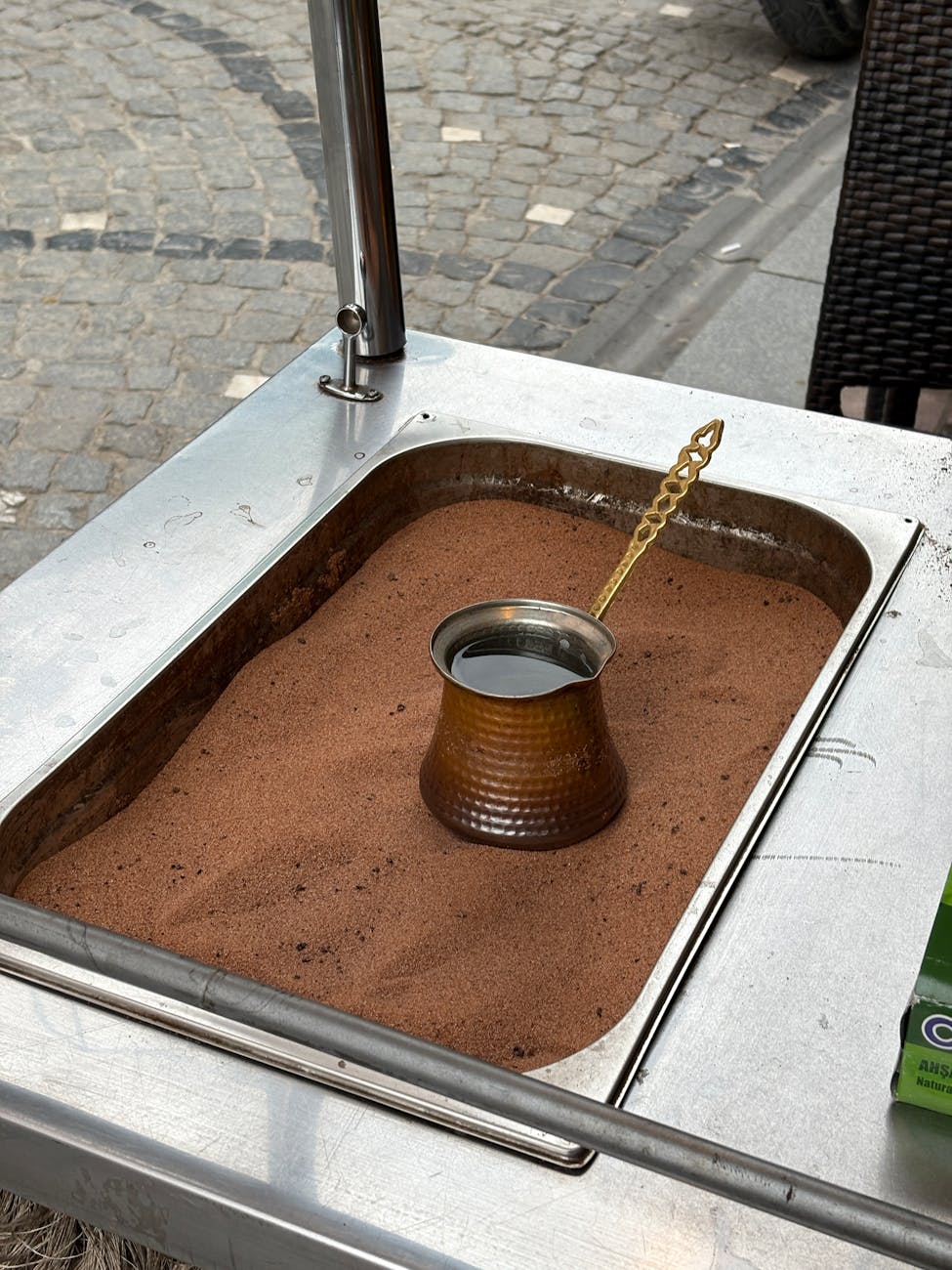
The rich aroma and velvety foam of a well-made Turkish coffee are a true delight, a ritual enjoyed one small cup at a time. But what happens when you have guests? The prospect of brewing individual cups can be daunting. Many attempt to simply multiply a single-serving recipe for a larger pot, or cezve, only to be met with a bitter, foam-less brew that boils over in a volcanic mess. The truth is, scaling Turkish coffee is an art that requires more than simple math. The physics of heat transfer and extraction change with volume. This guide will walk you through the nuances of brewing multiple perfect servings in a single large cezve, from selecting the right equipment to mastering the adjusted technique for a flawless, shareable experience.
Choosing the right tool for the job
Before you can even think about ratios and heat, you must start with the proper vessel. A large cezve isn’t just a bigger version of a small one; its design is critical for success. The traditional shape—a wide, heavy bottom that tapers to a narrow neck with a pour spout—is not just for aesthetics. This design is functional and becomes even more important when brewing larger quantities.
- The wide base: This ensures even and stable heat distribution from your stove, preventing hot spots that can scorch the coffee grounds and create bitterness.
- The narrow neck: This is the secret to developing a thick, rich foam, or kaymak. It limits the surface area, forcing the foam to build up into a dense layer. Without this feature, the foam would spread out thinly and dissipate quickly.
- Material matters: Copper is the traditional and most recommended material because it conducts heat exceptionally well, allowing for precise temperature control. A tin lining on the inside is essential to make it food-safe. Stainless steel is a durable and more affordable alternative, but it doesn’t manage heat with the same finesse, requiring you to be extra vigilant.
When selecting a size, remember that “cups” in the world of Turkish coffee refer to small demitasse servings of about 2-2.5 ounces (60-75 ml). A “4-cup” cezve is designed to make four of these small servings, not four standard coffee mugs.
The art of scaling: Ratios and measurements
Here is where most people go wrong. You cannot simply double, triple, or quadruple the ingredients and expect the same result. A larger volume of water retains heat differently and takes much longer to reach the ideal brewing temperature. This extended time means the coffee grounds are in contact with hot water for longer, increasing the risk of over-extraction, which leads to a harsh, bitter taste.
To compensate, you must slightly adjust the coffee-to-water ratio. As you scale up, you use proportionally less coffee per serving. The goal is to balance the longer brew time with a slightly less concentrated mixture to achieve a smooth, flavorful cup. While sugar can be scaled linearly according to taste, the coffee requires a more nuanced approach.
Here is a reliable starting point for your scaling journey. Remember to use a fine, powder-like grind, consistent with traditional Turkish coffee.
| Servings (demitasse) | Water | Coffee (heaping tsp / grams) | Sugar (optional, per serving) |
|---|---|---|---|
| 1 (Baseline) | 70 ml (2.4 oz) | 2 tsp / 7-8g | 1 tsp |
| 2 Servings | 140 ml (4.8 oz) | 3 tsp / 12-13g | As desired |
| 3 Servings | 210 ml (7.1 oz) | 4.5 tsp / 18-19g | As desired |
| 4 Servings | 280 ml (9.5 oz) | 6 tsp / 24-25g | As desired |
Note: These measurements are a guide. Feel free to adjust based on the specific coffee you are using and your personal taste preferences.
Adjusting your technique for a larger brew
With the right cezve and correctly scaled ingredients, the final piece of the puzzle is technique. Brewing a larger batch requires more patience and a keen eye.
1. The initial mix: Combine your water, coffee, and sugar (if using) in the cezve. Stir gently for about 15-20 seconds until the coffee is fully submerged and there are no dry clumps. This initial stir is crucial for an even extraction. After this, do not stir again, as it will destroy the forming foam.
2. Heat management is everything: This is the most critical step. Use low to medium-low heat. A larger volume of liquid needs to be heated slowly and gently. If the heat is too high, the water at the bottom will boil before the top has a chance to form a proper foam, causing the entire pot to erupt and ruin your brew. The entire process for a 4-serving pot should take around 4-6 minutes. Patience is key.
3. Watch the foam: As the coffee heats, a dark ring of foam will begin to form around the edges and move toward the center. In a large cezve, this “raft” of foam will be substantial. You are looking for the moment it begins to dome and rise up the narrow neck. Remove the cezve from the heat just before it threatens to spill over. Do not let it come to a rolling boil.
4. The strategic pour: Serving is just as important as brewing. To ensure everyone gets a fair share of the precious kaymak, pour a small amount of coffee into each cup first. This distributes the initial layer of foam. Then, return to the first cup and top up all the cups in the same order. This method prevents one person from getting all the foam while the last gets only the liquid.
Common pitfalls and how to avoid them
Even with careful preparation, a few things can go wrong. Here’s how to troubleshoot the most common issues when brewing in a large cezve.
- Problem: The coffee boiled over. This is almost always caused by using heat that is too high. The larger water volume creates more intense pressure when it boils. Always use low, gentle heat and never walk away from the stove.
- Problem: The coffee is weak and watery. This points to an incorrect ratio. You may have under-dosed the coffee grounds, overcompensating for the scaling principle. Refer to the ratio table and consider adding a little extra coffee on your next attempt.
- Problem: The coffee is bitter and harsh. This is a classic sign of over-extraction. The cause is either a brew time that was too long (from heat being too low) or, more commonly, a sudden boil caused by heat that was too high. The goal is a gentle rise, not a violent eruption.
- Problem: There is little to no foam (kaymak). This can have several causes: your coffee grounds may not be fresh, you may have stirred after the initial mix, or you allowed the coffee to come to a full boil, which destroys the delicate foam structure. Ensure you are using a cezve with a properly narrow neck to encourage the foam to build.
Brewing Turkish coffee for a group doesn’t have to be a stressful, one-cup-at-a-time affair. By embracing the challenge of a larger cezve, you can transform your coffee making into a centerpiece of hospitality. The solution lies not in simple multiplication, but in mindful adjustment. It begins with choosing the right tool—a well-shaped cezve that encourages foam. It continues with a nuanced understanding of scaling, where you slightly reduce the coffee-to-water ratio to prevent bitterness from a longer brew. Finally, it culminates in a patient technique defined by low, slow heat and a strategic pour. Mastering this process takes a bit of practice, but the reward is serving multiple cups of rich, aromatic, and perfectly foamed Turkish coffee, turning a simple beverage into a truly shared and memorable experience.



 No products in the cart.