

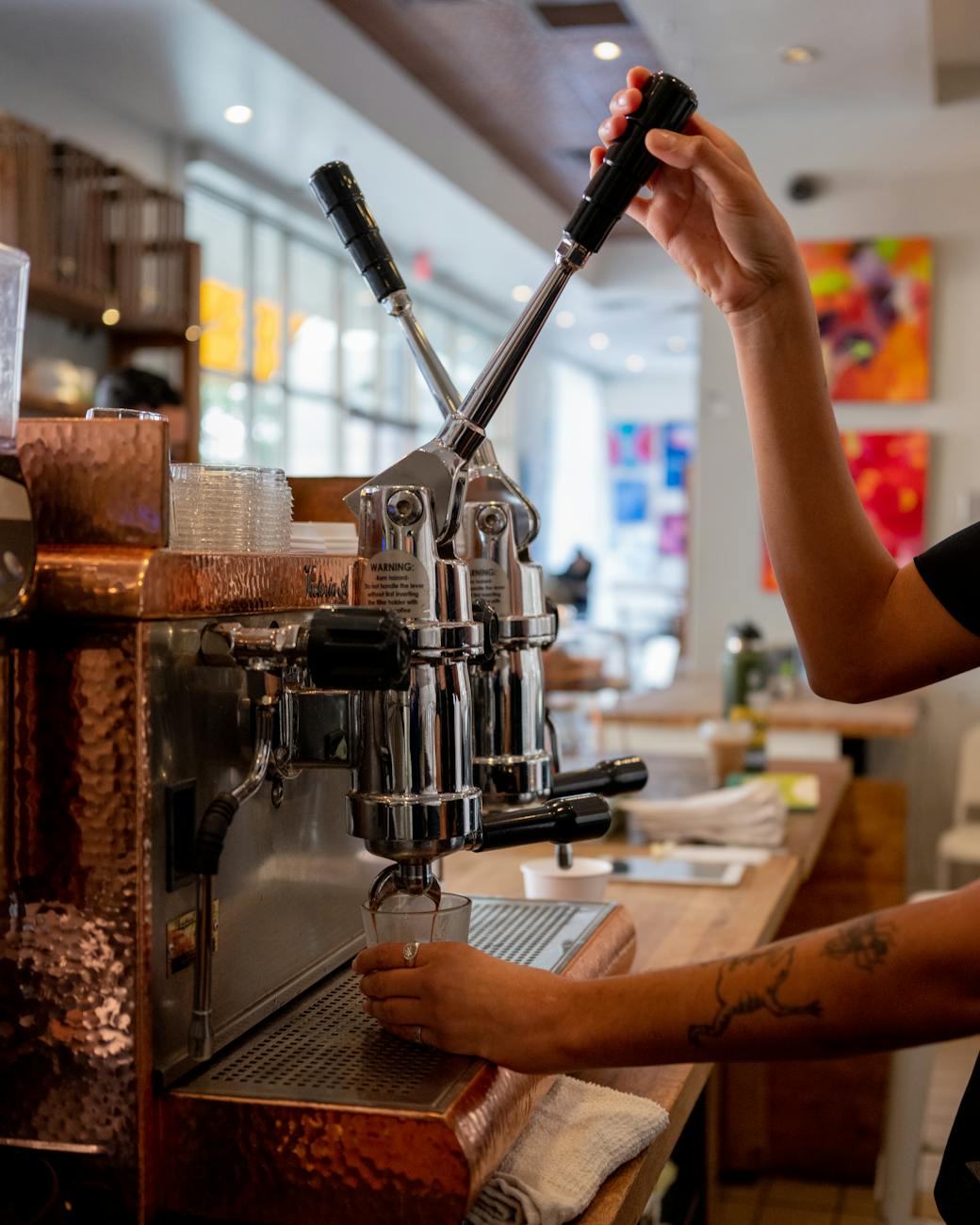
For decades, the 9-bar extraction has been the undisputed king of espresso. It’s the industry standard, the number hard-coded into most commercial and prosumer machines. But what if there was another way? For users of manual lever espresso machines, the power to manipulate every variable of the shot opens up a world of possibilities. One of the most rewarding paths to explore is the 6-bar extraction. This lower-pressure approach isn’t about weakness; it’s about finesse. It’s a technique that can tame bitterness, unlock delicate sweetness, and reveal a clarity in your coffee you may have never tasted before. This article will guide you through the theory, mechanics, and mastery of the 6-bar pull on your manual lever machine.
Why 6 bars? Deconstructing the pressure myth
To understand the appeal of a 6-bar extraction, we first need to look at its 9-bar counterpart. The 9-bar standard originated with commercial pump-driven machines designed for consistency and speed in a busy café setting. This pressure is highly effective at extracting soluble compounds from darker roasted, traditional espresso blends, producing thick, syrupy shots with heavy crema. It’s a reliable workhorse. However, it can also be a brute-force method. High pressure can amplify bitterness and astringency, especially with lighter roasts, and can more easily create channels in the coffee puck if preparation isn’t perfect.
A lower pressure extraction, typically in the 6 to 7 bar range, offers a gentler approach. Here’s what it brings to the cup:
- Reduced channeling: The lower force of the water is more forgiving on the puck, minimizing the risk of water finding a weak spot and creating a channel. This leads to a more even and complete extraction.
- Enhanced sweetness and clarity: By extracting more slowly and gently, a 6-bar pull tends to highlight the inherent sweetness and delicate acidity of a coffee bean. It mutes the deeper, bitter notes, allowing the more nuanced fruit and floral flavors to shine. This makes it ideal for single-origin, light to medium roast coffees.
- Softer, creamier texture: While you might get slightly less of the thick, frothy crema associated with 9-bar shots, the body of a 6-bar shot is often described as softer, silkier, and more integrated.
Moving away from the 9-bar default isn’t about saying it’s wrong; it’s about adding another powerful tool to your barista toolkit, one that is uniquely suited to the tactile control of a manual lever machine.
The mechanics of a 6-bar pull
Achieving a 6-bar shot is a dance between your preparation and your physical input on the lever. Because you are using less pressure, your other variables, primarily grind size, must be adjusted to compensate. To achieve the proper resistance and flow rate, you will almost certainly need to grind finer than you would for a 9-bar shot. This finer grind creates a more compact puck, providing the necessary resistance against the lower water pressure.
The process of the pull itself can be broken down into three phases:
- Pre-infusion: This phase is critical. Gently lift the lever to allow water into the group head, saturating the puck at a very low pressure (1-2 bars). You want to do this until you see the first few drops appear at the bottom of the basket. A typical pre-infusion for a 6-bar shot might last 10-15 seconds. This ensures the puck is fully saturated, which helps prevent channeling when you apply pressure.
- Ramping and holding: Once pre-infusion is complete, begin to apply steady downward pressure on the lever. If you have a pressure gauge, you can watch as you ramp up to your target of 6 bars. If you don’t, you must learn by feel. A 6-bar pull requires significantly less force than a 9-bar pull. Think of it as firm, consistent pressure rather than a full-body-weight push. Your goal is to hold this pressure as steadily as possible throughout the main extraction phase.
- Ramp down: As the shot nears its end (you are approaching your target yield), you can either maintain the 6-bar pressure or allow it to naturally decline. Many lever machines with springs do this automatically, and mimicking this with a direct lever can result in a beautifully balanced shot, softening the extraction at the end to avoid pulling in unwanted bitterness.
The total shot time, including pre-infusion, might be slightly longer than a typical 9-bar shot, often landing in the 30-40 second range for a standard 1:2 ratio.
Dialing in your shot for a 6-bar extraction
Dialing in for a lower pressure shot requires patience and a methodical approach. The relationship between grind, dose, and yield is your primary focus. Start with a baseline recipe, for example, 18g of coffee in and 36g out. Your goal is to hit that yield in around 30-35 seconds (not including pre-infusion). Your taste buds are the ultimate judge, but a systematic process will get you there faster.
Make one adjustment at a time. If the shot is flowing too quickly, grind finer. If it’s choking the machine and flowing too slowly, grind coarser. Use a scale and timer for every shot to gather reliable data. Here is a simple table to help guide your adjustments:
| Problem | Taste Profile | Primary Solution | Secondary Solution |
|---|---|---|---|
| Shot flows too fast (e.g., <25 seconds) | Sour, thin, under-extracted, weak | Grind finer | Increase dose slightly (e.g., 18g to 18.5g) |
| Shot flows too slow (e.g., >40 seconds) | Bitter, astringent, burnt, over-extracted | Grind coarser | Decrease dose slightly (e.g., 18g to 17.5g) |
| Channeling (spurts from portafilter) | A mix of sour and bitter, uneven flavor | Improve puck prep (WDT, level tamp) | Ensure a gentle, full pre-infusion |
Remember that puck preparation is paramount. With a finer grind, the puck is more susceptible to clumps and imperfections. A Weiss Distribution Technique (WDT) tool is almost essential for ensuring an even density throughout the puck, which is your best defense against channeling.
Beyond the basics: advanced 6-bar techniques
Once you are comfortable holding a steady 6-bar profile, you can begin to experiment with more advanced techniques to further refine your espresso. The manual lever is the perfect instrument for this kind of improvisation. Consider trying a “blooming” pre-infusion, where you introduce water at 1-2 bars for 10 seconds, pause for another 10 seconds with no pressure to let the coffee bloom, and then begin your 6-bar ramp-up. This can sometimes lead to an even more uniform extraction and heightened aromatics.
Another popular technique is the declining pressure profile. Instead of holding a flat 6 bars, you can start your shot at a slightly higher pressure, perhaps 7 bars, and then intentionally allow the pressure to decline to 5 or even 4 bars towards the end of the shot. This mimics the pressure curve of a classic spring-lever machine and can produce a wonderfully complex cup, combining a strong initial extraction with a gentle finish that avoids bitterness. This level of control is the true magic of manual espresso, allowing you to tailor the extraction profile perfectly to the specific coffee you are using.
In conclusion, mastering the 6-bar extraction is a journey that transforms your relationship with your manual lever machine. It moves you from a button-pusher to a true craftsperson. By stepping away from the rigid 9-bar standard, you learn to listen to your coffee, adjusting your technique to highlight its best qualities. We’ve seen that this lower-pressure approach reduces channeling, tames bitterness, and unlocks a new dimension of sweetness and flavor clarity, especially in modern single-origin coffees. The process requires a finer grind and meticulous puck preparation, but the tactile feedback and direct control make the effort incredibly rewarding. Embrace the experimentation, taste everything, and enjoy the unparalleled quality of espresso that you can craft with your own hands.
 No products in the cart.