

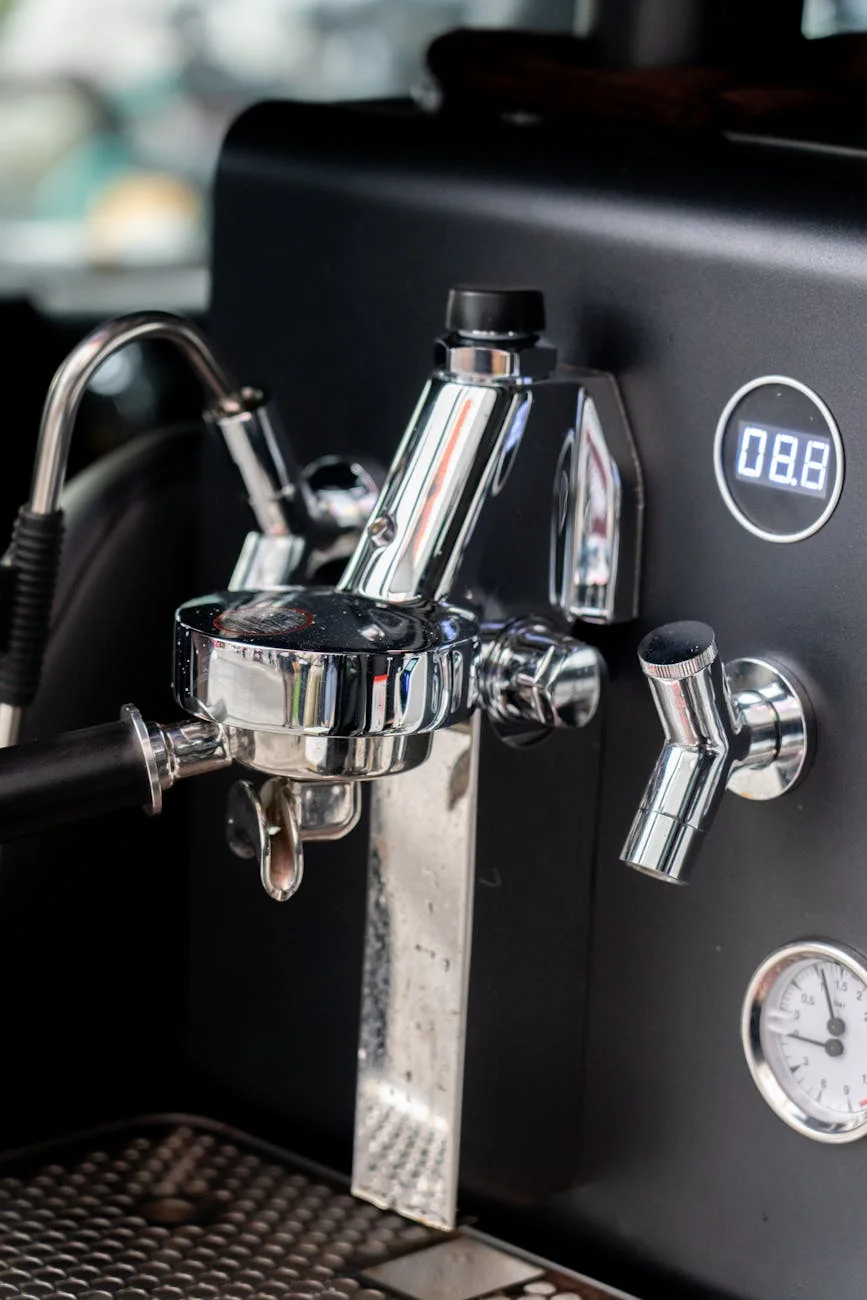
The legendary E61 group head is an icon of espresso history, celebrated for its thermal stability and its role in creating rich, complex shots. However, this classic piece of engineering has a well-known characteristic: it tends to run hot, especially after being left idle. An overheated group can scorch your coffee, resulting in a bitter and unpleasant cup. This is where the art of the cooling flush comes in. Mastering this simple yet crucial routine is the key to unlocking the full potential of your E61 machine. This article will guide you through understanding why your group overheats and provide a practical, step-by-step process for managing its temperature, ensuring you can pull perfectly balanced espresso shots, every single time.
Understanding the E61 design and heat
To master the cooling flush, you first need to understand why it’s necessary. The E61’s brilliance lies in its design, which features a heavy brass group head weighing over 4 kg (9 lbs) and a thermosyphon system. This system continuously circulates hot water from the boiler, through the group head, and back again. The constant flow keeps the massive brass component at a stable temperature, which is fantastic for pulling consecutive shots.
The issue arises when the machine is idle. This continuous circulation doesn’t stop, and the group head continues to absorb heat. This is particularly pronounced in Heat Exchanger (HX) machines, where the water in the thermosyphon loop can reach near-boiling temperatures from the steam boiler. In Dual Boiler (DB) machines, the problem is less extreme since the brew boiler is set to a specific brew temperature, but the group can still “heat creep” and sit a few degrees hotter than ideal after a long idle period.
This excess heat is the enemy of good espresso. If you try to pull a shot on a superheated group, the water will scald the coffee grounds, extracting bitter, astringent compounds and ruining the shot’s potential.
The purpose of a cooling flush
A cooling flush is the simple act of running water through the group head before locking in your portafilter and pulling a shot. Its purpose is purely for thermal management. By flushing hot water out of the group, you are drawing fresh, cooler water from the boiler (or reservoir, in the case of an HX machine’s heat exchanger) into the system. This actively cools the metal and stabilizes the water temperature to your desired brewing range, typically between 90-96°C (194-205°F).
This should not be confused with a quick cleaning flush done after a shot to rinse away old coffee grounds. A cooling flush is a deliberate, measured technique. The length of your flush directly impacts the final temperature of the water hitting your coffee puck. A longer flush results in a cooler brew temperature, while a shorter flush keeps the temperature higher. It’s the primary tool an E61 user has to control the brew temperature on the fly.
How to perform a flush on different machines
The flushing technique varies slightly depending on whether you are using a heat exchanger or a dual boiler machine. The key is to learn the specific cues of your machine.
For Heat Exchanger (HX) machines:
The flush is most dramatic and most critical on an HX machine. When the machine has been idle for 20 minutes or more, the water in the heat exchanger is superheated.
- Start by lifting the brew lever. You will immediately see and hear sputtering water mixed with steam. This is often called the “water dance.”
- Continue flushing. After a few seconds, the sputtering will subside, and the water will transition into a smooth, steady, and quiet stream.
- This moment—when the water flow calms—is your baseline. It indicates that the superheated water has been purged. From this point, you can continue flushing for a few extra seconds to cool the group down even further for darker roasts, or stop and brew for lighter roasts.
For Dual Boiler (DB) machines:
Since a DB machine has a dedicated brew boiler set to your target temperature, a long cooling flush is rarely needed. The goal here is less about a dramatic temperature drop and more about stabilizing the temperature of the group and purging any slightly overheated water sitting in the pipes. A short flush of 2-3 seconds is typically sufficient to ensure the water hitting the puck is at the exact temperature set on your PID.
For ultimate precision on any E61, a group head thermometer is an invaluable tool. It replaces guesswork with hard data, allowing you to see the exact temperature of your group and flush to a specific target every single time.
Dialing in your flush routine by taste
The perfect flush routine depends on your machine, your coffee, and your palate. The best way to dial it in is to taste your espresso and adjust accordingly. After pulling your shot, wait for it to cool slightly and take a sip. Is it bitter or sour? Your flush routine is likely the first thing you should adjust.
Use this simple table as your guide to making adjustments:
| Taste Defect | Likely Temperature Issue | Flushing Adjustment |
| Bitter, astringent, “burnt” | Too hot | Flush for a longer duration. Let more water run to further cool the group. |
| Sour, thin, underdeveloped | Too cool | Flush for a shorter duration. Stop the flush sooner to retain more heat. You can also try waiting longer after the flush (this is called “rebound time”) to let the group heat back up a bit before brewing. |
| Balanced, sweet, complex | Just right | Lock it in! You’ve found the right routine for this specific coffee. Repeat it consistently. |
Remember to only change one variable at a time. Adjust your flush time, pull another shot, and taste again. Through this simple, iterative process, you will quickly learn your machine’s behavior and develop an intuitive feel for managing its temperature.
Conclusion
The E61 group head’s tendency to overheat is not a design flaw but a characteristic that requires a hands-on approach from the barista. By understanding the thermosyphon system, you can appreciate why the group gets hot while idle. The cooling flush is your essential tool to manage this heat, transforming a potential problem into an opportunity for control. Whether you’re calming the “water dance” on a heat exchanger or performing a quick stabilization flush on a dual boiler, the principle remains the same: you are in charge of the brew temperature. By observing, tasting, and adjusting your routine, you move beyond guesswork and begin to pull consistently delicious and repeatable shots of espresso, unlocking the true potential of your iconic machine.
 No products in the cart.