

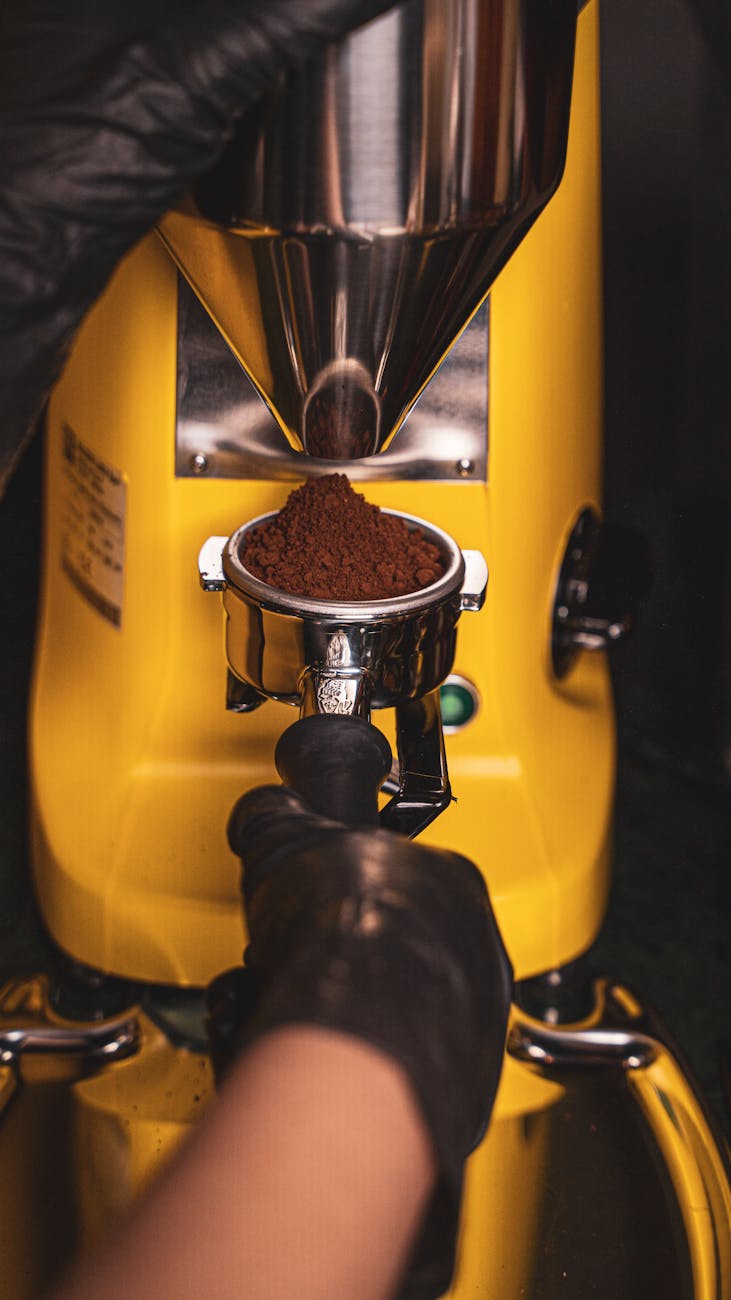
Unlocking perfect extraction: How dose and grind control coffee bed resistance
The journey to brewing the perfect cup of coffee is often a winding path of variables and adjustments. While we focus on water temperature, brew time, and bean origin, there is a fundamental force at play that dictates the final taste: coffee bed resistance. This concept refers to how difficult it is for water to flow through your ground coffee. Mastering this resistance is the key to achieving a balanced and delicious extraction every single time. In this article, we will demystify this crucial element, exploring the intricate relationship between the two most powerful tools at your disposal: your coffee dose (the amount of coffee you use) and your grind size. Understanding how these two factors work in tandem will transform your brewing process from guesswork into a controlled craft.
What is coffee bed resistance?
Imagine your coffee grounds as a maze for water. Coffee bed resistance is simply the measure of how complex that maze is. It directly controls the contact time—the duration water spends interacting with the coffee particles, extracting flavor, oils, and acids. If the resistance is too low, water rushes through the grounds too quickly. This results in under-extraction, producing a coffee that tastes weak, thin, and often unpleasantly sour. The water simply didn’t have enough time to pull out the desirable sweetness and complexity.
Conversely, if the resistance is too high, the water flow becomes sluggish or even chokes completely. This leads to over-extraction, where the water pulls out too many soluble compounds, including the harsh, bitter ones. The resulting cup will taste astringent, bitter, and hollow. The ultimate goal for any brew method, from pour-over to espresso, is to create an optimal level of resistance that allows for an even, well-paced extraction, capturing the full spectrum of your coffee’s intended flavor profile.
The primary lever: The role of grind size
Your most direct and sensitive control over resistance is the grind size. The principle is straightforward: the finer you grind your coffee, the more resistance you create. This happens for two key reasons. First, finer particles have a much greater total surface area, which creates more friction against the water. Second, and more importantly, the smaller particles pack together more tightly, leaving less empty space (or interstitial space) for water to navigate. This creates a denser, more difficult path, slowing the water down and increasing contact time.
A coarser grind does the opposite. The larger, more irregular particles create bigger gaps between them, offering an easier, more open path for the water. This leads to lower resistance and a faster flow rate. It is also important to consider the impact of “fines”—the dust-like particles produced even by high-quality grinders. An excess of fines can clog the filter and disproportionately increase resistance, often leading to channeling, where water finds a single path of least resistance and bypasses the rest of the coffee bed, causing both under- and over-extraction in the same cup.
The foundation: How coffee dose changes the equation
While grind size is the fine-tuning knob, the coffee dose is the foundation upon which resistance is built. Think of it as changing the length of the maze. A larger dose creates a deeper coffee bed. For water to pass through, it must travel a longer distance, which naturally increases the overall resistance and contact time. A smaller dose creates a shallower bed, offering a shorter and quicker journey for the water, thus decreasing resistance.
This is where the interdependence of dose and grind becomes critical. You cannot adjust one without impacting the other. For instance, if you decide you want a stronger brew and increase your dose from 15 grams to 18 grams, you have significantly increased the potential resistance. If you keep the same grind size, your brew will likely run much slower and risk over-extraction. To compensate, you must grind slightly coarser to open up the coffee bed and maintain a similar flow rate and extraction time. This symbiotic relationship is the key to repeatable and adjustable brewing.
Finding the balance: A practical guide
Dialing in your coffee is about harmonizing dose and grind to achieve your desired taste. The best approach is to be systematic. Start by fixing one variable, typically your dose, based on the strength of coffee you prefer and the capacity of your brewer. For example, you might decide to always use 20 grams of coffee for your single-cup pour-over.
With your dose fixed, the grind becomes your primary tool for adjustment. Brew a cup and taste it.
- Is it sour and weak? Your brew time was likely too short due to low resistance. You need to grind finer.
- Is it bitter and harsh? Your brew time was likely too long due to high resistance. You need to grind coarser.
Once you find a grind setting that produces a balanced cup at your chosen dose, you have found your baseline. From there, you can make informed adjustments. The table below illustrates how to troubleshoot a pour-over brew.
| Scenario | Dose | Grind Adjustment | Resulting Brew Time | Taste Notes & Action |
|---|---|---|---|---|
| Baseline Recipe | 20g | Medium-Fine (Setting 15) | 3:00 | Balanced, sweet, and clear. This is our target. |
| Under-extracted | 20g | Medium (Setting 18) | 2:15 | Sour, grassy, lacking body. Action: Grind finer to increase resistance. |
| Over-extracted | 20g | Fine (Setting 12) | 4:10 | Bitter, dry, astringent. Action: Grind coarser to decrease resistance. |
| Goal: Stronger Cup | 22g | Medium (Setting 17) | 3:05 | Rich and strong, but balanced. Action: Increased dose, so ground coarser to compensate. |
This table shows that every change requires a thoughtful reaction. Increasing your dose isn’t a standalone decision; it necessitates a corresponding adjustment to your grind to maintain a balanced extraction profile.
Ultimately, brewing delicious coffee is a craft built on understanding fundamental principles. Coffee bed resistance, governed by the dynamic duo of dose and grind, is perhaps the most important of these. We have seen that resistance dictates contact time, which in turn determines extraction. Finer grinds and larger doses increase this resistance, slowing down your brew, while coarser grinds and smaller doses decrease it, speeding things up. The goal is not to find a single magic setting but to comprehend this relationship so you can adapt to any coffee and any situation. By starting with a consistent dose and using your grinder to dial in the taste, you move from hoping for a good cup to engineering one. Embrace experimentation, taste mindfully, and you will unlock a new level of control and consistency in your coffee brewing.
 No products in the cart.