

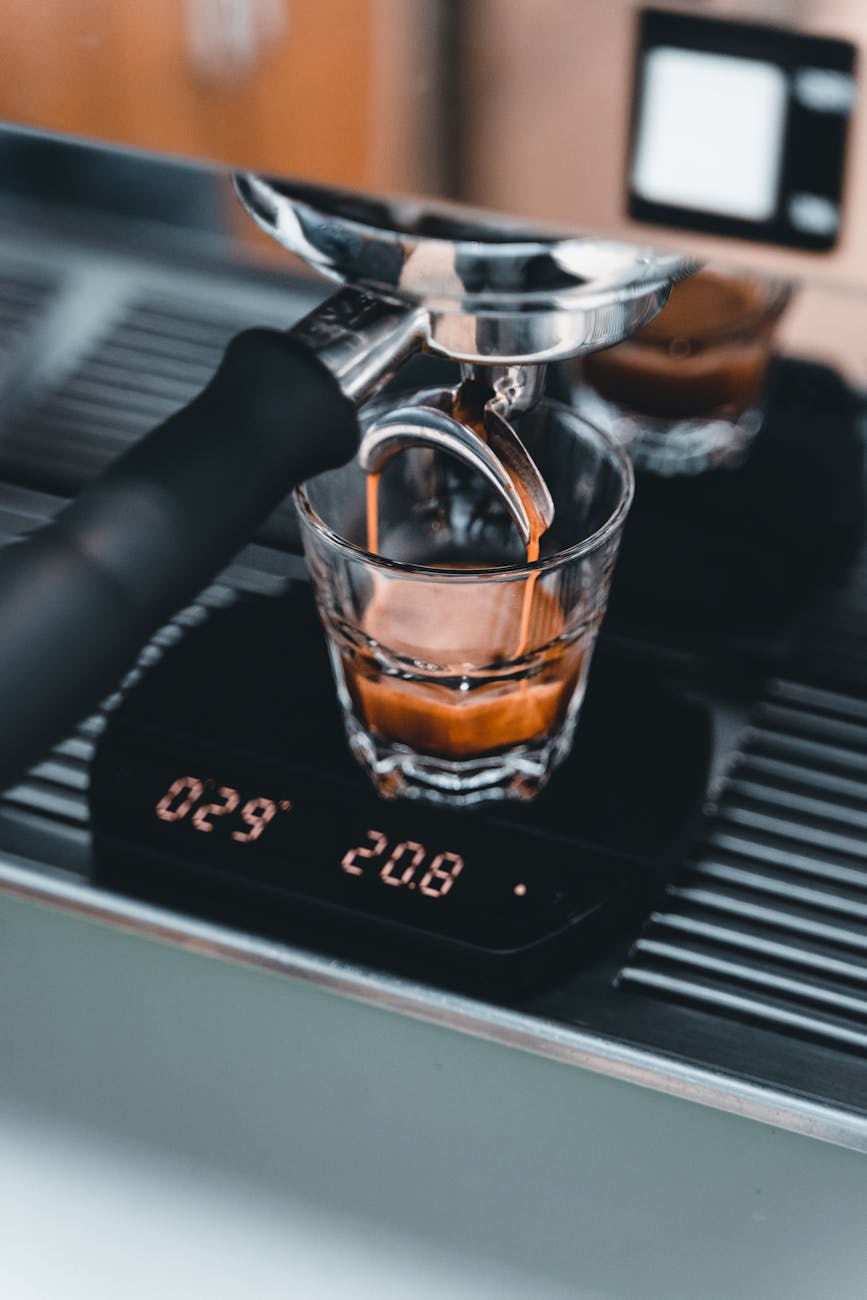
How to use a bottomless portafilter to perfect your lever technique
The allure of a manual lever espresso machine is undeniable. It represents a return to the craft of coffee making, offering tactile control and a direct connection to the extraction process. However, this control comes with a steep learning curve. Without the automated consistency of a pump-driven machine, how can you truly understand what’s happening inside the group head? The answer lies in a simple yet powerful tool: the bottomless portafilter. More than just a way to get beautiful Instagram shots, this “naked” portafilter is the ultimate diagnostic window into your espresso puck. It provides unfiltered, real-time visual feedback, turning guesswork into a clear, actionable science. This guide will show you how to interpret these visual cues to diagnose, troubleshoot, and ultimately perfect your lever technique.
What a bottomless portafilter reveals
At its core, a bottomless portafilter is simply a standard portafilter with the bottom and spouts machined off, exposing the entire underside of the filter basket. A spouted portafilter funnels the extracted espresso from two small holes, merging the streams and effectively hiding any flaws in your preparation. If one side of your puck extracts faster than the other, the spouts will mix it all together before it ever reaches your cup. You might taste that something is off—a telltale sourness or bitterness—but you won’t know why.
The bottomless portafilter hides nothing. It forces you to confront the quality of your puck preparation head-on. Every channel, every dead spot, and every uneven flow is laid bare. This direct feedback loop is invaluable for a lever machine user. While a pump machine provides consistent pressure, a lever operator is responsible for building, holding, and declining that pressure manually. Seeing how the coffee bed responds to your input on the lever is the key to mastering the art of manual extraction. The goal is to see a beautiful, unified stream of espresso forming in the center of the basket, looking like a syrupy cone of dark honey.
Diagnosing puck prep: from channeling to perfection
The most common and frustrating issue for any barista is channeling. This occurs when water finds a path of least resistance through the coffee puck, over-extracting from that “channel” while under-extracting the surrounding grounds. With a bottomless portafilter, this is shockingly obvious: you’ll see tiny, aggressive jets of watery espresso spurting out from the basket, often making a mess of your machine and counter. The resulting shot will taste thin, sour, and astringent.
So, what causes it and how do you fix it?
- Poor Distribution: Clumps in your coffee grounds create dense spots and empty pockets. Water will always choose the easy path, rushing through the less dense areas. The solution is the Weiss Distribution Technique (WDT), which involves using a tool with fine needles to break up clumps and evenly distribute the grounds.
- Uneven Tamping: Tamping harder on one side than the other will compress that side more, forcing water to flow faster through the less compressed side. The fix is to focus on a level, consistent tamp. You don’t need excessive force; you need even pressure.
- Incorrect Dosing: Too little coffee in the basket can leave too much headspace, making the puck prone to fracturing under pressure. Too much coffee can touch the shower screen, disrupting the water flow. Find the right dose for your specific basket.
By watching the extraction form, you can diagnose these issues instantly. If drips start forming on one side of the basket first, your distribution or tamp is likely uneven. If you see “bald spots” where no coffee flows, you have dense clumps. Each flawed shot becomes a lesson, not just a failure.
Connecting visual cues to your lever movements
This is where the bottomless portafilter becomes an extension of your lever technique. The process isn’t just about puck prep; it’s about how you manage the entire extraction with the lever.
First, consider pre-infusion. This is the gentle soaking of the puck before applying full pressure. With a bottomless portafilter, you can watch the first drops of coffee appear on the bottom of the basket. Ideally, you want to see these drops bead up evenly across the entire surface at roughly the same time. This tells you that your puck is fully and evenly saturated. If one side gets wet far sooner than the other, you know there’s an issue before you even begin the main pull.
During the pull itself, the flow rate is a direct reflection of the pressure you apply. If you pull the lever and the shot immediately gushes out in a fast, pale stream, you know your grind is too coarse or your puck prep was flawed. Conversely, if you pull with all your might and only a few thick drops emerge, your grind is too fine and is “choking” the machine. The bottomless portafilter allows you to make micro-adjustments to your lever pressure in real-time. You can ease off slightly to slow a fast shot or apply more firm pressure to push through a resistant puck, all while watching how the stream responds.
A practical workflow for consistent improvement
To turn these observations into repeatable success, you need a methodical approach. Stop chasing the “god shot” randomly and start building a foundation of consistency.
- Isolate Your Variables: Don’t change your grind size, dose, and tamping pressure all at once. Change only one thing at a time. Is your shot channeling? Focus solely on improving your distribution with WDT until the channeling stops. Then, you can move on to adjusting the grind size to dial in the taste.
- Film Your Shots: Prop your phone up and record the extraction from below. This allows you to review what happened without having to crouch under the machine. You’ll be amazed at what you notice when you can watch it back in slow motion.
- Use a Scale and Timer: Visuals are crucial, but they need to be paired with data. Weigh your dose in, and weigh your liquid yield out. Time the shot from the first pull of the lever. Aiming for a consistent ratio (e.g., 1:2, like 18g of coffee in and 36g of espresso out) in a specific time frame (e.g., 25-35 seconds) gives you measurable targets.
Here is a simple troubleshooting table to guide you:
| Visual Cue | Likely Problem | Primary Solution(s) |
|---|---|---|
| Spurting jets (channeling) | Uneven puck density or seal | Improve distribution (WDT); ensure a level tamp. |
| Flow starts on just one side | Uneven distribution or unlevel machine | Focus on distributing grounds evenly; check if machine is level. |
| Shot flows too quickly (a “gusher”) | Grind is too coarse; low dose | Adjust grinder one step finer; check dose weight. |
| Shot barely drips (choking) | Grind is too fine; high dose | Adjust grinder one step coarser; check dose weight. |
| Stream quickly turns pale (“blonding”) | Under-extraction, likely from channeling | Improve puck prep and/or grind finer. |
Conclusion: from diagnosis to mastery
Mastering a lever espresso machine is a journey of feel, intuition, and practice. The bottomless portafilter is the single best tool to accelerate that journey. It demystifies the process, transforming abstract concepts like “puck integrity” and “flow rate” into clear, observable events. It bridges the gap between the action of pulling the lever and the result in the cup. Instead of being frustrated by a bad-tasting shot, you are empowered with the visual data needed to understand exactly what went wrong and how to correct it on your next attempt. Embrace the feedback, even the messy sprays. Each shot, good or bad, is a lesson. By learning to read the story your extraction tells, you will move beyond simply pulling shots and begin to truly craft your espresso, perfecting the art of the lever.
 No products in the cart.