

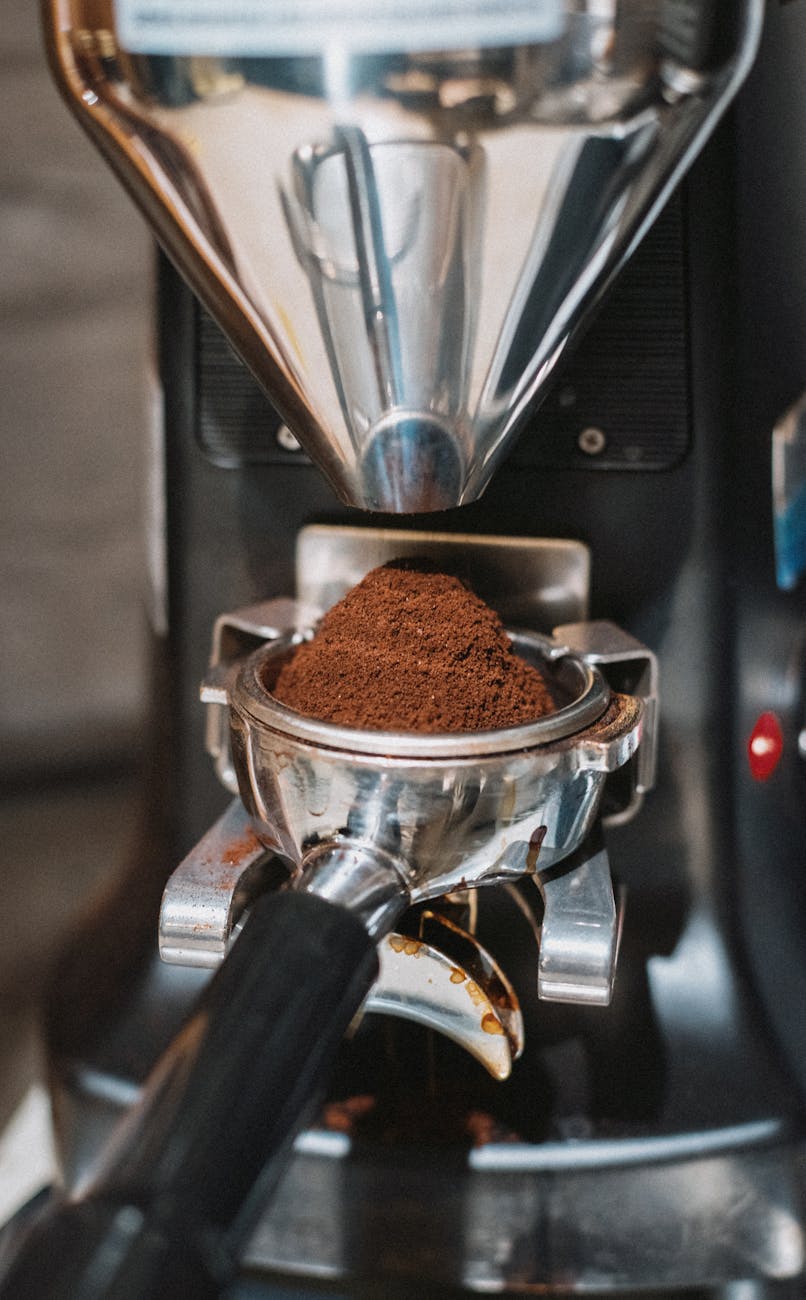
How to season your espresso grinder burrs for more consistent results
There’s nothing quite like the excitement of unboxing a brand new espresso grinder. You envision perfectly fluffy grounds, dialing in that god shot, and the aroma of a café filling your kitchen. But often, the initial experience is met with frustration. Your shots are inconsistent, you see channeling in your puck, and the grind setting seems to have a mind of its own. The culprit isn’t your technique; it’s your new, unseasoned burrs. Seasoning, or breaking in, your grinder burrs is a critical first step that many new owners overlook. It’s the process of smoothing out microscopic imperfections from the manufacturing process to achieve a stable and consistent grind. This article will guide you through why seasoning is essential and how to do it properly.
Why new grinder burrs need seasoning
To understand the need for seasoning, we have to look at how grinder burrs are made. Whether flat or conical, burrs are precision-machined pieces of steel or ceramic. The process of cutting and shaping the metal leaves behind microscopic burrs, sharp edges, and uneven surfaces. While invisible to the naked eye, these imperfections have a significant impact on grind quality. Think of it like breaking in a new pair of leather shoes; they need some wear to conform and become comfortable.
These initial rough surfaces create several problems:
- Inconsistent particle size: The uneven edges fracture coffee beans unpredictably, creating a wider distribution of particle sizes. This means you get more ultra-fine particles (fines) and more overly-large particles (boulders) alongside your target grind size. This inconsistency is a direct cause of channeling during extraction, leading to a cup that is simultaneously bitter and sour.
- Grind setting drift: As you use the grinder, these tiny metal burrs and sharp edges wear down quickly. This “settling” process causes your grind setting to shift. A setting that produced a perfect 30-second shot yesterday might produce a 20-second gusher today, forcing you to constantly re-dial your grinder.
- Increased static: The rough surfaces can also contribute to more static electricity, causing coffee grounds to cling to the grinder’s chute and make a mess on your counter.
Seasoning is simply an accelerated “wearing-in” process. By grinding a specific amount of coffee through the burrs, you smooth out these microscopic imperfections, creating a more uniform and stable cutting surface. This lays the foundation for predictable and consistent grinding for years to come.
The process of seasoning your burrs
Seasoning your grinder is a straightforward process that requires a little time and some coffee you’re willing to sacrifice. Don’t use your expensive, single-origin beans for this; the resulting grounds are not suitable for brewing and will be discarded.
Step 1: Choose the right coffee
The ideal coffee for seasoning is a bag of inexpensive, stale, medium-roast beans from the supermarket. Why? It’s cost-effective, and you won’t feel bad about throwing it away. Avoid very dark, oily roasts, as the excess oils can gunk up the new burrs and chamber, requiring a deep clean right after seasoning. A medium roast provides enough hardness to effectively abrade the burrs without being overly oily.
Step 2: Determine the amount of coffee
The amount of coffee needed depends on the size and material of your burrs. Larger burrs have more surface area and require more coffee to season. Steel burrs generally season faster than harder ceramic burrs. Below is a general guideline, but always check your grinder’s manual for manufacturer recommendations.
| Burr Size / Type | Recommended Coffee for Seasoning |
|---|---|
| Entry-level conical burrs (e.g., Baratza Encore) | 250g – 500g (0.5 – 1 lb) |
| 50-64mm flat burrs (Prosumer) | 1kg – 2kg (2 – 4 lbs) |
| Large commercial flat burrs (65mm+) | 3kg – 5kg (6 – 10 lbs) |
Note: These are estimates. Some high-performance burrs with special coatings may require more.
Step 3: Grind in stages
Do not try to grind all the coffee at once. This can overheat the grinder’s motor. Instead, work in batches of about 100-150 grams.
- Start with a medium-coarse grind setting, similar to what you would use for a drip coffee maker. Grind your first batch.
- Adjust the setting slightly finer. Grind the next batch.
- Continue this process, grinding in batches and moving progressively finer. This ensures the entire cutting surface of the burrs is evenly worn.
- For the last 20% of your coffee, set the grinder to a typical espresso fineness. This focuses the seasoning on the part of the burrs most critical for espresso.
Step 4: Clean the grinder
Once you’ve finished grinding, it’s crucial to clean out all the stale coffee. Unplug the grinder, remove the hopper, and access the burrs. Use a brush and a vacuum or a grinder-specific bellows to remove all residual grounds from the burr chamber and the exit chute. Now you’re ready to dial in with your good beans.
What to expect after seasoning
The difference after seasoning can be subtle at first, but it becomes very apparent as you start dialing in your espresso. The immediate frustration you may have felt with your new grinder will be replaced by predictability and control. The primary benefit is a dramatic improvement in grind consistency. With the burrs’ surfaces smoothed, they will now produce a much more uniform particle size distribution with significantly fewer fines. This directly translates to better-tasting espresso.
A more uniform grind allows for a more even extraction. Water will flow through the coffee puck at a more consistent rate, reducing the likelihood of channeling. This means you can say goodbye to those shots that are both sour (under-extracted) and bitter (over-extracted). Instead, you’ll unlock more flavor clarity, sweetness, and a balanced profile from your beans. Another major benefit is the stability of your grind setting. The “drift” you experienced initially will be gone. A seasoned grinder holds its setting, so when you make a micro-adjustment, you can trust that the change will be predictable and repeatable. Dialing in new beans becomes a much faster and less wasteful process.
Common questions and considerations
Even though the process is simple, a few common questions often arise. One of the most frequent is whether other materials can be used for seasoning. You may have heard of people using rice, but you should never do this. Uncooked rice is much harder than coffee beans and can chip, stall, or even permanently damage your grinder’s motor and burrs, voiding your warranty. Stick to coffee. Specialised grinder cleaning products like Grindz are designed for cleaning, not seasoning. They are too soft to effectively abrade the metal and are best used for their intended purpose: removing old coffee oils and residue.
Another point of confusion is frequency. Seasoning is a one-time process for new burrs. Once broken in, they will remain so for their entire lifespan. You will only need to repeat the process if you replace the burrs years down the line. So, what happens if you choose not to season your grinder at all? The burrs will eventually season themselves through normal, daily use. However, this process could take weeks or even months of inconsistent shots and wasted bags of your favorite expensive coffee. Actively seasoning your grinder is an upfront investment that saves you time, money, and a great deal of frustration in the long run.
Unlocking your grinder’s true potential
In conclusion, seasoning your new espresso grinder burrs is not an optional tweak for enthusiasts; it is a fundamental step to achieving the performance you paid for. By understanding that new burrs come with microscopic imperfections from the factory, the logic becomes clear. Grinding a designated amount of inexpensive coffee beans serves to smooth and normalize these surfaces, much like sanding a piece of rough wood. This one-time process transforms your grinder from an unpredictable tool into a reliable and precise instrument. The payoff is immense: greater grind consistency, the elimination of frustrating setting drift, and most importantly, a more even extraction that leads to significantly better-tasting espresso. By investing a little time and a bag of cheap beans upfront, you unlock your grinder’s true potential from day one.
 No products in the cart.