

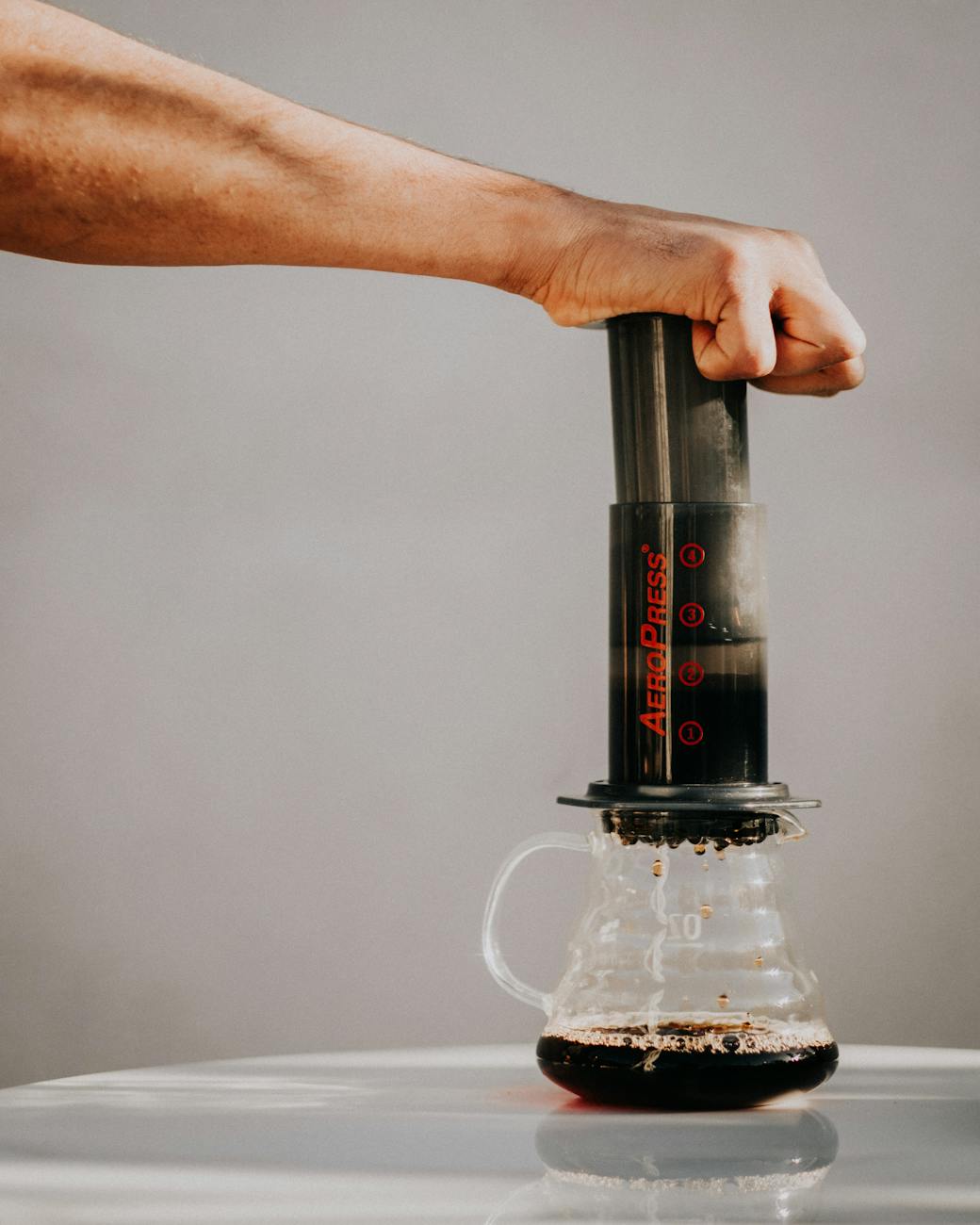
Effortless AeroPress: How to reduce plunging resistance and boost flavor
The AeroPress is celebrated for its versatility and the fantastic coffee it produces. However, many users have experienced the dreaded, high-resistance plunge—that moment when you feel like you’re putting your entire body weight on the plunger, and it barely moves. This immense pressure is often a sign of a choked filter bed, typically caused by a very fine grind. The simple solution is to grind coarser, but this introduces a new problem: a weak, sour, and underextracted brew. So how do you find that perfect balance? This article will guide you through the key techniques to significantly reduce AeroPress plunging resistance without sacrificing the rich, full-flavored extraction you love. We’ll move beyond just grind size to explore the interconnected roles of dose, technique, and filtration.
Mastering your grind size and consistency
The most direct cause of a difficult plunge is your coffee grind. When coffee is ground too finely, the tiny particles compact together, creating a dense, muddy bed that water struggles to pass through. This is especially true if your grinder produces a lot of “fines”—micro-particles that act like silt and clog the pores of the paper filter. While the immediate impulse is to go much coarser, the key is to make small, incremental adjustments.
Try coarsening your grind by just one or two steps on your grinder. To compensate for the potential loss of extraction from the larger particles, you can slightly increase your steeping time. For example, if you make your grind a little coarser, try steeping for an extra 15-20 seconds before you plunge. This gives the water more time to do its work, ensuring you still get a full extraction. The quality of your grinder is also paramount. A high-quality burr grinder will produce a much more uniform particle size with fewer fines than a blade grinder, giving you a cleaner coffee bed that allows for a smoother flow of water.
Dialing in your dose and agitation
Your grind size isn’t working in a vacuum; it’s directly related to your coffee dose and preparation technique. A larger dose of coffee naturally creates a thicker puck, which increases the distance water has to travel and, therefore, increases resistance. If you are using a high dose, such as 18 grams or more, and experiencing a difficult plunge, consider scaling back to a more moderate 14-16 grams. You can adjust your water ratio to maintain the desired strength, but the shallower coffee bed will provide an immediate reduction in pressure.
Furthermore, how you agitate the slurry matters. Vigorous or excessive stirring can cause fines to become suspended in the water, only to settle in a dense, uniform layer over the filter when you begin to press. This creates a seal that is difficult to break. Instead, try a gentler approach. After adding your water, give the coffee a brief and gentle stir, just enough to ensure all the grounds are saturated. Then, let it steep undisturbed. This allows the grounds to settle more naturally, creating more channels for the water to pass through during the plunge.
The art of the plunge itself
Once your grind and dose are set, your plunging technique becomes the final critical factor. Many users, especially when they feel resistance, try to force the plunger down quickly. This is counterproductive. An aggressive plunge compacts the coffee grounds at the bottom, instantly choking the filter and bringing everything to a halt. The secret is a slow, steady, and gentle press.
Aim for your plunge to take between 20 and 30 seconds. Don’t use your arm or shoulder muscles; instead, use your body weight to apply consistent, light pressure. Simply rest your hands on the plunger and lean gently. This slow pace allows water to find its way through the coffee bed evenly, leading to a better extraction and a surprisingly easy plunge. A clever trick to try is the “pre-plunge lift.” After stirring and before pressing, pull the plunger up just a centimeter. This action gently lifts and decompresses the coffee bed, breaking up any compacted areas and making the initial phase of the plunge significantly smoother.
Choosing the right filter for your flow
The final piece of the puzzle is the filter itself. The type of filter you use has a direct impact on both the resistance you feel and the final taste in the cup. While standard AeroPress paper filters are excellent for creating a clean, crisp brew, their tight weave is what makes them susceptible to clogging by fines. If you consistently struggle with resistance, changing your filter could be the solution.
Metal filters are a popular alternative. They have larger holes, which allow for a much faster and easier plunge with almost zero risk of choking. This comes with a trade-off: more oils and some fine sediment will pass through into your cup, resulting in a brew with more body and a slightly different texture, closer to a French Press. If a smooth plunge is your top priority and you enjoy a fuller-bodied coffee, a metal filter is an excellent investment. Below is a simple comparison of common filter options.
| Filter type | Plunging resistance | Body & oils | Fines in cup |
|---|---|---|---|
| Single paper | Medium to high | Low | Very low |
| Double paper | High | Very low | Almost none |
| Metal | Low | High | Medium |
In conclusion, overcoming a difficult AeroPress plunge without compromising on flavor is about a holistic approach, not a single fix. It’s a delicate interplay between grind size, coffee dose, brewing technique, and your choice of filter. Instead of simply coarsening your grind and accepting a weaker coffee, you can make a slight adjustment to the grind and compensate with a longer steep time. You can reduce your dose for a shallower coffee bed or switch to a metal filter for an easier flow. By adopting a gentle stir and a slow, 30-second plunge, you give the water time to extract all the delicious flavors evenly. The key is to experiment with these variables one at a time to discover the combination that produces a smooth, effortless press and a perfectly extracted cup that suits your personal taste.

 No products in the cart.