

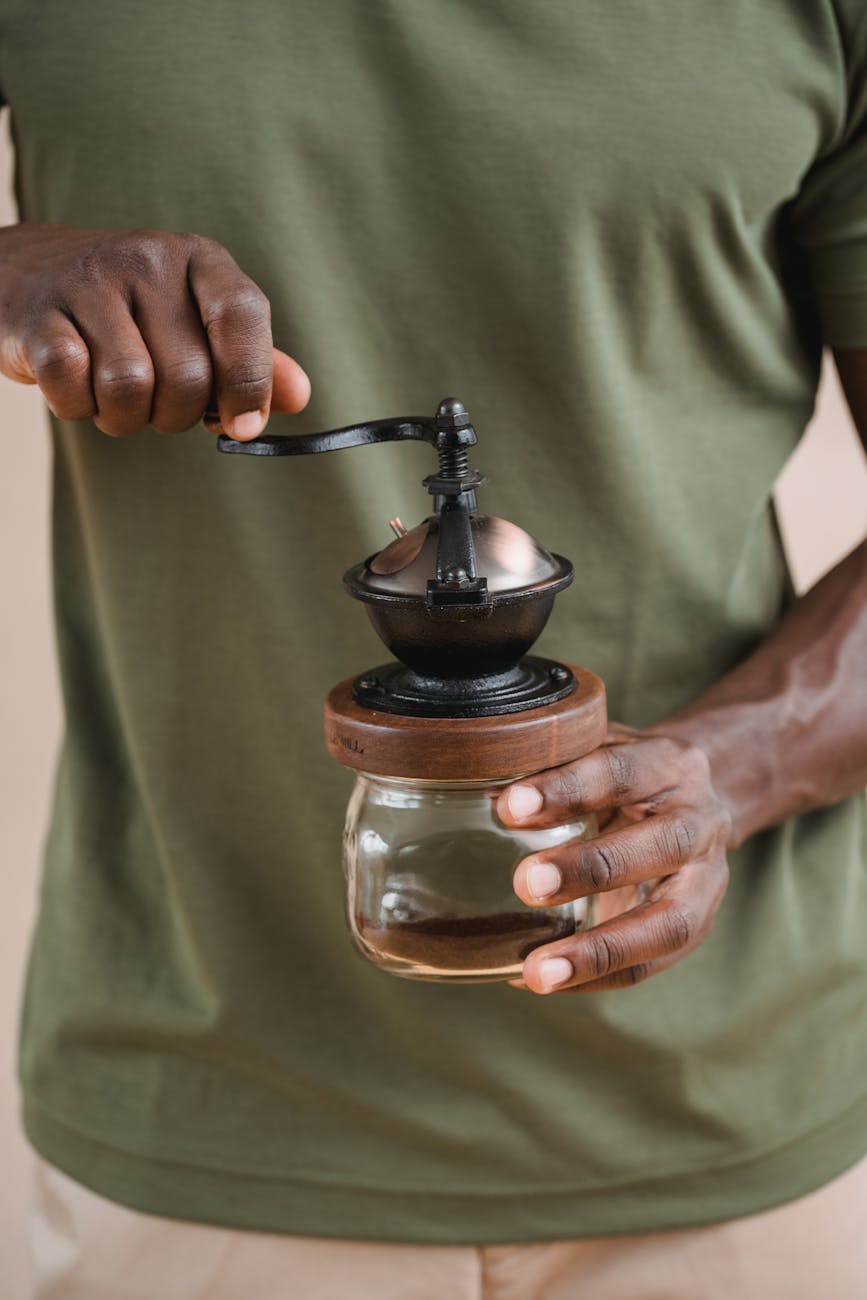
How to install and calibrate SSP burrs in your Eureka Mignon: A complete guide
The Eureka Mignon series has earned its place on the countertops of discerning home baristas worldwide, celebrated for its compact design, quiet operation, and excellent grind quality. However, for those on a relentless quest for the perfect shot of espresso, there’s always room for improvement. Enter SSP (Sung-Sim Precision) burrs, a premium upgrade that promises to elevate your Mignon’s performance to new heights. These meticulously engineered burrs are renowned for their unique geometries and hardened coatings, which result in superior grind consistency and flavor clarity. This article will guide you through the entire process, from selecting the right SSP burrs for your needs to the crucial steps of installation and precise calibration. It’s a journey that requires patience, but the reward is found in every sip.
Understanding the SSP burr upgrade
Before you grab a screwdriver, it’s important to understand why an SSP burr set is such a transformative upgrade. Stock Eureka burrs are very capable, but SSP burrs are in a different league, primarily due to their material composition and cutting geometry. They are machined from high-grade tool steel and often treated with extremely hard coatings like Red Speed (Titanium Aluminum Carbon Nitride) or Silver Knight (Titanium Aluminum Nitride). These coatings dramatically increase the burrs’ lifespan, reduce friction and heat during grinding, and maintain a sharper cutting edge for much longer.
The biggest difference, however, is in the geometry. SSP offers several types for the Mignon’s 64mm platform:
- High-Uniformity (HU): These are designed to produce a grind distribution with fewer fines and a more focused peak of particle sizes. For espresso, this often translates to a richer texture, higher extraction yields without bitterness, and a more forgiving dial-in process.
- Multi-Purpose (MP): Formerly known as Unimodal, these burrs are engineered for exceptional clarity. They produce a very low amount of fines, making them incredible for pour-over and filter coffee. They can be used for modern, light-roast espresso, but their low-fines nature can lead to very fast-flowing shots that require a finer grind and careful puck preparation.
Choosing SSP burrs is about tailoring your grinder’s output to your brewing preference. By upgrading, you’re investing in a more consistent grind, which is the foundation of repeatable and delicious coffee.
| Feature | Stock Eureka Burrs | SSP Burrs (64mm) |
|---|---|---|
| Material | Hardened Steel | Tool Steel with Red Speed or Silver Knight coating |
| Geometry | Traditional flat burr design | Specialized geometries (e.g., High-Uniformity, Multi-Purpose) |
| Lifespan | ~300-500 kg | ~4000-5000 kg |
| Grind Consistency | Good, suitable for traditional espresso | Exceptional, tailored for high-clarity or high-body results |
| Primary Benefit | Cost-effective and reliable | Enhanced flavor separation, consistency, and longevity |
Preparation and disassembly
A successful installation begins with proper preparation. Working in a clean, well-lit area will make the process much smoother and prevent tiny screws from getting lost. Before you begin, gather your tools and ensure your grinder is completely empty of beans and unplugged from the power source.
You will need:
- A Phillips head screwdriver (PH2 is usually a good fit)
- A vacuum cleaner with a narrow crevice tool
- A stiff-bristled brush (like a firm paintbrush or a dedicated grinder brush)
- Isopropyl alcohol and a microfiber cloth or paper towels
- A non-permanent, dry-erase marker
- Your new 64mm SSP burrs
Once you have your tools, the first step is to access the grind chamber. On most Eureka Mignon models, this is a straightforward process. First, remove the hopper. Then, you’ll see the top plate of the grinder, which is typically secured by one to three screws. Carefully remove these screws and set them aside. Lift the top plate off, which will expose the top burr carrier. Now, you’ll see the three larger screws that hold the top burr assembly in place. Unscrew these, and you can lift the entire top burr carrier out, giving you full access to both the stationary top burr and the rotating bottom burr.
Installation and deep cleaning
With the grinder open, you can now swap the burrs. This is also the perfect opportunity to give your grinder the deepest clean it has ever had. A clean seating surface for the new burrs is absolutely critical for proper alignment.
- Remove old burrs: Use your screwdriver to remove the screws holding the old burrs to their carriers. These can be quite tight, so apply firm, even pressure to avoid stripping the screw heads. Keep these screws, as you will reuse them for the SSP burrs.
- Thoroughly clean everything: This is the most important step. Use your brush and vacuum to remove every last trace of old coffee grounds from the grind chamber, the threads of the adjustment mechanism, and both burr carriers. Pay special attention to the flat surface where the burrs will sit.
- Degrease the carriers: After brushing and vacuuming, apply some isopropyl alcohol to a cloth and wipe down the burr seating surfaces. This removes coffee oils and any microscopic residue, ensuring the new burrs sit perfectly flat.
- Mount the SSP burrs: Carefully place your new SSP burrs onto the carriers. The screw holes are offset, so they will only fit one way. Insert the screws and tighten them gently in a star or crisscross pattern to ensure even pressure. Once all screws are snug, give them a final quarter-turn to secure them. Do not overtighten, as this can warp the carrier.
- Reassemble partially: Place the top burr carrier back into the grinder, but don’t put the top grinder plate or hopper back on yet. You’ll need access to the burr chamber for the next, most crucial step.
The alignment and calibration process
Installing SSP burrs without aligning them is like putting high-performance tires on a car with a bad wheel alignment; you won’t get the benefits. Alignment ensures the faces of the two burrs are as parallel as possible. Even tiny deviations can lead to an inconsistent grind. The most common method for checking this is the marker test.
The marker test:
- Color the burr: Take your dry-erase marker and color the outer flat cutting edge of the top burr. You don’t need to color the whole burr, just the last few millimeters of the cutting surface.
- Find the zero point: With the grinder plugged in and empty, turn it on. Very slowly and carefully, turn the adjustment knob towards finer. Listen closely. You are trying to find the exact point where you hear the very first, faint “chirp” or “kiss” of the burrs touching. This is your zero point.
- Stop immediately: As soon as you hear the chirp, stop turning the knob and turn the grinder off. Turn the knob a full rotation back towards coarse to create space between the burrs.
- Inspect the result: Remove the top burr carrier again and look at the marker you applied. An ideal alignment is indicated by the marker being wiped off evenly all the way around the burr’s circumference. If the marker is only wiped off on one side, your burrs are misaligned.
Correcting misalignment with shims:
If the test reveals misalignment, you can correct it using small pieces of aluminum foil as shims. Identify the high spot on the bottom burr (this corresponds to the area on the top burr where the marker was erased). You need to raise the area opposite to the high spot. Place a small, carefully cut piece of foil on the burr carrier, underneath the burr, on the side that was not making contact. Reassemble and repeat the marker test. This is an iterative and patient process. You may need to add, move, or even layer small pieces of foil to achieve a perfect, even wipe. Once you have it, your burrs are aligned. Your true zero point is now calibrated, and you can dial in your coffee with newfound precision.
Conclusion
Upgrading your Eureka Mignon with SSP burrs is one of the most significant improvements you can make to your coffee setup. The process, while detailed, is well within the reach of any dedicated home barista. It involves careful preparation, a deep cleaning of your grinder’s internal components, and the meticulous installation of the new burrs. The final, and most critical, phase is the alignment. Using the marker test and foil shims, you can achieve a level of parallelism that unleashes the full potential of your new SSP burrs, ensuring a remarkably consistent grind. The effort pays dividends in the cup, delivering espresso shots and filter brews with a clarity, sweetness, and complexity that the stock burrs simply cannot match. It’s a rewarding project that truly bridges the gap between high-end consumer and professional-grade equipment.

 No products in the cart.