

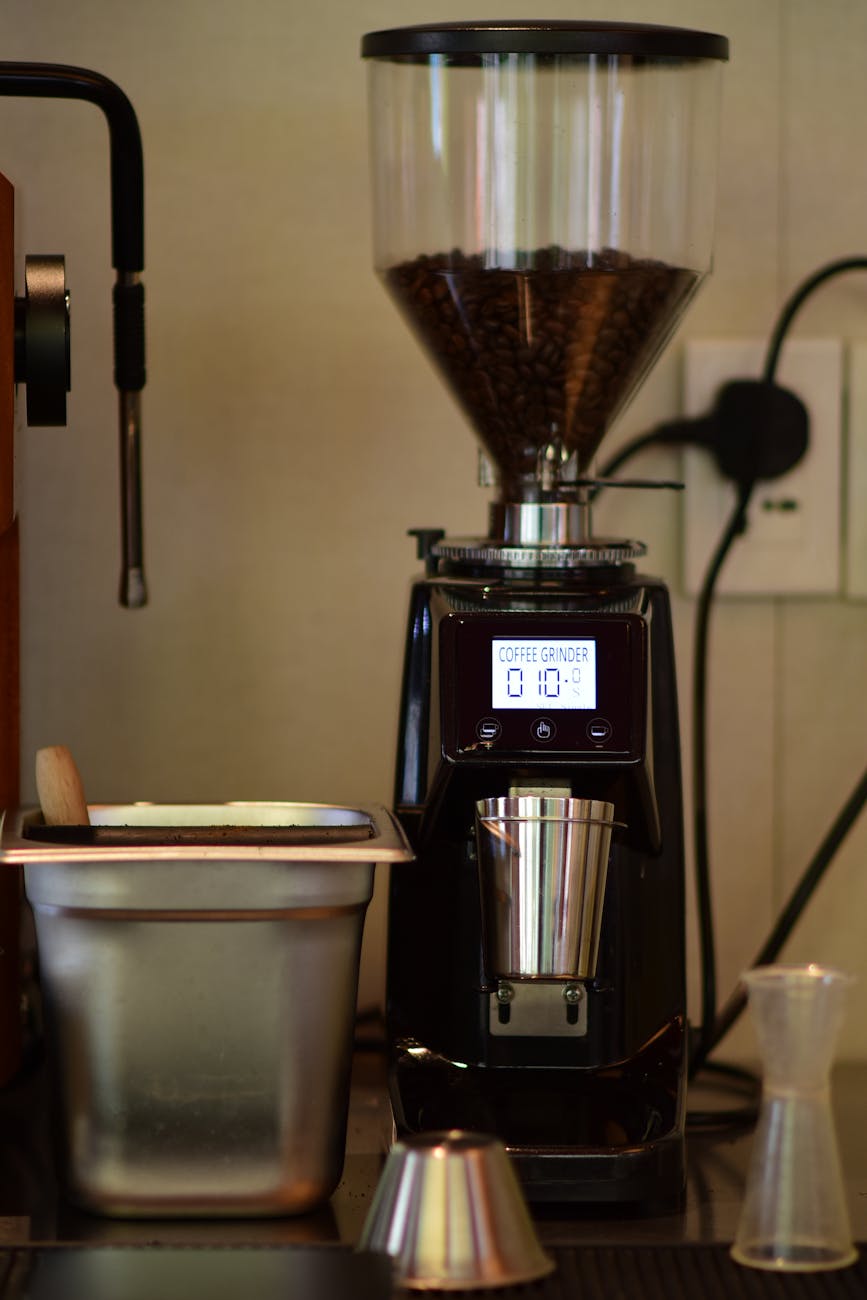
How humidity changes your espresso grind settings
Every espresso enthusiast knows the cycle. One day, you pull a perfect shot: syrupy, balanced, and absolutely delicious. The next day, using the exact same beans and settings, you get a gusher that’s sour and undrinkable, or a choked shot that’s bitter and harsh. While many variables are at play, one of the most influential and often overlooked culprits is the weather outside your window. The ambient humidity in your kitchen or cafe dramatically affects your coffee beans and, consequently, your grinder settings. Understanding this relationship is the key to moving from inconsistent results to consistent mastery. This guide will explore the science behind how humidity interacts with coffee and provide you with the practical knowledge to adjust your grind settings like a pro, no matter the forecast.
The science of coffee beans and moisture
To understand why you need to change your grind settings, we first need to look at the coffee bean itself. Roasted coffee beans are hygroscopic. This is a scientific term meaning they readily absorb and retain moisture from their surrounding environment. They are essentially dry little sponges. This characteristic is central to the entire issue of grind consistency.
When the air is humid, your coffee beans absorb water vapor. This has several physical effects:
- They get heavier: A given volume of beans will weigh more. If you measure your dose by volume instead of weight, your dose will be off.
- They swell slightly: The beans increase in size, becoming less dense.
- They become softer: The added moisture makes the cellular structure of the bean less brittle and more pliable.
Conversely, when the air is very dry, the beans release moisture into the atmosphere. They become harder, more brittle, and lighter. This fundamental change in the bean’s physical state is what directly impacts how it shatters and breaks apart inside your grinder.
How humidity directly impacts the grinding process
A grinder’s job is to crush or cut coffee beans into smaller particles. But as we’ve established, the physical state of those beans is not constant. How a soft, slightly moist bean shatters is completely different from how a hard, brittle bean does, leading to significant changes in your espresso shot.
On a day with high humidity, the softer, moisture-laden beans offer more resistance to the grinder burrs. Instead of shattering cleanly, they tend to be crushed. The resulting grounds are stickier and more prone to clumping together in the grinder chute and the portafilter. These clumps create an uneven coffee bed. When water is forced through it, it can lead to channeling, where water finds paths of least resistance, over-extracting some parts of the puck and under-extracting others. Furthermore, the slightly swollen grounds pack together in a way that slows down the water flow, often leading to a slow, over-extracted, and bitter shot.
On a day with low humidity, the opposite happens, but the result can be surprisingly similar. The dry, brittle beans shatter easily. This sounds good, but it often results in the creation of a higher proportion of very fine particles, or “fines.” These fines, combined with increased static electricity from the dry conditions, can make a mess and, more importantly, they fill in the gaps between the larger coffee grounds in your portafilter. This creates a very dense, compact puck that severely restricts water flow, often choking the machine and also leading to a slow, over-extracted shot.
Making the right grind adjustment for the weather
Knowing that both high and low humidity can slow down your shot, the key is to make a counter-adjustment with your grinder. The goal is always to achieve your target brew ratio (e.g., 1:2 dose to yield) in your target time (e.g., 25-30 seconds). When humidity changes this, your grind setting is the primary tool to bring it back in line.
The core principle is to adjust the grind size to either increase or decrease the resistance the water encounters. Here is how to approach it:
- When humidity increases: Your shots are likely running slow because the moist, clumpy grounds are restricting water flow. To fix this, you need to grind coarser. A coarser grind creates larger particles with more space between them, reducing the overall resistance and allowing the water to flow more freely. This will speed up your shot time back into the target range.
- When humidity decreases: Your shots are likely running slow because the brittle beans have created extra fines, choking the shot. Counterintuitively, the solution here is also often to grind coarser. By making the grind coarser, you reduce the production of those problematic fines, allowing for a more even and faster extraction.
It’s crucial to make small, incremental adjustments. Don’t make a huge change at once. Adjust your grinder one small step at a time and pull another shot, keeping your dose weight and yield weight exactly the same to isolate the variable of grind size.
| Condition | Effect on Beans & Grind | Observed Shot Behavior | Required Grind Adjustment |
|---|---|---|---|
| High Humidity | Beans are softer, grounds clump, less fines | Shot runs too slow, may taste bitter | Grind Coarser |
| Low Humidity | Beans are harder/brittle, more fines produced | Shot runs too slow, may taste bitter/astringent | Grind Coarser |
| Stable/Ideal Humidity | Beans are stable, grind is consistent | Shot runs in your target time/yield | No adjustment needed |
Tools and techniques for ultimate consistency
While adjusting your grinder is the main response, you can also use other tools and techniques to mitigate the effects of humidity and make your life easier.
First, proper bean storage is your best defense. Keep your beans in an airtight container, away from sunlight and moisture. For daily use, consider a single-dose workflow, where you only weigh and grind the beans you need for one shot. This minimizes the exposure of your main supply to the ambient air.
Next, upgrade your puck preparation. A Weiss Distribution Technique (WDT) tool is invaluable, especially in high humidity. This tool, which looks like a handle with fine needles, is used to rake through the coffee grounds in your portafilter. It breaks up any clumps and evenly distributes the grounds, creating a homogenous puck that is much less prone to channeling.
In low humidity, static electricity is the enemy. The Ross Droplet Technique (RDT) is a simple and effective solution. Use a small spray bottle to add a single, tiny spritz of water to your beans before grinding. This minuscule amount of moisture eliminates static, preventing grounds from flying everywhere and reducing clumping caused by static cling.
Finally, consider getting a small, inexpensive hygrometer for your coffee station. This device measures the humidity level, giving you objective data. Keeping a simple log of the humidity, your grind setting, and your shot time can help you predict exactly what adjustment you’ll need to make before you even pull your first shot of the day.
Conclusion
The frustration of an inconsistent espresso routine often comes down to environmental factors we can’t control, like humidity. However, by understanding the science, we can learn to react to it. Remember that coffee beans are hygroscopic, absorbing moisture on humid days and drying out on dry ones. This changes their physical properties, causing high humidity to produce sticky, clumpy grounds and low humidity to create an excess of fine particles. Both scenarios can choke your machine and lead to a slow, over-extracted shot. The solution, in most cases, is to make a small adjustment to a coarser grind setting to bring your shot time back into the ideal range. By combining this knowledge with proper storage, meticulous puck prep using tools like a WDT, and managing static, you can finally tame the variable of humidity and pull delicious, repeatable espresso shots every single day.

 No products in the cart.